
AI arms race forces Corning into multi‑year optical fiber and specialty glass capacity build‑out
- Corning faces a multi-year capacity decision for fiber and specialty glass amid surging AI-driven data‑center demand.
- It must choose between accelerating capacity now or accepting short-term tightness that raises margins but risks future exposure.
- Executives map multi-year ramps while preserving flexibility to avoid overbuilding if hyperscaler demand normalizes.
AI arms race forces suppliers into long‑term build‑out
Corning confronts a multi‑year capacity calculus for fiber and specialty glass
The surge in AI investment by hyperscalers and cloud providers is reshaping demand for optical fiber, connectivity components and specialty glass that power data centres, putting Corning at the centre of a capital‑intensive supply chain decision. As companies such as Microsoft, Google, Meta and Amazon expand AI compute, requirements for high‑bandwidth interconnects and low‑latency optical links grow, stretching lead times for materials and forcing suppliers to weigh large, multi‑year factory projects against uncertain future demand.
For Corning, the strategic choice is between accelerating capacity additions now or accepting near‑term tightness that could lift margins for existing output but leave the company exposed if hyperscalers scale back. Industry observers say the math of capacity expansion resembles the constraints faced by other parts suppliers: long permitting and build cycles, heavy upfront capital, and the risk that demand trajectories shift with AI model architecture or hyperscaler procurement strategies. These dynamics make incremental investment and staged build‑outs more likely than overnight scaling.
The company’s decisions play into a broader theme across industrial supply chains: when constraints are real, patience and disciplined capital allocation often beat haste. Corning is balancing short‑term revenue opportunity against the risk of overbuilding into a market that could normalize, with executives mapping multi‑year timelines for ramping optical and specialty glass capacity while preserving flexibility to adapt equipment and production profiles.
Memory and chip parallels shape supplier behaviour
The current pattern mirrors tightness in chip and memory markets, where underinvestment in replenishing capacity leaves some suppliers benefiting as if they were “free riders” on constrained supply. That dynamic reinforces caution among materials makers like Corning, which face similar incentives to avoid oversized, inflexible investments.
Sports analogy underscores capital discipline
Commentators liken the situation to a multi‑year rebuild in professional sports: constraints such as salary caps force staged plans and tradeoffs, and only a few outliers defy the timetable. For Corning and its peers, that analogy underscores why disciplined, patient capital allocation — not rapid expansion — is the rational response amid AI‑driven disruption.
Related Cashu News

SuperCom Wins New Nevada Electronic Monitoring Contract for Offender Supervision
SuperCom (Ticker: SPCB), a leading provider of secure solutions for e-Government, IoT, and Cybersecurity, has recently secured a new electronic monitoring (EM) contract in Nevada. This new agreement m…
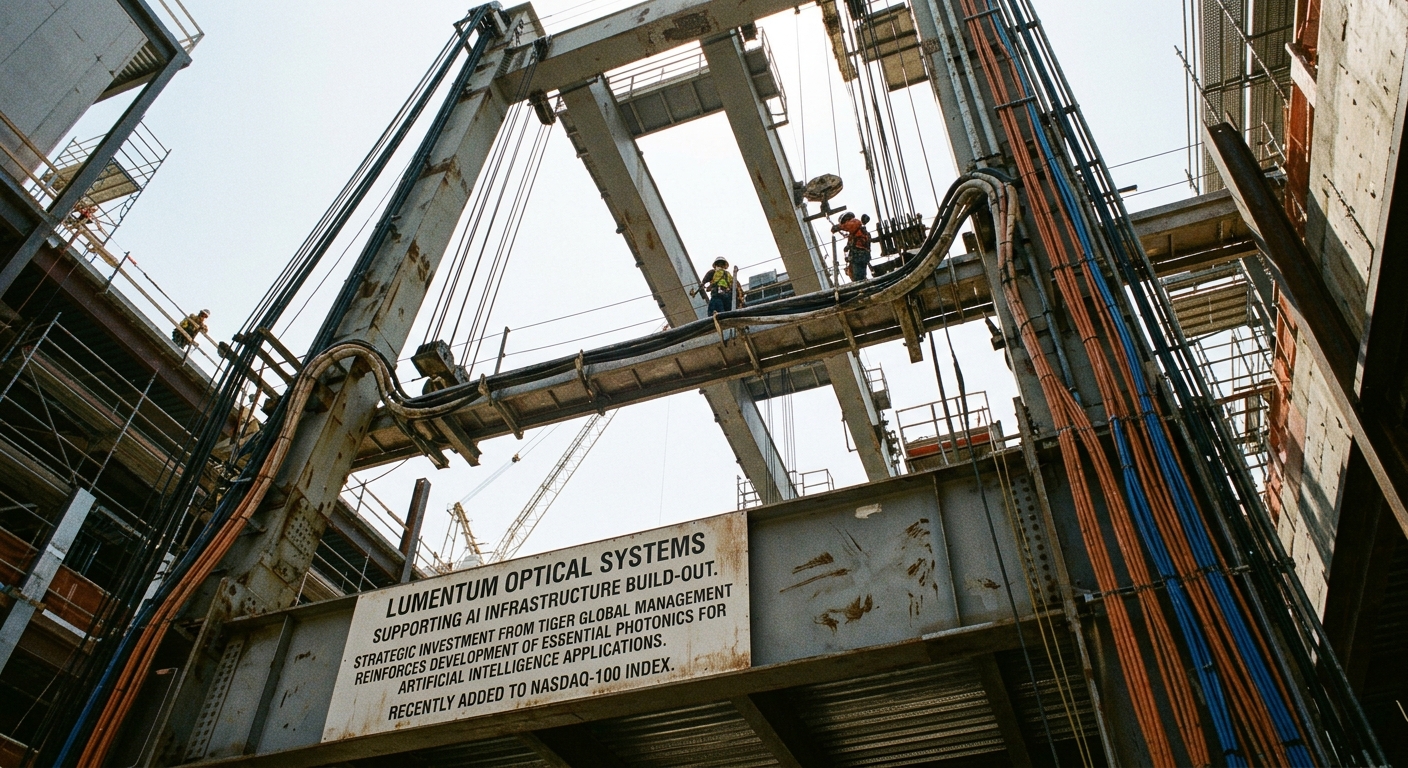
Lumentum Holdings Gains Strategic Investment from Tiger Global Amid Nasdaq-100 Inclusion
On the heels of its recent inclusion in the Nasdaq-100 index, Lumentum Holdings (Ticker: LITE) attracts strategic investment from Tiger Global Management. This move enhances Lumentum's visibility and…

Strengthened Growth Outlook for Ceragon Networks Amidst Telecommunications Challenges
Ceragon Networks (Ticker: CRNT) continues to strengthen its position in the telecommunications sector, showcasing resilience amidst industry challenges. The company reports that its recent quarterly e…

Franklin Wireless Faces Earnings Challenges While Seeking Growth in Mobile Broadband Innovations
Franklin Wireless focuses on innovations in cellular wireless technology to enhance mobile broadband applications. The company's recent quarterly earnings report highlights significant challenges in i…