
AI's Impact on Job Market: Urgent Need for Skilled Trades Training
- Amazon can benefit from prioritizing vocational education to secure a skilled workforce for AI-enhanced roles.
- The demand for skilled trades is rising, creating high-paying job opportunities in technology infrastructure.
- Investing in vocational training is essential for addressing automation challenges and ensuring long-term economic stability.
Navigating the AI-Driven Job Landscape: A Call for Skilled Trades
At the forefront of the discourse surrounding artificial intelligence (AI) and its impact on the job market, Nvidia CEO Jensen Huang makes a compelling case for the burgeoning opportunities in skilled trades. Speaking at the World Economic Forum in Davos, Huang highlights a transformative shift where AI is not just a harbinger of job displacement but also a catalyst for the creation of high-paying employment, particularly in the trades associated with technology infrastructure. The expansion of AI capabilities necessitates a robust workforce to build and maintain the related facilities, with salaries for skilled positions potentially reaching six figures. This evolution presents a critical moment for both educators and job seekers to focus on vocational training as a viable pathway to success.
Huang's assertions are underpinned by a significant trend: as industries pivot towards AI integration, the demand for skilled labor in trades such as plumbing, electrical work, and network management is surging. In a landscape where some tech-related salaries are reportedly doubling, the need for vocationally trained technicians becomes imperative. The semiconductor sector alone anticipates a need for 75,000 skilled workers to support its growth. This urgent call for tradespeople resonates with the broader narrative that while AI may displace certain occupations, it simultaneously creates a landscape ripe with new opportunities for those equipped with the right skill sets. Huang emphasizes that a fulfilling career does not necessarily require advanced degrees, thereby encouraging a reevaluation of traditional educational pathways.
Moreover, the findings from Microsoft’s research bolster Huang’s claims by revealing that blue-collar jobs exhibit resilience against automation. The study, which involved analysis of 200,000 interactions with AI tools, indicates that individuals in physical roles, such as phlebotomists and painters, are among the least likely to be affected by AI advancements. This data suggests a promising outlook for vocational careers in an era characterized by technological upheaval. Roxana Mînzatu, EVP at the European Commission, echoes this sentiment, urging younger generations to pursue vocational training as a strategic response to the shifting employment landscape shaped by AI.
In addition to Huang’s insights, the broader implications for workforce development are significant. As industries grapple with the dual challenges of automation and skill shortages, the emphasis on vocational education and training becomes increasingly crucial. By realigning educational frameworks to prioritize practical skills, companies like Amazon can ensure a pipeline of talent equipped to thrive in an AI-enhanced economy. This approach not only addresses immediate labor needs but also fosters long-term economic stability in a rapidly evolving job market.
As AI continues to redefine the contours of employment, the emphasis on upskilling through vocational pathways may well prove to be the linchpin in securing sustainable livelihoods for future generations. The message is clear: as opportunities grow, so too must the investment in skilled trades that underpin the technological advancements of tomorrow.
Related Cashu News
JD.com and Mastercard Collaborate on Advanced Cross-Border Payments and AI Commerce Solutions.
JD.com Inc (Ticker: UNDEFINED), a leading player in the Chinese e-commerce market, forges a pivotal partnership with Mastercard aimed at transforming the global payment infrastructure. This collaborat…

RH Milan Launches: Expanding European Presence with Immersive Lifestyle Experience
RH (Ticker: UNDEFINED) takes a significant step forward with the opening of RH Milan, The Gallery, marking its bold entry into the European market. This new, expansive venue spans seven levels and sho…

Pool Corporation Announces Leadership Change Amid Significant Shareholder Performance Challenges
Pool Corporation, facing significant challenges in shareholder performance, prepares for a pivotal leadership change as John B. Watwood is announced as the new President and CEO effective May 4, 2026.…
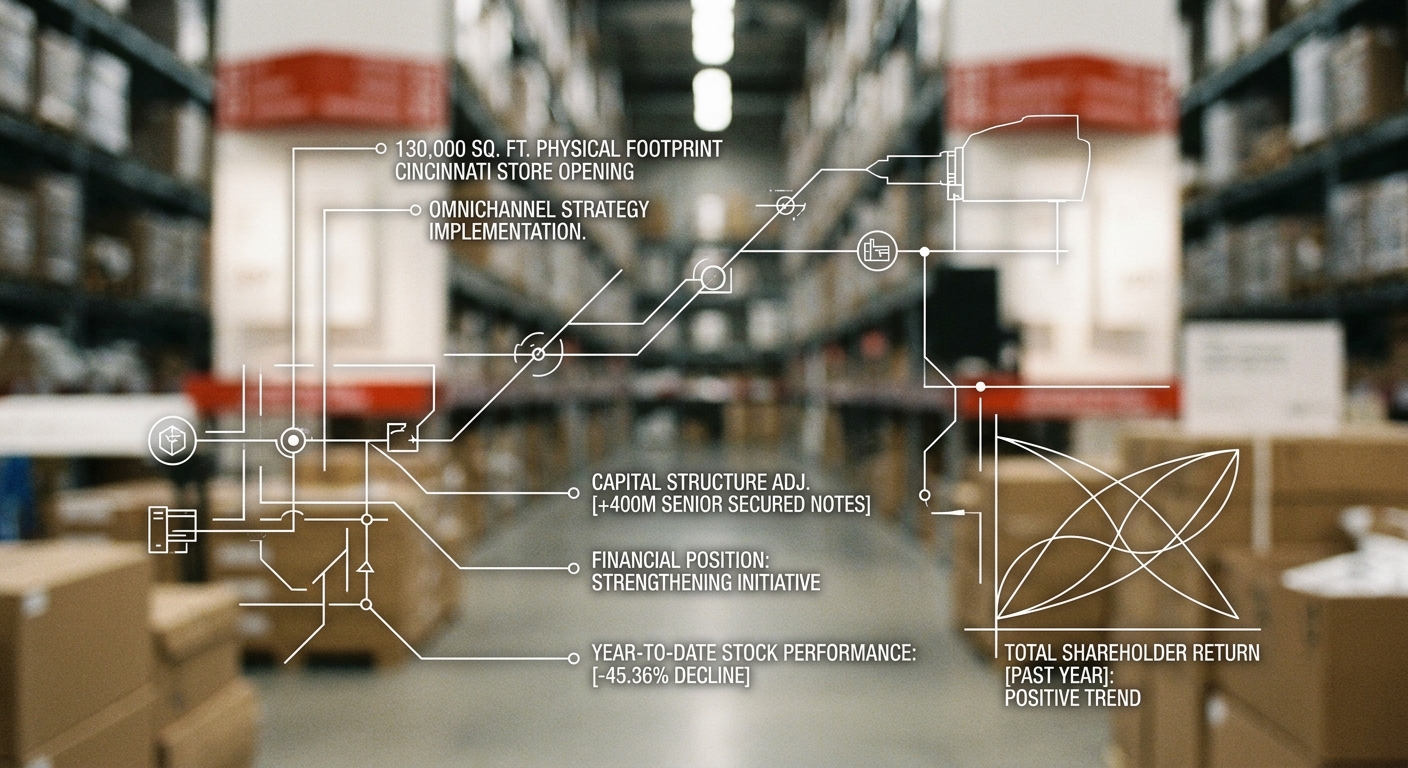
Wayfair Opens Flagship Store in Cincinnati Amid Financial Strategies and Stock Decline
Wayfair Inc. (Ticker: W) has recently announced the opening of a new flagship store in Cincinnati, spanning 130,000 square feet, signaling its commitment to enhancing its omnichannel retail strategy.…