
BioMarin's BMN 401 Trial Shows Biomarker Success but Lacks Clinical Benefits for ENPP1 Deficiency
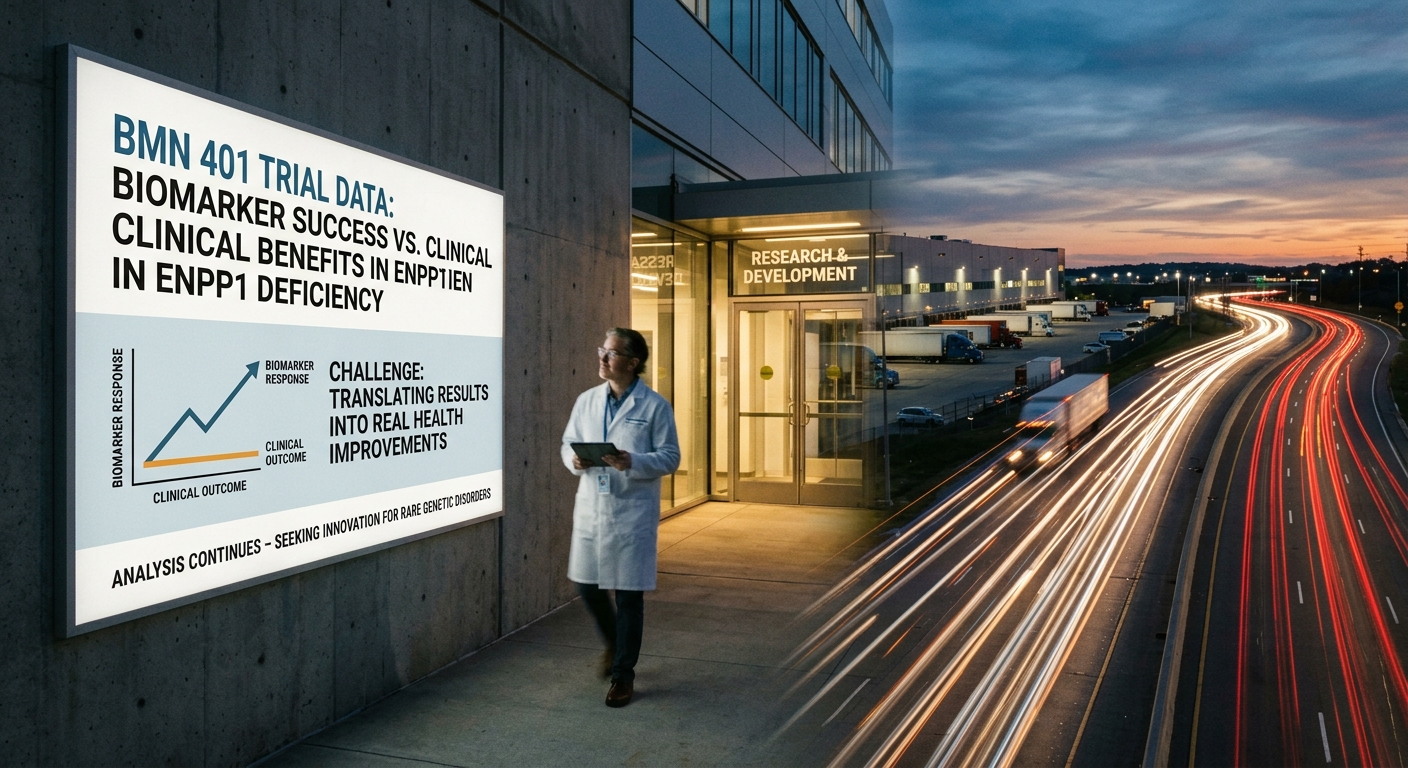
- BioMarin Pharmaceutical’s Phase 3 ENERGY 3 trial for BMN 401 showed positive biomarker results but lacked significant clinical benefits.
- The trial results highlighted the challenge of translating biomarker success into real health improvements for ENPP1 deficiency patients.
- BioMarin remains committed to analyzing trial data and innovating treatments for rare genetic disorders, reinforcing its leadership role.
BioMarin Pharmaceutical Inc. has made significant strides in addressing rare genetic disorders through its innovative research and clinical trials. The company recently provided an update on its Phase 3 ENERGY 3 trial for BMN 401, a potential treatment for children suffering from ENPP1 deficiency, a rare genetic disorder that can lead to severe health complications. Although the trial achieved one of its co-primary endpoints by showing statistically significant increases in plasma inorganic pyrophosphate (PPi) levels, a crucial biomarker related to the disease, it fell short in delivering meaningful clinical benefits, as indicated by unchanged Radiographic Global Impression of Change (RGI-C) scores. The trial results signal the complexity of translating biomarker success into tangible health improvements for patients with ENPP1 deficiency.
Mixed Results from the ENERGY 3 Trial
Despite the disappointing outcome regarding clinical benefits, the positive biomarker results indicate that BMN 401 is well-tolerated and presents no new safety concerns, according to BioMarin's Executive VP, Greg Friberg. He expressed his disappointment over the lack of significant clinical improvements, underscoring the urgent necessity for effective treatments for patients suffering from ENPP1 deficiency, which is associated with high mortality rates in infants and can lead to severe lifelong health issues. BioMarin remains committed to analyzing the trial data thoroughly to decide on potential future directions to best serve this vulnerable patient population.
Future Directions and Commitment
The focus now turns to how BioMarin can leverage the insights gained from the ENERGY 3 trial for BMN 401 to propel its ongoing research efforts. In parallel, fresh perspectives emerge from promising results of the CANOPY-HCH-3 study for VOXZOGO (vosoritide), another treatment aimed at children with different forms of skeletal dysplasia. This competitive landscape emphasizes the importance of continued innovation and dedication toward developing effective therapies in the realm of rare genetic disorders, reinforcing BioMarin’s role as a leader in this specialized field and underlining their commitment to addressing the pressing healthcare needs of affected individuals and families.
Related Cashu News

Thermo Fisher Launches Bioanalytical Lab in Sweden to Support Drug Development
Thermo Fisher Scientific (Ticker: TMO) strengthens its commitment to the pharmaceutical and biotechnology sectors with the launch of a new bioanalytical and biomarker laboratory in Gothenburg, Sweden.…

Inovio Advances VGX-3100 for Cervical Dysplasia with Successful Phase 3 Trial Results
Inovio Pharmaceuticals is achieving significant advancements through its partnership with ApolloBio in the development of VGX-3100, an investigational DNA immunotherapy aimed at treating cervical dysp…

Agios Pharmaceuticals Seeks Accelerated FDA Approval for Mitapivat in Sickle Cell Disease Treatment
Agios Pharmaceuticals (Ticker: AGIO) is making significant strides in advancing its drug mitapivat, marketed as AQVESME, for treating rare hematologic diseases. The company recently submitted a supple…

Bristol Myers Squibb Partners with Anthropic to Enhance Operations Using AI Technology
Bristol Myers Squibb Company (Ticker: UNDEFINED) partners with Anthropic to enhance its operational efficiency using advanced AI technology. This collaboration marks a significant milestone as it empl…