
Chinese humanoid autonomy race strains AI compute, pressures NVIDIA (NVDA), raises dual‑use concerns
- Humanoid autonomy pressures Nvidia as a key supplier of high-performance AI compute.
- UBTech's open-source Thinker benchmarks claim to challenge Nvidia's models.
- Demand favors Nvidia's GPU and software ecosystem, creating opportunity and governance challenges.
NVIDIA and the push to power humanoid "brains"
Chinese robotics firms are racing to build advanced vision‑language‑action models that let full‑size humanoids perceive, interpret and autonomously carry out complex tasks, a development that directly pressures suppliers of high‑performance AI compute such as NVIDIA. Reports say Dobot has developed Dobot‑VLA, a model its Atom humanoid uses to "see through" task clusters, resolve ambiguous instructions and decide how to complete jobs on its own. Rival UBTech has open‑sourced a multimodal humanoid model called "Thinker" and posts benchmark claims that challenge models from Nvidia and ByteDance, saying its Walker S2 humanoid achieves near‑perfect performance on factory tasks like moving boxes and sorting parts.
The shift from choreographed demonstrations to learning‑based autonomy is raising demand for more powerful training and inference infrastructure, which typically relies on GPU acceleration and software stacks familiar to Nvidia. Industry engineers say embodied systems require low‑latency perception, large multimodal models and real‑time control loops, increasing appetite for high‑throughput datacenter GPUs for training and compact accelerators at the edge for on‑robot inference. That combination plays directly into existing ecosystems built around Nvidia hardware and frameworks, even as open‑source models create fresh competition in model design and optimization.
At the same time, the rapid production timetable for humanoid platforms—several firms saying they will enter series production and ship to factory floors this year—adds operational and regulatory pressure on suppliers and integrators. Companies that build or host these models must balance performance demands with safety, verification and compliance, and may face new controls on advanced robotics components or model exports. The trajectory of humanoid autonomy therefore represents both a market opportunity and a governance challenge for Nvidia and others providing the compute backbone.
Dual‑use and battlefield concerns
Observers warn the same autonomy that makes humanoids useful on assembly lines can make them dual‑use, suitable for testing at polygon facilities or deployment in conflict zones if hostilities continue. Reports highlight fears that advanced robots could be repurposed for military experiments or battlefield tasks, prompting scrutiny from policymakers.
Calls for regulation and export controls are intensifying, with industry watchers urging safeguards to manage strategic risks as commercial profits and fast timelines drive widespread deployment. Governments and firms face pressure to coordinate rules that limit misuse while allowing continued industrial adoption.
Related Cashu News
ASML and Tata Electronics Partner for India's First 300mm Semiconductor Fabrication Plant
ASML Holding N.V. (Ticker: UNDEFINED) secures a major agreement with Tata Electronics, highlighting a significant advancement in India’s semiconductor manufacturing capabilities. This partnership aims…

Ideal Power Advances B-TRAN® Technology with $30 Million Fundraising for Growth in Semiconductors
Ideal Power Inc (Ticker: IPWR) has recently completed a registered direct offering, raising around $30 million from institutional investors. This fundraising comes from the sale of more than 5 million…
Canadian Solar Announces Leadership Change and Strengthens U.S. Manufacturing for Sustainable Growth
Canadian Solar Inc (Ticker: CSIQ) has announced a significant leadership transition, signaling a strategic pivot aimed at enhancing profitability over mere volume growth. Colin Parkin takes the helm a…
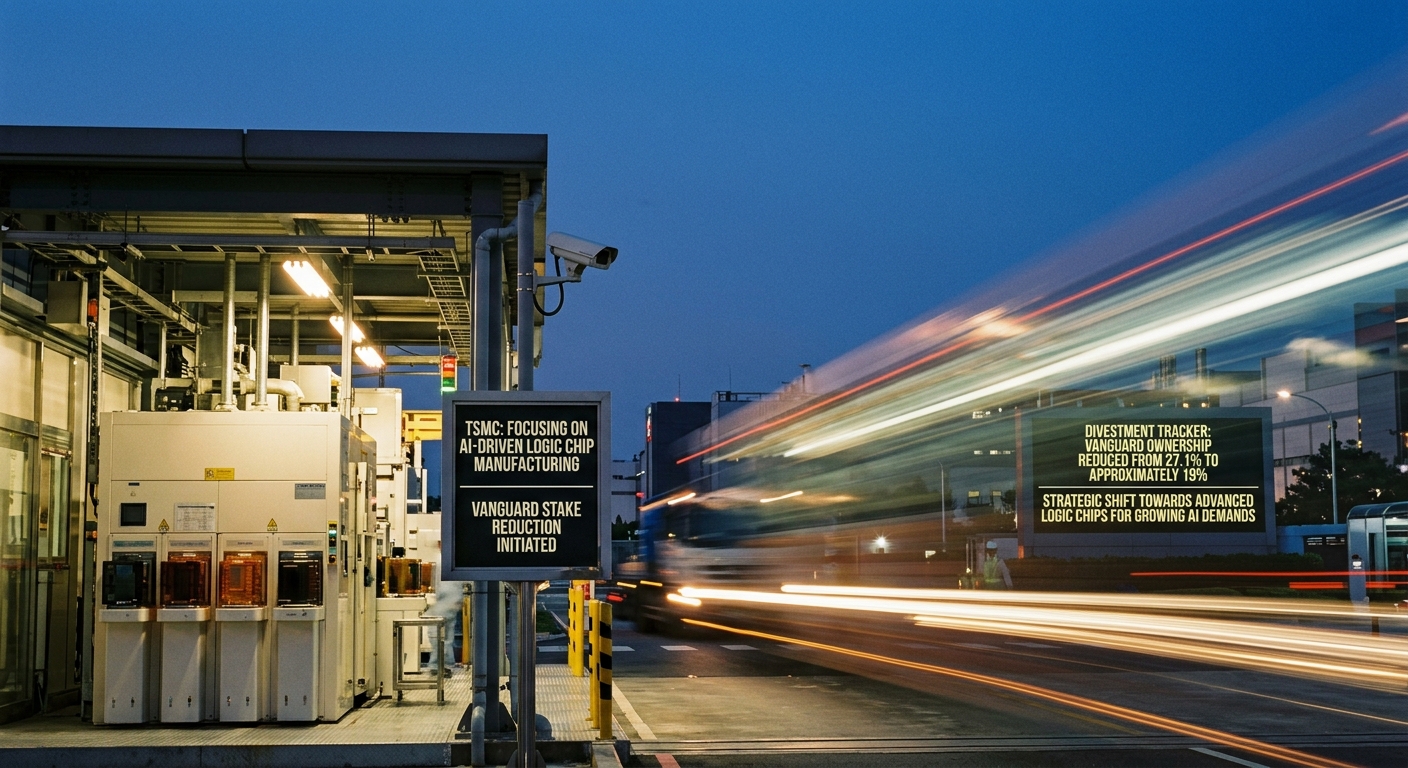
TSMC Reduces Stake in Vanguard to Focus on AI-Driven Logic Chip Manufacturing
Taiwan Semiconductor Manufacturing Company (Ticker: TSM) is making significant strategic moves to enhance its core operations in the semiconductor sector. Recently, TSMC announced its decision to sell…