
Citigroup’s Payroll Call Raises Questions About Seasonal Adjustments and Risk Models
- Citi was the only major forecaster calling 135,000 payrolls, closely matching the January print.
- Citi must reassess model inputs as adjusted versus raw payroll data diverge, affecting credit scoring and stress tests.
- Citi will stress-test temporary scenarios, monitor revisions, and calibrate client advice, provisioning, and capital/trading plans.
Citi’s payroll call and the seasonal‑adjustment puzzle
NEW YORK — Citigroup is singularly highlighted after U.S. payrolls unexpectedly outpace consensus, a development that tests bank forecasting and risk models across the industry. The Bureau of Labor Statistics reports a seasonally adjusted gain of 130,000 jobs in January, roughly double the median 65,000 forecast and very close to Citigroup’s 135,000 call — the only major forecast to anticipate a figure of that size. The headline beats a backdrop of public messaging from the administration urging markets to expect weak numbers, underscoring the gap between political signals, consensus economics, and one major bank’s projection.
Payroll surprise forces re‑examination of seasonal factors
The surprise largely reflects seasonal adjustments rather than broad strength in the underlying labor market, complicating the policy and credit outlook for Citigroup and peers. The unadjusted series shows a decline of 2.649 million jobs, and recent downward revisions — November down by 15,000 and December by 2,000, part of a pattern where 25 of the past 26 reports are revised lower — raise the likelihood that the apparent beat will erode in later months. For Citigroup, which integrates monthly labor data into credit scoring, stress tests and macroeconomic scenarios, the divergence between adjusted and raw data prompts a reassessment of model inputs and short‑term risk assumptions.
Implications for Citi’s client advice and balance‑sheet management
Citi’s near‑accurate call enhances its position as a source of macro intelligence for corporate and institutional clients, yet the seasonal‑adjustment element mandates caution in advising on loan growth, provisioning and interest‑rate sensitivity. Banks use payroll trends for forward‑looking credit demand and loss projections; if the headline is later revised down, provisioning needs and liquidity planning could shift. At the same time, Citi’s economics team is likely to stress‑test scenarios that treat the January print as temporary, aligning capital and trading desks to a range of possible revisions rather than a single interpretation of labor strength.
Broader labor details and wage pressures
The report also shows the unemployment rate falling to 4.3% from 4.4% while labor force participation edges up to 62.5%. Average hourly earnings rise 0.4% month‑on‑month and 3.7% year‑on‑year; part‑time employment for economic reasons falls by 453,000 to 4.9 million but remains above last year’s level by 410,000, all details Citi and other banks track closely for consumption and credit implications.
Analysts urge caution on policy readings
Economists caution that headline beats driven by seasonal adjustments can reverse, affecting Federal Reserve expectations and client guidance provided by Citi’s markets and advisory teams. The bank is therefore positioned to monitor revisions closely and calibrate advice on lending, capital management and risk exposures as subsequent data arrive.
Related Cashu News

Western Alliance Bancorp Faces Scrutiny Over Non-Performing Loan and Declining Stock Performance
Western Alliance Bancorporation (Ticker: UNDEFINED) faces heightened scrutiny following a significant disclosure regarding its asset quality, which raises concerns about the bank's credit risk and ope…
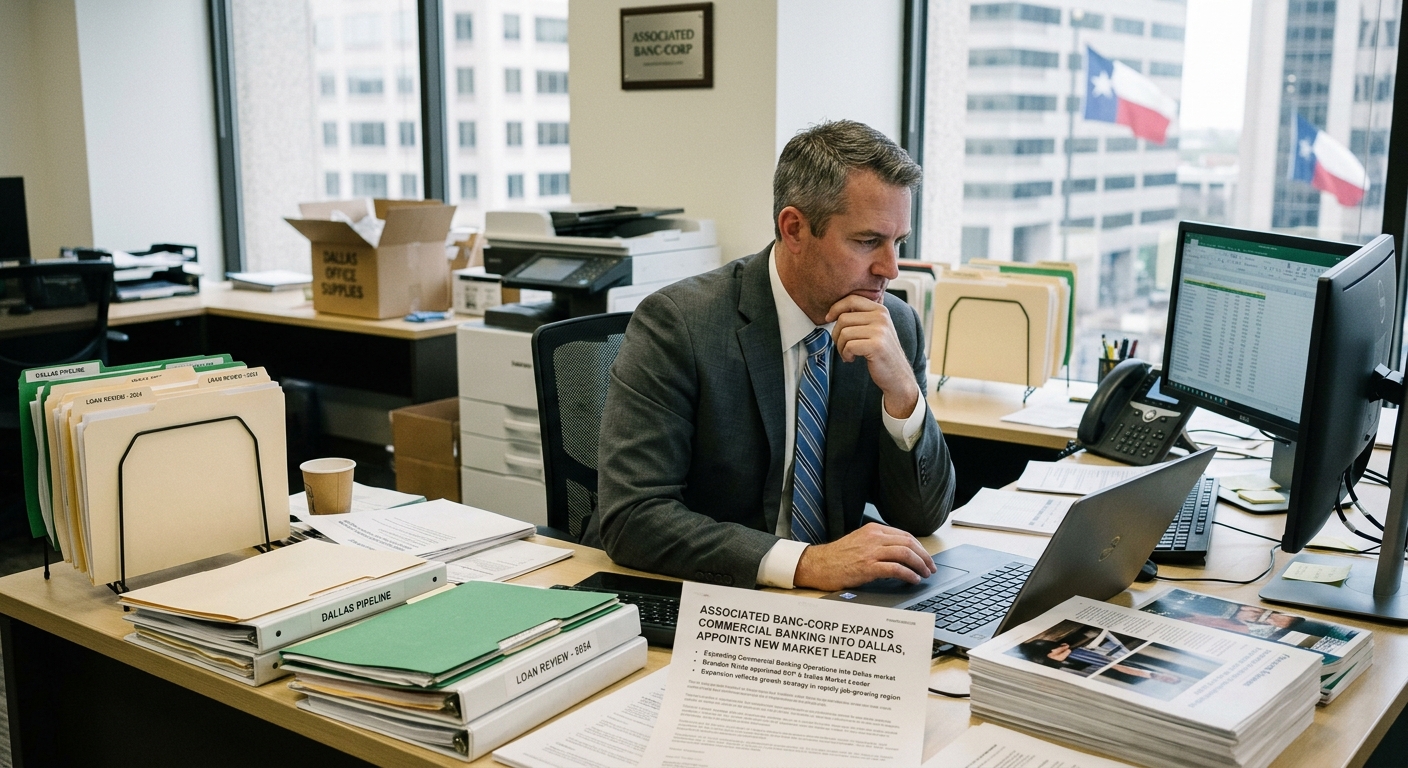
Associated Banc-Corp Expands Commercial Banking into Dallas, Appoints New Market Leader
Associated Banc-Corp (Ticker: UNDEFINED) is expanding its commercial banking operations into the Dallas market, capitalizing on recent success in Kansas City. The bank appoints Brandon White as the se…

S&T Bancorp Strengthens Business Banking Focus with New Director Appointment
S&T Bancorp has taken significant steps to enhance its focus on small and midsize businesses with the appointment of Julie Lane as the new director of business banking and senior vice president. This…

Dime Community Bancshares Launches Equipment & Franchise Finance Group Amidst Stock Fluctuations.
Dime Community Bancshares (Ticker: DCOM) has recently established an Equipment & Franchise Finance Group targeted at providing tailored financing options for middle market borrowers and established fr…