
Dow 50,000 spotlights ExxonMobil as symbol of industrial continuity amid tech-driven shift
- ExxonMobil is framed as a symbol of long-running industrial relevance amid the Dow’s 50,000 milestone.
- Its multi-decade Dow presence highlights endurance through waves of sectoral change.
- Maintaining Dow membership requires scale and adapting upstream/refining businesses toward energy-transition investments.
Dow 50,000 spotlights ExxonMobil’s industry continuity
The Dow Jones Industrial Average eclipsing 50,000 frames ExxonMobil as a symbol of long-running industrial relevance rather than a relic of a bygone era. The milestone underlines how the benchmark, created in 1896 and now comprising 30 members, tracks companies that combine established reputations with evolving business models. ExxonMobil appears in historical listings of the index’s roster, highlighting the oil major’s multi-decade presence amid waves of sectoral change.
Index governance by S&P Dow Jones Indices emphasizes reputation, long-term growth and investor relevance when weighing membership, criteria that favor companies with durable operating platforms and global reach — characteristics that ExxonMobil projects in the energy sector. That selection process helps explain why legacy energy firms remain visible even as the broader market shifts toward technology and services. For ExxonMobil, sustained inclusion depends on maintaining operational scale and adapting to energy-market trends that reshape demand and regulatory expectations.
The 50,000 milestone also underlines the contrast between continuity and churn: while names such as Sears, General Electric and Bethlehem Steel fall away over decades, energy incumbents that modernize their portfolios retain relevance. For ExxonMobil, the challenge implicit in the index’s evolution is to balance traditional upstream and refining businesses with investments and strategies that address long-term energy transition pressures, keeping the company aligned with the criteria that define Dow membership.
Tech ascent reshapes the Dow’s look
Technology’s rise is visible in the index composition, with seven major tech firms now represented, underscoring a structural shift from the industrial- and materials-heavy lineups of earlier decades. The change demonstrates how the Dow is adapting to an economy where software and digital services command a larger share of corporate prominence, even as stalwarts from the energy and consumer sectors remain.
Committee balancing act and historical perspective
A committee overseen by S&P Global evaluates additions to maintain sector representation and relevance, deliberately excluding utilities and transportation because those sectors have separate Dow averages. The index’s 130-year arc thus serves as a compact, price-weighted snapshot of market leadership, reflecting both the persistence of companies like ExxonMobil and the turnover that accompanies technological and economic change.
Related Cashu News
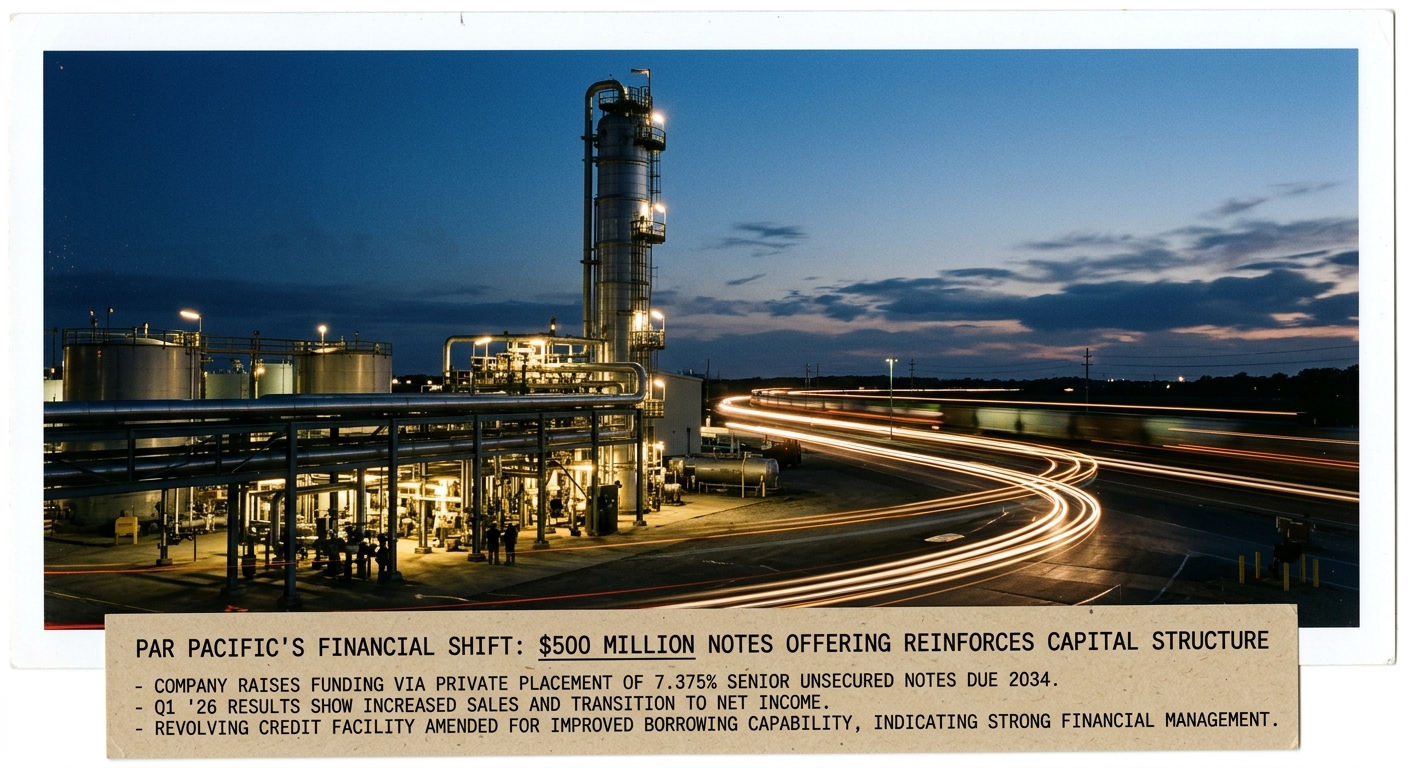
Par Pacific Strengthens Capital Structure with $500 Million Notes Offering and Improved Financial Performance
Par Pacific Holdings, Inc. has recently strengthened its capital structure by completing a $500 million private placement of 7.375% senior unsecured notes, which are set to mature on June 1, 2034. Thi…

Genesis Energy L.P. Reports Q1 Profitability Surge with $446.56 Million in Sales
Genesis Energy L.P. (Ticker: UNDEFINED) announces its first-quarter financial results, signaling a resurgence in profitability and operational performance. The company reports total sales of $446.56 m…

Nordic American Tankers Finalizes New Leasing Contracts to Strengthen Cash Position and Dividends.
Nordic American Tankers (Ticker: NAT) has recently marked a significant milestone by finalizing multiple new vessel leasing contracts in a favorable tanker market. This strategic move is aimed at rein…

Marine Petroleum Trust Announces Quarterly Distribution Amid Fluctuating Energy Sector Conditions
Marine Petroleum Trust (Ticker: MARPS) announces a quarterly cash distribution of $0.096470 per unit, reflecting a decrease compared to prior distributions. This development highlights the trust's ong…