
Hudson Pacific and landlords rethink office strategies as AI reshapes tenant demand
- Hudson Pacific is reassessing campuses as AI may reduce office demand, prompting leasing flexibility and asset conversion planning.
- It prioritizes product changes: collaboration hubs, better connectivity, secure on‑site environments and co‑working, lab or studio conversions.
- Hudson Pacific adopts analytics, automation and tech to cut operating costs, streamline leasing and improve tenant retention.
Market rethink: landlords face the AI test
Hudson Pacific Properties and other big office landlords are reassessing how they manage and position urban campuses as rapid advances in artificial intelligence reshape tenant needs. The company, a major owner of West Coast creative and technology-focused office properties, is confronting a narrative that AI could compress demand for traditional white‑collar office space by reducing headcount or enabling more distributed work. That risk prompts landlords to evaluate leasing flexibility, amenity mixes and long‑term asset conversion options to preserve occupancy and rents.
For Hudson Pacific, adaptation centers on product and service changes rather than short‑term market moves. The firm is increasingly focused on making office space more functionally essential to AI‑era tenants by emphasizing collaboration hubs, enhanced connectivity and secure on‑site environments that support hybrid teams and compute‑heavy workflows. Landlords like Hudson Pacific are also exploring longer‑term repositioning — including co‑working partnerships, lab and studio conversions, and infrastructure upgrades that cater to data‑intensive tenants — to reduce exposure if desk‑counts fall.
Operationally, the push for efficiency extends to building management itself. Hudson Pacific and peers are adopting technology to lower operating costs, streamline leasing and improve tenant retention, using data analytics and automation to optimise energy use, security and space utilisation. Industry players and consultants say those changes aim to make office portfolios more resilient whether AI augments or reshapes office employment, and to create differentiated spaces that are harder to replace with remote workflows.
Selloff highlights sector anxiety
The sector‑wide anxiety is visible in a recent market selloff that hits commercial real estate firms alongside brokers and logistics companies, reflecting investor concern that AI will disrupt labour‑intensive business models. Analysts note the move stems less from immediate fundamentals than from a re‑rating of businesses seen as vulnerable to automation.
Debate centers on timing and mitigation
Market participants and analysts debate how quickly AI adoption will alter occupier behaviour and whether policy responses, union actions or corporate retraining programs can blunt disruption. For landlords such as Hudson Pacific, the immediate priority is adapting offerings and capital plans to a market that increasingly values flexibility and technological readiness.
Related Cashu News

Apple Hospitality REIT Reports Q1 2026 Revenue Increase and Raises Full-Year Income Guidance
Apple Hospitality REIT, Inc. (Ticker: UNDEFINED) has unveiled its first-quarter financial results for 2026, showcasing a notable revenue increase juxtaposed with a slight decline in net income. The co…
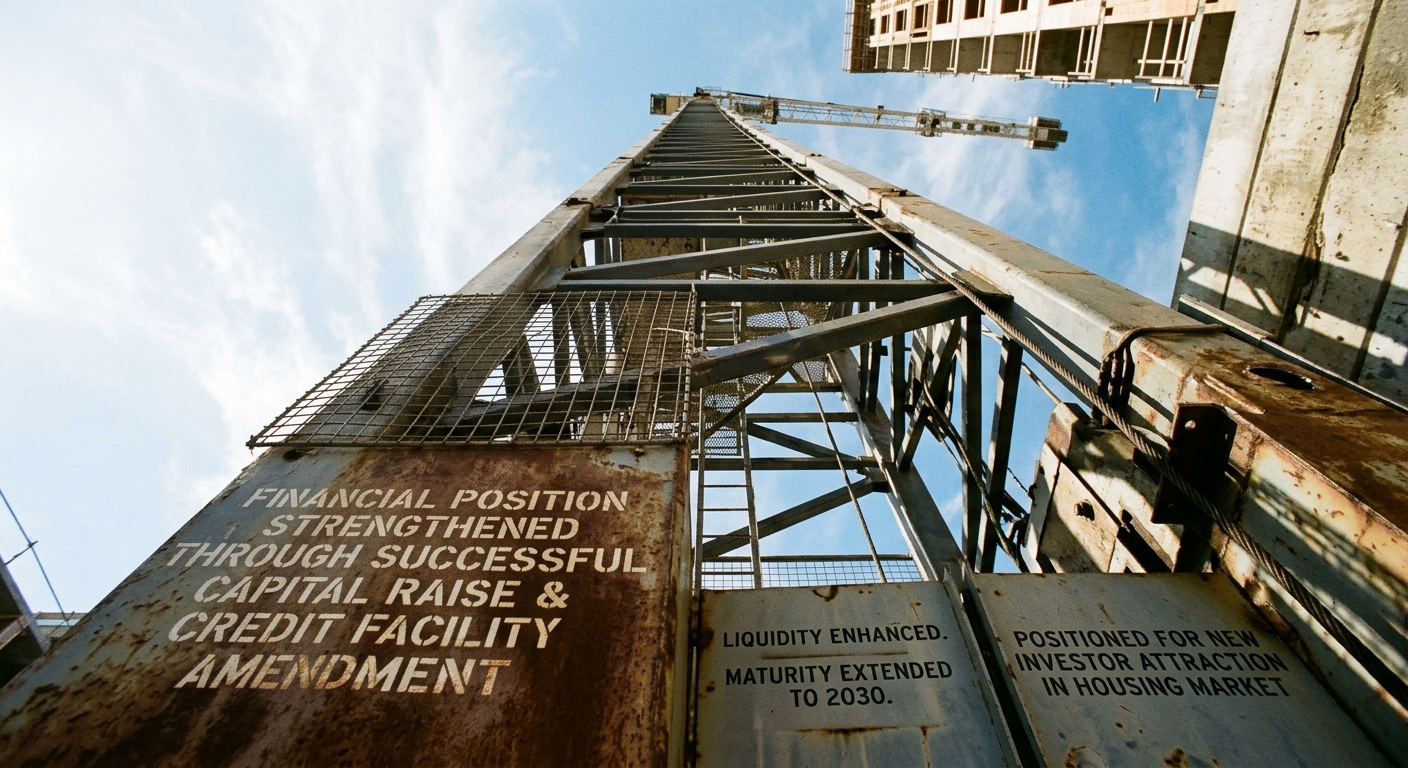
UMH Properties Strengthens Financial Position with Successful Capital Raise and Credit Facility Amendment
UMH Properties, Inc. (Ticker: UNDEFINED) is enhancing its financial framework, which underscores its strategic positioning in the manufactured housing sector. Strategic Financial Maneuvers by UMH Prop…

Independence Realty Trust Increases Dividend to Enhance Shareholder Returns Amid Market Changes
Independence Realty Trust (Ticker: IRT) reveals a strategic decision to enhance shareholder returns through a substantial increase in its quarterly dividend, showcasing its dedication to both its inve…

Equinix Expands Fabric Geo Zones for Enhanced Data Sovereignty in Multicloud Environments
Equinix (Ticker: EQIX) has announced the global expansion of its Fabric Geo Zones solution, introducing a new network-level data sovereignty control layer. This innovative enhancement is designed to a…