
Industrial policy tightens defence supply chains, affecting L3Harris (LHX) sourcing and oversight
- Policy changes directly affect L3Harris, which supplies military platforms and electronic systems reliant on critical inputs.
- Government stakes and veto rights reduce closure/transfer risk but add coordination, export, and sourcing restrictions L3Harris must manage.
- Contracts may demand more domestic content, lifecycle support, and supply transparency, pushing L3Harris toward domestic teaming and sourcing.
Industrial policy shift tightens grip on defence supply chains
The U.S. government is reshaping the defence-industrial base through direct equity interventions that aim to secure critical inputs and production capacity, a trend that has immediate implications for contractors such as L3Harris Technologies. By taking stakes and special governance rights in firms that produce steel, chips and rare earths, Washington is moving beyond traditional procurement and regulatory levers toward active management of supply chains that underpin military platforms and electronic systems supplied by L3Harris.
For L3Harris, which relies on a complex network of suppliers for semiconductors, magnet materials, and precision components, the policy is altering risk calculus at the vendor level. Government ownership or veto rights over facilities and sales can reduce the risk of sudden plant closures or foreign transfers of critical capabilities, but they also introduce new layers of coordination and potential export or relocation restrictions that prime contractors must manage in contracting, qualification of parts and long‑term sourcing strategies. Contractors face a balance between improved security of supply and heightened oversight, which may accelerate investments in domestic sourcing, vertical integration, or certified second-source programs.
The shift also pressures defence suppliers to adapt commercially. As Washington ties industrial policy to national security objectives, companies such as L3Harris may see increased emphasis in contracts on domestic content, lifecycle support in the U.S., and supply‑chain transparency. That could spur new teaming arrangements with government-backed domestic producers — for example in advanced packaging, chip fabrication, or rare-earth processing — and influence product roadmaps where component availability constrains system development timelines.
Recent landmark government equity actions
This industrial intervention takes specific forms: the White House secures a “golden share” in U.S. Steel, granting veto powers over plant closures and relocations; the Commerce Department acquires roughly 10% of Intel; and the Pentagon strikes a deal with MP Materials that includes $400 million of preferred stock, a price floor and a warrant that could translate to about a 15% stake. Those deals signal a willingness to use equity and governance tools to keep capacity onshore.
Analysts and political visibility
Observers characterize the approach as a new mode of strategic investment that blends commercial returns with national objectives, and Commerce officials say stakes in major defence suppliers such as Lockheed Martin could follow. High-profile visits and public messaging underline the political visibility of the policy and its potential to reshape how defence primes like L3Harris source, qualify and secure critical inputs.
Related Cashu News

Icahn Enterprises L.P. Announces Key Leadership Changes for Corporate Stability and Strategy Continuity
Icahn Enterprises L.P. has made significant leadership changes aimed at stabilizing the company's corporate structure during a period of strategic evolution. Ted Papapostolou, a seasoned finance execu…

Thermon Group Holdings' Fiscal Year 2026: Resilience Amidst Revenue Growth and Margin Pressure
Thermon Group Holdings (Ticker: THR) navigates a challenging fiscal landscape as it releases its fiscal year 2026 results, showcasing both significant revenue achievements and persistent pressure on p…
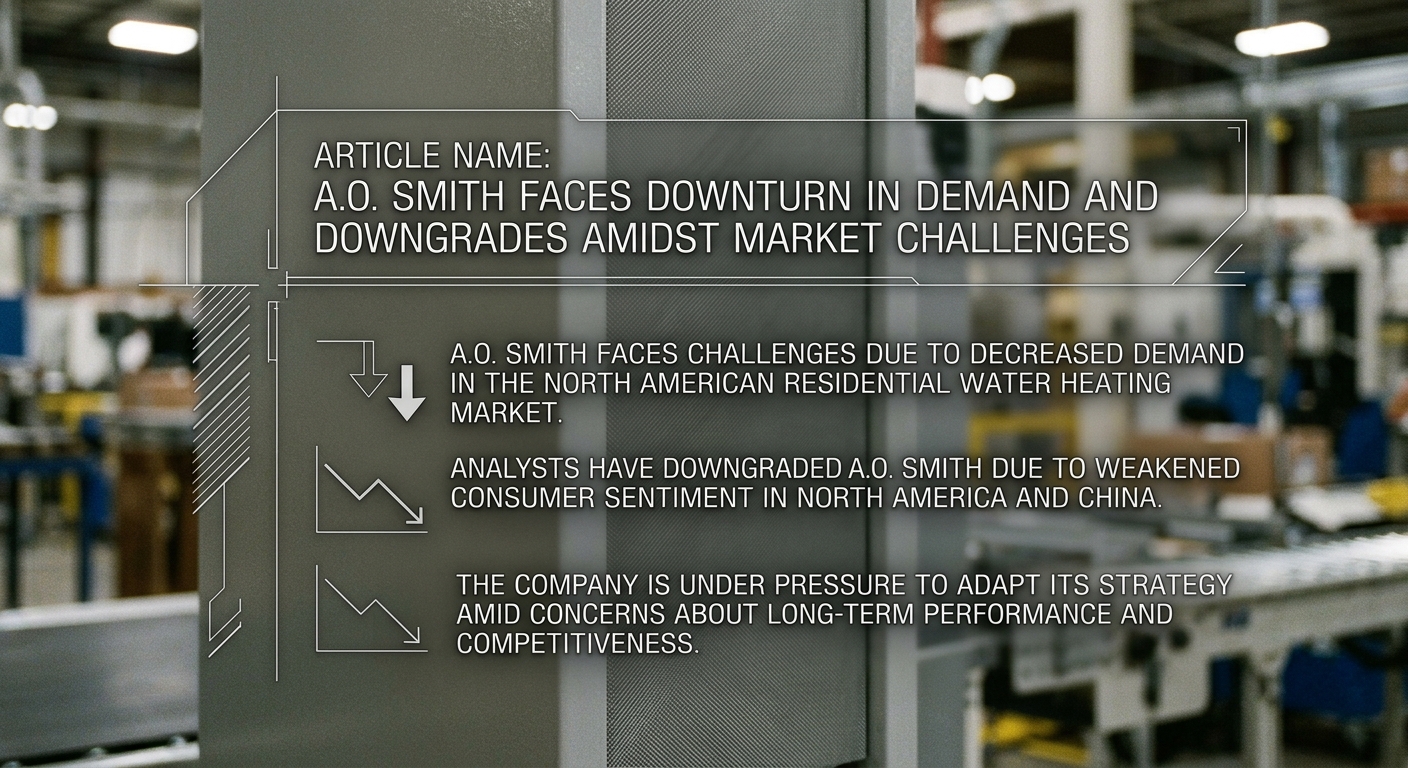
A.O. Smith Faces Downturn in Demand and Downgrades Amidst Market Challenges
A. O. Smith faces significant challenges in the water heating industry as it navigates a downturn in demand, particularly within the North American residential market. Analysts from JPMorgan and DA Da…

Watts Water Technologies Reports Strong Growth Driven by Data Center Cooling Demand
Watts Water Technologies (Ticker: WTS) has reported impressive first-quarter results for 2026, underscoring its strong position within the water technology industry. The company's sales reached $677.3…