
JPMorgan's Strategy Signals Caution in Private Credit Markets Amid Rising Risks
- Golub Capital BDC may face pressure to reassess exposure in light of JPMorgan's strategic markdowns in private credit.
- JPMorgan's risk management approach highlights vulnerabilities in private credit firms, affecting their borrowing capacity and collateral requirements.
- As retail investors withdraw funds, the dynamics of private credit financing shift, prompting firms to reconsider loan quality and risk.
JPMorgan's Strategic Shift: A Cautionary Tale for Private Credit Markets
JPMorgan Chase & Co. is taking significant steps to reduce its exposure to the private credit sector under the guidance of CEO Jamie Dimon. This proactive approach involves marking down the valuations of loans used as collateral, particularly those associated with private credit firms that have adopted "back-leverage" strategies to enhance their fund returns. The bank's decision comes against a backdrop of increasing scrutiny on loans primarily issued to software companies, raising concerns over potential risks associated with advancements in artificial intelligence from industry leaders such as OpenAI and Anthropic. This critical moment places JPMorgan at the forefront of a strategic reevaluation in the private credit landscape, positioning the bank as a bellwether for the sector's future.
These markdowns, while not attributed to actual loan defaults, are indicative of market shifts that reflect JPMorgan's commitment to risk management and financial discipline. By implementing these adjustments, the bank aims to limit the borrowing capacity of private credit firms, potentially requiring them to provide additional collateral. This move is noteworthy as it may compel other financial institutions to reconsider their exposure and valuation practices in light of unexpected challenges. Dimon underscores the importance of anticipating potential difficulties rather than merely reacting to crises, a philosophy that significantly influenced JPMorgan's initial reduction of leverage in the private credit market during the COVID-19 pandemic. This consistent approach to risk aversion suggests a deeper awareness of the vulnerabilities present within the private credit sector, particularly as public sentiment toward direct lenders has soured amidst liquidity concerns.
Concerns about a looming liquidity spiral are exacerbated by recent trends of retail investors withdrawing significant funds from private credit firms. Companies such as Blue Owl and Blackstone report heightened redemption requests from anxious investors, signaling a potential turning point for the industry. While experts like Goldman Sachs point out that nearly 80% of direct lending structures limit on-demand withdrawals—thus mitigating acute drawdown risks—the true vulnerability appears to lie within retail-focused evergreen funds, which account for approximately $220 billion of the total lending exposure in the private credit space. This confluence of retail redemption pressures and increasing caution about loans to software companies underscores significant shifts in the perception and dynamics of private credit financing.
In a landscape characterized by evolving risks, industry leaders acknowledge that not all private credit investments are fraught with peril. Veteran investors such as Howard Marks of Oaktree Capital Management advise prudence while recognizing that layered debt structures, often integral to leveraged buyouts, call for careful evaluation. With increasing calls for greater discernment in the quality of loans among different underwriters, and a focus on larger firms better positioned to weather economic uncertainties, the dialogue surrounding private credit is transforming. As JPMorgan leads the charge in recalibrating its position, the broader implications for risk management and investor sentiment in the private credit market become increasingly pronounced.
Related Cashu News

Blackstone Mortgage Trust Launches $450 Million Senior Secured Notes for Financial Stability
Blackstone Mortgage Trust (Ticker: UNDEFINED) has initiated a private offering of US$450 million in senior secured notes due in 2031, marking a strategic move to strengthen its capital structure. This…
![AllianceBernstein Partners with Brookfield and Carlyle to Launch ABC [ONE] Retirement Solution.](https://firebasestorage.googleapis.com/v0/b/cashuapplication.appspot.com/o/cashuNewsData%2Fe612a612bbd7a184b952afc6b0cafecacfe232d3%2Fnews_e612a612bbd7a184b952afc6b0cafecacfe232d3.png?alt=media&token=019545694f4417154e316de7809f1ae8)
AllianceBernstein Partners with Brookfield and Carlyle to Launch ABC [ONE] Retirement Solution.
AllianceBernstein Holding L.P. (Ticker: UNDEFINED) collaborates with Brookfield Asset Management and Carlyle to launch an innovative retirement solution, ABC [ONE], aimed at enhancing asset class dive…
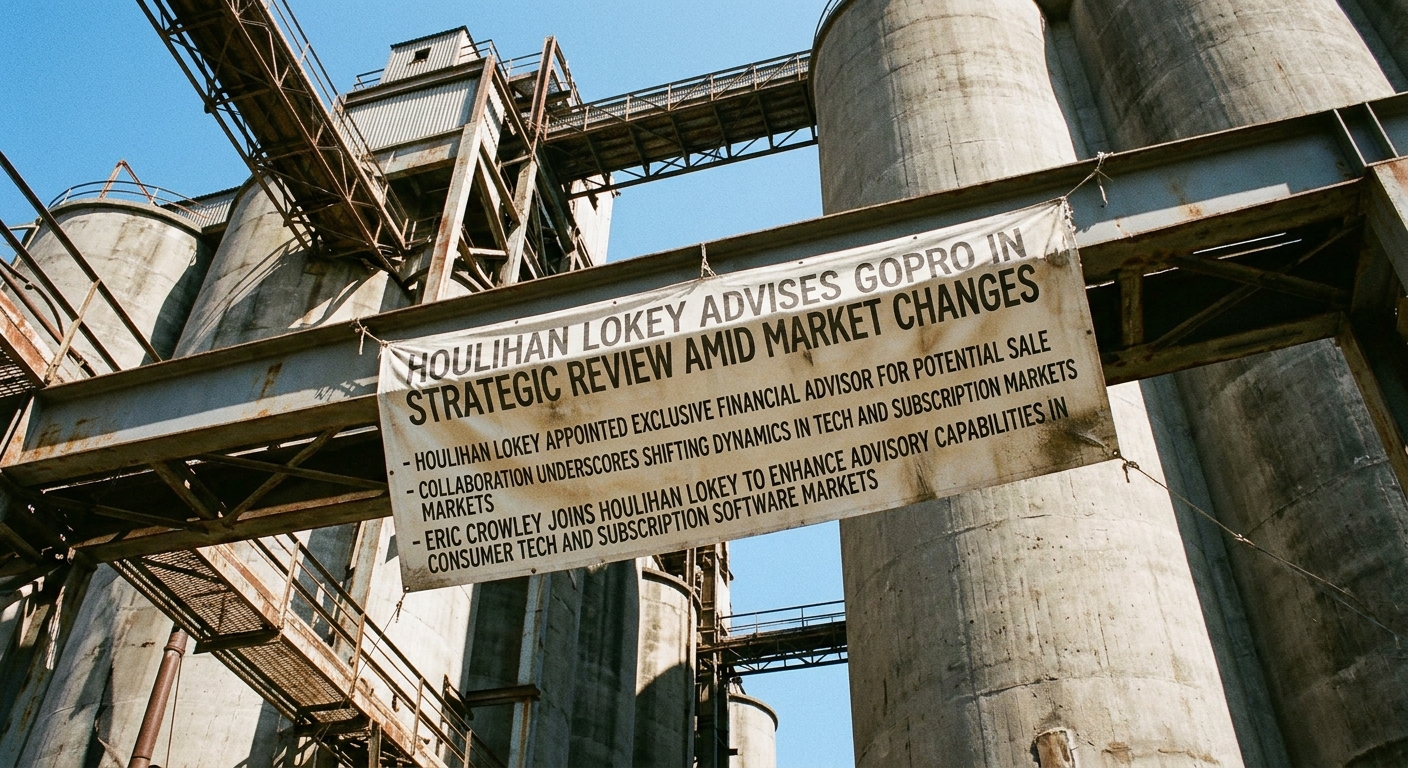
Houlihan Lokey Advises GoPro in Strategic Review Amid Market Changes
Houlihan Lokey (Ticker: HLI) has recently been appointed as the exclusive financial advisor to GoPro, a well-known consumer electronics company. This appointment marks a pivotal moment as GoPro embark…

Federated Hermes Announces Steve Chiavarone as New Chief Investment Officer for Global Equities
Federated Hermes, Inc. (Ticker: UNDEFINED) undergoes a pivotal leadership transition with the appointment of Steve Chiavarone, CFA, as its new Chief Investment Officer for Global Equities, effective S…