
Keysight Technologies Enhances AI Design with New RF and Optical Simulation Tools
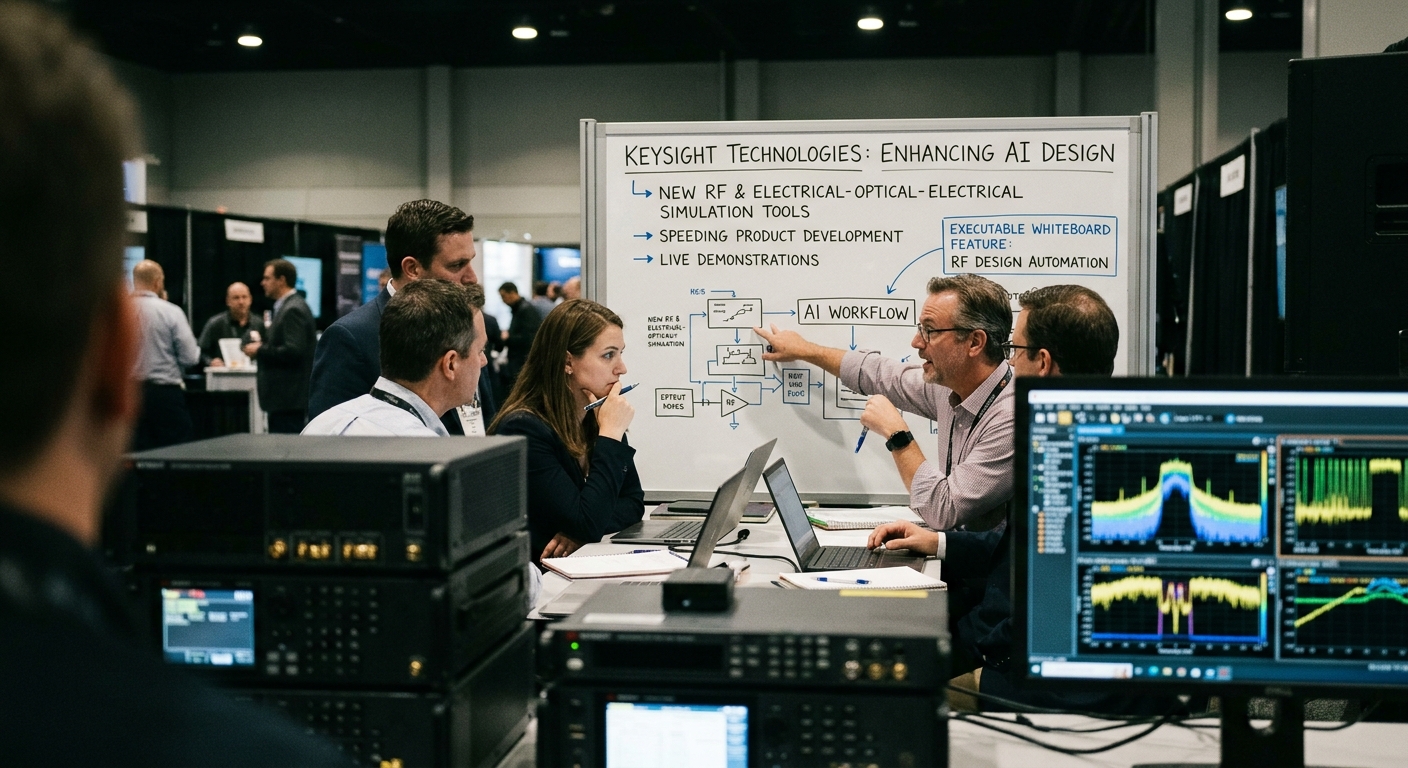
- Keysight Technologies launches RF and Electrical-Optical-Electrical simulation tools to improve AI design workflows.
- The company showcased these tools through live demonstrations at recent industry events.
- An executable whiteboard feature automates RF design, enhancing efficiency and speeding up product development.
Keysight Technologies (KEYS) introduces new RF and Electrical-Optical-Electrical simulation tools that significantly enhance their role in AI design. Through live demonstrations at recent industry events, the company showcases the capabilities of these innovative tools. One of the most notable features is an executable whiteboard designed to automate RF design, which is tailored to improve and streamline engineering workflows. This facet of the launch is particularly important, as the automation of design processes can lead to considerable increases in efficiency and a reduction in the time it takes to bring products to market.
Innovative Integration into Advanced Design Systems
In addition to the whiteboard, Keysight integrates an EOE simulation workflow within its ADS (Advanced Design System) 2026 platform. This integration facilitates coherent analysis across diverse applications, which encompasses areas like artificial intelligence, quantum technologies, and optical networking. By combining these capabilities, Keysight enhances the functional design process and solidifies its position as a leader in technological advancements vital for future innovations.
Enhancing Growth in Key Technology Sectors
Keysight's focus on these groundbreaking simulation tools signifies a strategic move to bolster capabilities in sectors where AI and advanced simulations are increasingly pivotal. The introduction of such tools not only enhances the design capabilities for engineers but also aligns Keysight with the burgeoning demand for innovation in these critical fields, suggesting a proactive approach to sustaining growth in a competitive landscape.
Conclusion
Through these latest advancements, Keysight Technologies demonstrates its commitment to driving progress in technology sectors that are poised for explosive growth. By prioritizing automation and seamless integration within its platforms, the company is well-positioned to meet the future needs of engineering and design in a rapidly evolving industry.
Related Cashu News

SuperCom Secures $1.8 Million Electronic Monitoring Contract in Norway, Strengthening Nordic Presence
SuperCom (Ticker: SPCB), a global leader in secure e-Government, IoT, and Cybersecurity solutions, has recently made significant strides in expanding its presence in the Nordic region. SuperCom Secure…

Hewlett Packard Enterprise Reports 40% Revenue Growth Driven by AI Demand and Strategic Initiatives
Hewlett Packard Enterprise Company (Ticker: HPE) showcases significant advancements in its financial performance for the fiscal 2026 second quarter, emphasizing the company's robust growth trajectory…

Lumentum Advances in AI Photonics with AIXTRON Acquisition and Nvidia Partnership
Lumentum Holdings (Ticker: LITE) is strategically advancing its position in the rapidly expanding AI-focused photonics market. The company recently announces its acquisition of AIXTRON G10-AsP MOCVD s…

Gilat Satellite Networks and Boeing Advance In-Flight Connectivity with New Antenna Technology
Gilat Satellite Networks (Ticker: GILT) announces a significant milestone in its collaboration with Boeing, focusing on the implementation of Gilat's multi-orbit Sidewinder electronically steered ante…