
Memory shortage forces AI hardware suppliers to recalibrate as hyperscalers expand, squeezing NVIDIA margins
- HBM and DRAM shortages raise NVIDIA accelerator input costs, forcing contract renegotiations and pricing adjustments. • Surging hyperscaler and private AI investments keep NVIDIA GPU demand strong despite rising component costs. • Timing of memory‑cost relief determines NVIDIA’s near‑term margin recovery and profitable rollout of new accelerators.
Memory squeeze forces data‑centre suppliers to recalibrate as hyperscalers expand
A global shortage in memory chips is reshaping the supply chain for AI hardware, putting pressure on component costs and margins across networking and chipmaking alike. Cisco reports higher memory prices as a key headwind, and the same dynamics are central to NVIDIA’s market: high‑bandwidth memory (HBM) and DRAM form a material portion of the bill of materials for AI accelerators, and tight supply pushes vendors, customers and intermediaries to renegotiate contracts and adjust pricing. Hyperscale orders continue to surge, reinforcing demand for NVIDIA GPUs even as input costs rise.
Chip and systems makers respond by leveraging scale and longer‑term procurement ties with memory suppliers, revising contractual terms, and selectively raising product prices to mitigate margin pressure. For NVIDIA, which sits at the heart of the AI compute stack, the timing of memory cost relief is a crucial determinant of near‑term margin recovery and the pace at which new variants of its accelerators can be rolled out profitably. Industry observers say negotiating leverage, large‑volume commitments from cloud providers and supply agreements with memory vendors will be the most effective mitigants, but uncertainty remains about when HBM and DRAM markets stabilize.
The imbalance between booming demand from hyperscale customers and constrained memory supply is reshaping deployment economics for AI infrastructure. Strong, sustained orders from data‑centre operators and enterprise buyers keep the pipeline for NVIDIA’s GPUs full, while memory price volatility complicates procurement planning and product mix decisions. Regional data‑centre tie‑ups and expansions, such as reported collaborations in South Korea, are likely to intensify localized demand for compute and memory, further testing suppliers’ ability to match order flow with component availability.
Family offices' AI spending bolsters hardware demand
A surge in direct investments by single‑family offices into AI startups and infrastructure accelerates demand for GPU compute and related hardware. As more private capital flows into AI software, models and robotics, demand for NVIDIA’s accelerators and the memory that supports them is increasing beyond traditional hyperscaler channels.
Macro and labour signals inject caution into tech outlook
Stronger‑than‑expected U.S. labour data and renewed concerns about AI‑driven disruption are prompting a more cautious tone across growth‑sensitive tech sectors. While these macro signals do not diminish underlying infrastructure needs for AI, they add another layer of uncertainty for timing of corporate spend and cadence of data‑centre projects that underpin demand for NVIDIA’s products.
Related Cashu News
ASML and Tata Electronics Partner for India's First 300mm Semiconductor Fabrication Plant
ASML Holding N.V. (Ticker: UNDEFINED) secures a major agreement with Tata Electronics, highlighting a significant advancement in India’s semiconductor manufacturing capabilities. This partnership aims…

Ideal Power Advances B-TRAN® Technology with $30 Million Fundraising for Growth in Semiconductors
Ideal Power Inc (Ticker: IPWR) has recently completed a registered direct offering, raising around $30 million from institutional investors. This fundraising comes from the sale of more than 5 million…
Canadian Solar Announces Leadership Change and Strengthens U.S. Manufacturing for Sustainable Growth
Canadian Solar Inc (Ticker: CSIQ) has announced a significant leadership transition, signaling a strategic pivot aimed at enhancing profitability over mere volume growth. Colin Parkin takes the helm a…
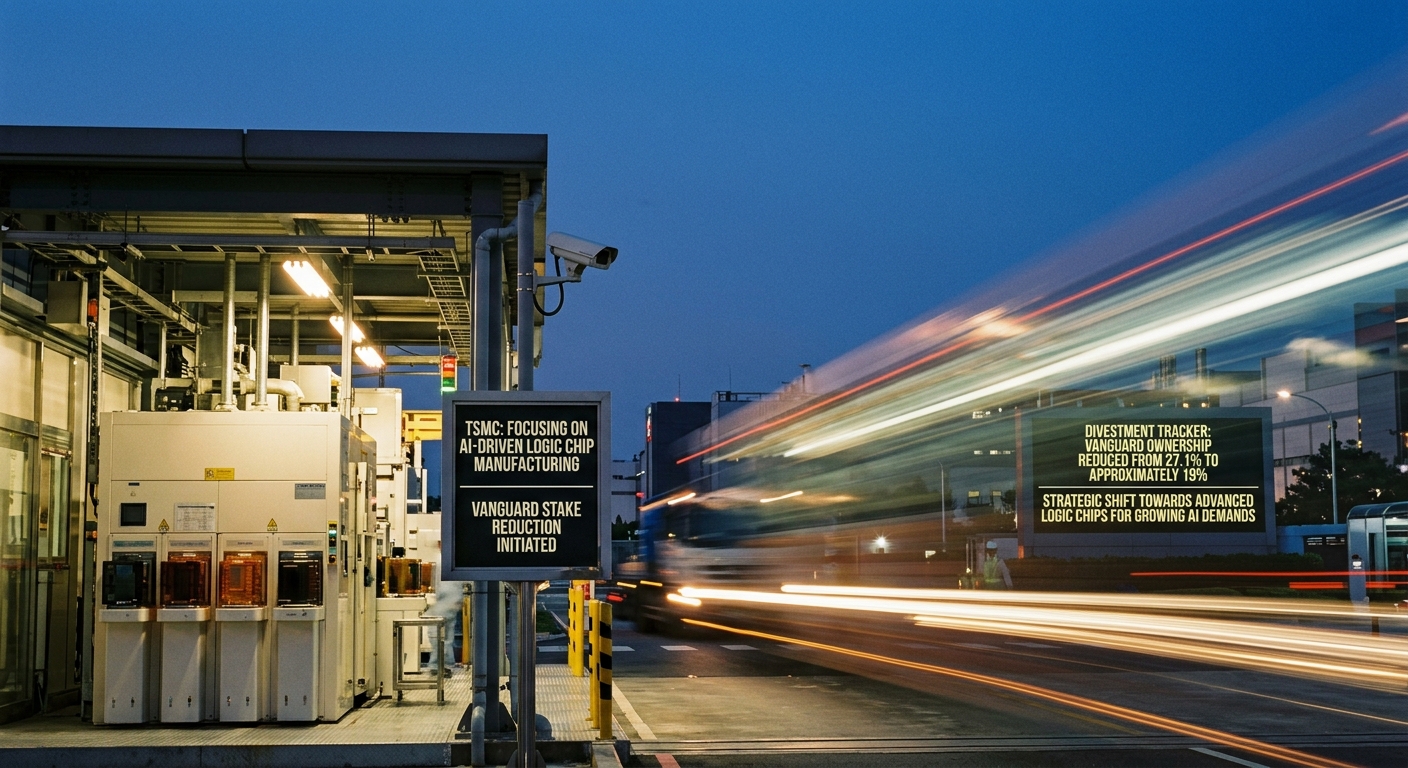
TSMC Reduces Stake in Vanguard to Focus on AI-Driven Logic Chip Manufacturing
Taiwan Semiconductor Manufacturing Company (Ticker: TSM) is making significant strategic moves to enhance its core operations in the semiconductor sector. Recently, TSMC announced its decision to sell…