
Supreme Court tariff ruling amplifies supply‑chain risk for commercial real estate, CoStar reports
- CoStar Group is tracking Supreme Court tariff‑ruling uncertainty for U.S. commercial real estate.
- CoStar reports rising client demand for material‑cost indices, construction‑start tracking, vacancy and rent forecasts.
- CoStar’s analytics are used to model tariff and interest‑rate scenarios across markets and asset types.
Headline: Supreme Court tariff ruling amplifies supply‑chain risk for commercial real estate, CoStar data shows
Main development: Tariff ruling heightens construction and leasing uncertainty for property markets
A Supreme Court decision that the Trump administration misused the International Emergency Economic Powers Act to impose reciprocal tariffs—and the subsequent announcement of a new 10% "global tariff" under alternate statutes—creates fresh uncertainty for U.S. commercial real estate markets, industry data firm CoStar Group is tracking. The ruling and the prospect of prolonged litigation over refund claims that could force billions back to importers prompt developers, owners and lenders to reassess cost assumptions for new projects and renovations.
Rising uncertainty around tariff policy directly affects prices for construction inputs such as steel, aluminum and finished goods, which in turn alters projected construction timelines and budgets for office, industrial and retail projects. CoStar is reporting increased client demand for up‑to‑date material‑cost indices, construction‑start tracking and localized vacancy and rent forecasts as occupiers and developers look to reprice deliveries and adjust leasing strategies in light of volatile input costs and potential supply‑chain delays.
The legal limbo over refunds and the administration’s approach to reissuing duties also feeds into broader inflation and interest‑rate dynamics that shape property valuation. If tariff developments cool inflation, the Federal Reserve could reinterpret policy and influence borrowing costs; conversely, sustained uncertainty can keep risk premia elevated and push capitalization rates higher. CoStar’s analytics products are increasingly used by owners, lenders and brokers to model multiple tariff and rate scenarios across markets and asset types.
Geopolitical tensions add fuel‑price and logistics risk
Escalating tensions with Iran, including public warnings of possible military action, compound trade uncertainty by threatening energy price spikes and shipping disruptions. Those developments raise freight and insurance costs, pressuring industrial occupiers and distribution networks that underpin demand for logistics real estate tracked by CoStar.
AI demand sustains data‑center and tech‑hub leasing
Separately, surging interest in artificial intelligence hardware and services—highlighted by near‑term earnings attention on major chipmakers—continues to support demand for data centers and office space in tech hubs. CoStar notes sustained leasing activity and conversions to mission‑critical facilities as firms expand capacity to support AI workloads.
Related Cashu News

Kennedy-Wilson Holdings Under Investigation Over Alleged Fiduciary Duty Breaches in Recent Sale
Kennedy-Wilson Holdings (Ticker: KW) is facing scrutiny amid an investigation by Halper Sadeh LLC, a law firm focused on investor rights. The firm is probing potential breaches of fiduciary duties rel…

Zillow Study Reveals Financial Risks of Real Estate Practices for Home Sellers
Zillow Group (Ticker: UNDEFINED) reveals substantial financial risks for home sellers who utilize certain real estate practices, emphasizing the significant impact of agency representation and market…
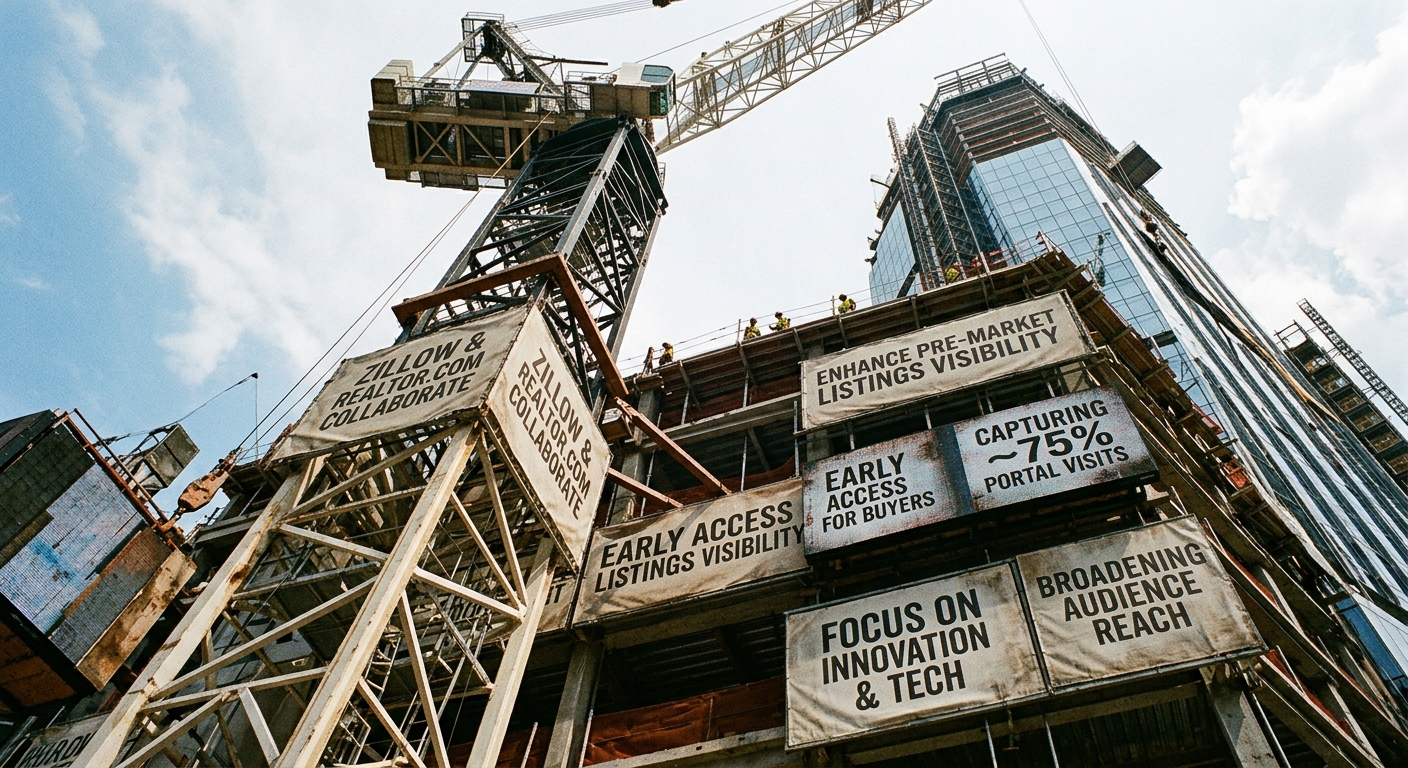
Zillow and Realtor.com Collaborate to Enhance Pre-Market Home Listings Visibility
Zillow Group and Realtor.com Form Strategic Alliance Zillow Group and Realtor.com have announced a strategic collaboration to enhance pre-market home listings visibility, a significant development in…

CBRE Group Forecasts Surge in Commercial Real Estate Transactions Driven by AI Adoption
CBRE Group (NYSE:CBRE), a leading global commercial real estate services firm, is predicting a substantial increase in commercial real estate transaction volumes between 2026 and 2027, thanks to the r…