
The Met Coal Setup Most Investors Are Missing
- Steel production requires metallurgical coal; no industrial substitutes exist.
- The U.S. and Colombia recently classified it as critical.
- Forge Resources is positioned to supply this scarce resource.
Forge Resources (CSE: FRG | OTCQB: FRGGF): The Met Coal Setup Most Investors Are Missing
Disseminated on behalf of Forge Resources Corp.
Roughly 1.9 billion tonnes of steel get produced globally every year. Every tonne requires metallurgical coal to manufacture. There is no industrial-scale substitute, and there isn't one in development.
That single chemistry fact sits behind one of the most overlooked setups in resource markets right now, and behind a small Colombian developer most investors still haven't put on a watchlist.
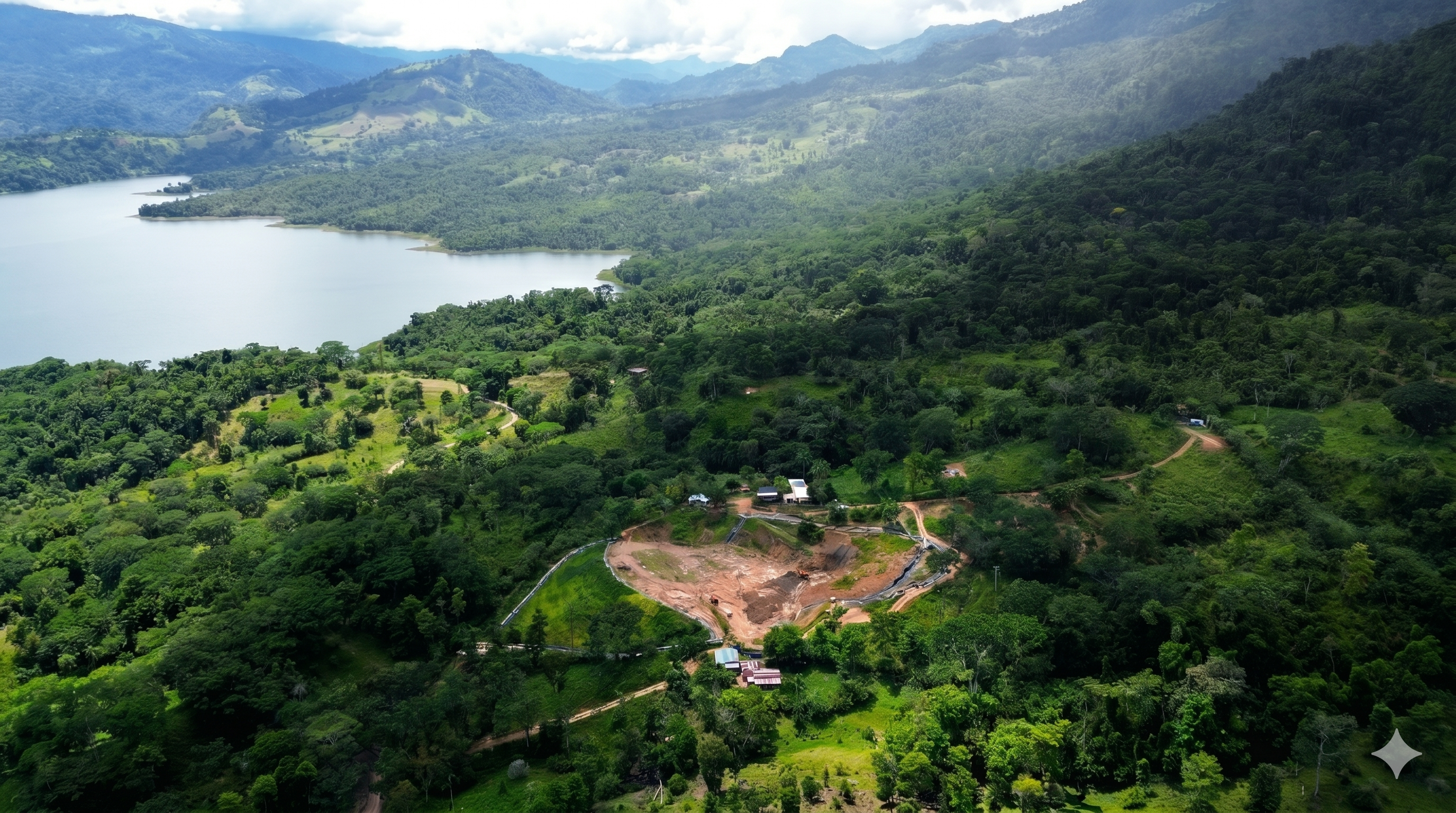
Forge Resources Inc. (CSE: FRG, OTCQB: FRGGF) is a Colombia-focused metallurgical coal company whose flagship asset, the La Estrella project in Santander, is fully permitted and actively advancing, according to the company. The thesis is straightforward. Coking coal is being repriced as a strategic material on both sides of a major trade relationship. New supply is scarce. Forge is positioned to put new tonnes into a market that has suddenly started to care.
Here is why that matters now.
The steel reality
The warships rolling out of shipyards from Norfolk to Busan, the fighter jets coming off aerospace lines, the armoured vehicles defining modern ground forces, the bridges and rail and high-rises being put up across emerging markets, all of it is steel. And steel is coking coal.
Not as a fuel that swaps out for solar or hydrogen. As a chemical reductant in the blast furnace process, with no industrial-scale alternative in commercial use. That is true today, and it remains true on even the most aggressive decarbonization timelines.
This is the part of the energy debate that tends to get glossed over, and it is starting to show up in policy.
A material being repriced as a security input
In 2025, the United States made two moves on metallurgical coal that did not get much attention. According to Forge Resources, the Department of Energy classified met coal as a "critical material," and the Department of the Interior subsequently added it to the official U.S. Critical Minerals List. Around the same window, per the company, the White House declared a national emergency under Executive Order 14156 aimed at expanding coal supply chain capacity, citing risks to national defense capability if a shortfall were to materialize.
Layer in Colombia's own move. The country formally designated metallurgical coal as a strategic mineral in 2023, according to Forge. The picture starts to look less like coincidence and more like alignment. A producing jurisdiction elevates the material domestically, while its largest trading partner (the U.S., with bilateral trade above $50 billion in 2025 per the company) elevates it as a national security input.
Coking coal didn't just rally. It got reclassified.
The price action followed. Forge cites met coal pushing into the $240-per-tonne range in 2026, a level that reflects, in the company's framing, less a demand spike than a structural supply wall. New mines are not being permitted at the pace old ones are depleting. A decade of ESG-driven divestment pulled capital out of the sector right as steel demand was about to be re-underwritten by infrastructure stimulus and a global rearmament cycle.
That is the macro setup. The investable question is who is positioned to put new tonnes into that market.
Forge Resources and the La Estrella project
Forge Resources is a Colombia-focused metallurgical coal developer whose flagship asset is the La Estrella project in Santander. According to the company, La Estrella is fully permitted and actively advancing. That detail matters in a sector where permitting has become the main bottleneck. "Permitted, advancing" is the state most peers are not in.
Santander has an established coal mining history and existing logistics infrastructure for moving material to port. That matters because metallurgical coal economics are decided as much by transportation costs as by the resource itself. A high-grade deposit fifty kilometres from a railhead is a fundamentally different asset than the same geology a thousand kilometres into a frontier basin.
Colombia's broader role, as Forge frames it, is a "flex supply" engine. The country's met coal can move into Europe when supply tightens, into the Americas as industrial demand reshapes, and into defence-aligned supply chains as Western steel buyers look for sources that are neither Russian nor Chinese. Colombia's geographic position and Atlantic-facing ports make that flexibility credible rather than theoretical.
The team
The pitch on Forge is not only the asset. It is the operators behind it. According to company materials, the management team has collectively raised close to a billion dollars across prior ventures and has been associated with major mineral discoveries before.
That is a fair thing to weigh. In a junior mining vehicle, the operator is often a larger driver of outcome than the rock itself. A team that has previously taken projects from permit to production is materially different from one that has not done it before.
Prior success is not a guarantee of repeat success. The gap between "permitted" and "producing at commercial scale" is where most junior developers stall. Capital markets execution, offtake arrangements, and operational ramp are all live risks.
What to watch
For investors looking at Forge for the first time, the catalysts cluster into a few categories.
Project advancement. News flow tied to drilling, resource definition, and any production-readiness milestones at La Estrella. Each de-risking step compresses the discount the market typically applies to pre-revenue developers.
Met coal pricing. The thesis is more interesting at $240 per tonne than at $150. The Australian premium hard coking coal benchmark is the standard reference, and the entire sector re-rates with it.
Policy follow-through. Whether the U.S. critical materials designation translates into concrete supply-chain action, such as financing programs, strategic offtake, or stockpiling, versus remaining a symbolic listing. The same applies to any further Colombian alignment with U.S. supply needs.
Capital structure. Junior developers raise repeatedly. How Forge funds the next phases, whether through equity, debt, or strategic partner, and at what dilution will shape the per-share outcome regardless of how the underlying project performs.
Watch the full Forge Resources investor briefing.
This content has been paid for by Forge Resources Corp. We have been compensated by Capitalizonit who is not a registered investment advisor. Investing in securities involves risk, including the possible loss of principal. Viewers should conduct their own due diligence and consult with a qualified financial advisor before making any investment decisions.”