
Thermo Fisher’s Strategic Divestiture to Focus on High-Growth Life Sciences and Diagnostics
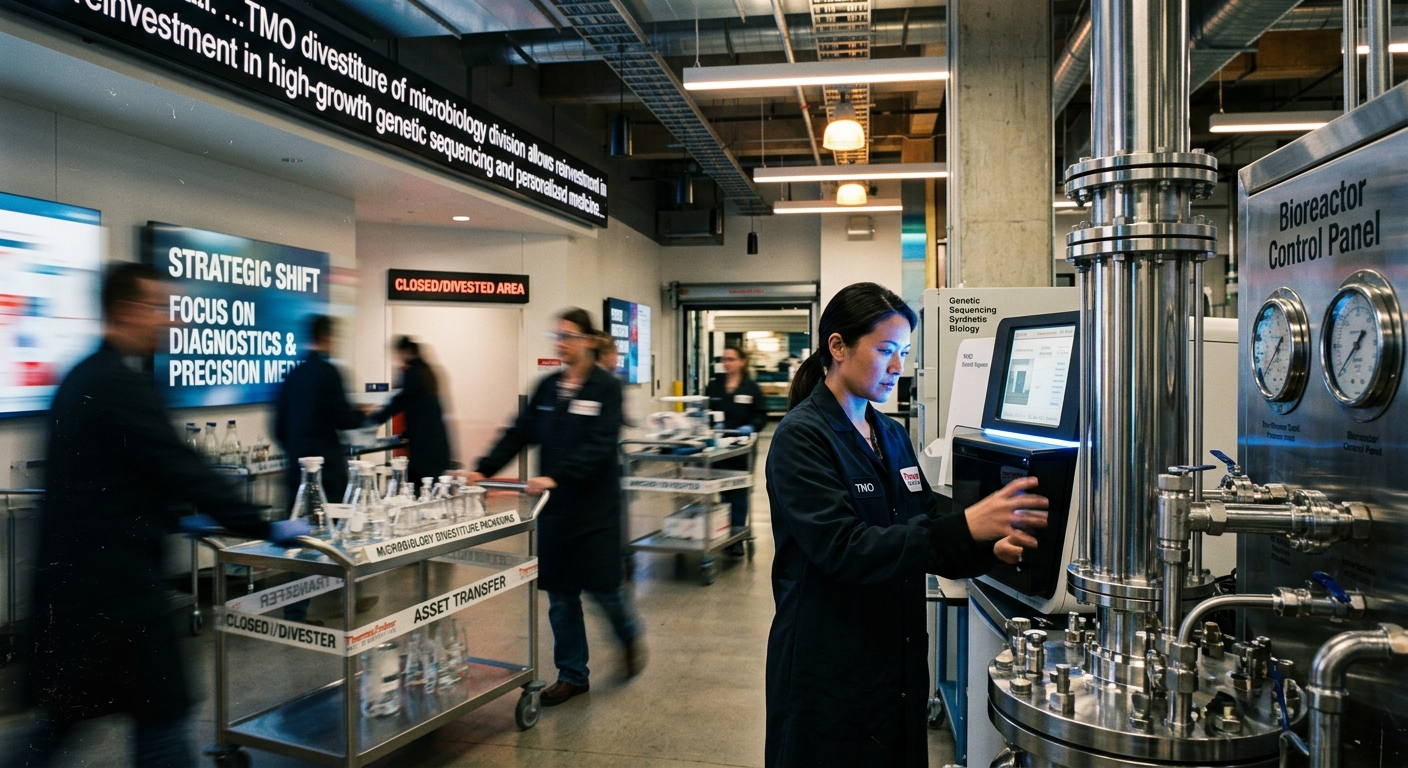
- Thermo Fisher Scientific sold its microbiology division for $1.075 billion to enhance focus on core strengths and high-growth areas.
- The divestiture allows Thermo Fisher to reinvest in high-margin sectors like genetic sequencing and synthetic biology.
- The strategic shift aims to drive innovation in precision medicine and personalized diagnostics, aligning with evolving healthcare demands.
Thermo Fisher Scientific strategically enhances its market position through divestitures and acquisitions, aligning its operations with growing areas of demand. Recently, the company completed a significant $1.075 billion sale of its microbiology division to private equity firm Astorg, a move that reflects its commitment to optimize its portfolio and focus on core strengths. This decision is part of Thermo Fisher's broader strategy to concentrate on high-growth segments, particularly in the life sciences and diagnostics fields, which are vital for addressing emerging healthcare challenges globally.
Divestiture to Enhance Focus on High-Growth Areas
Thermo Fisher’s divestiture is expected to allow the company to reinvest the proceeds into areas that promise higher margins and expansion potential, such as genetic sequencing and synthetic biology. Stakeholders view this as a positive reallocation of resources, particularly as demand for molecular diagnostics and biopharmaceutical development continues to surge. The sale not only bolsters Thermo Fisher’s financial health but also enhances its ability to innovate in core scientific fields.
Investment in Research and Development
Furthermore, the company is poised to leverage increased capital to advance its research and development initiatives, potentially accelerating advancements in precision medicine and personalized diagnostics. This strategic shift aligns with the trends toward more targeted healthcare solutions, which are becoming increasingly important in the current economic climate where healthcare innovation is paramount. Thermo Fisher's proactive management decisions illustrate a forward-looking approach that aims to stay ahead in the competitive life sciences market.
Conclusion: A Strategic Pivot for Future Growth
In the context of its recent developments, Thermo Fisher remains optimistic about its future growth trajectory. The sale represents a critical pivot point, directing resources toward priority areas that promise to drive long-term success. As global healthcare needs evolve, Thermo Fisher’s focused investment strategy could significantly enhance its market position in various high-demand scientific fields, enabling the company not just to respond to immediate market needs but to shape the future of health technologies.