
VR Resources (TSX-V: VRR | OTCQB: VRRCF): The C$1.3 Billion Discovery Team That Just Started Drilling in Nevada
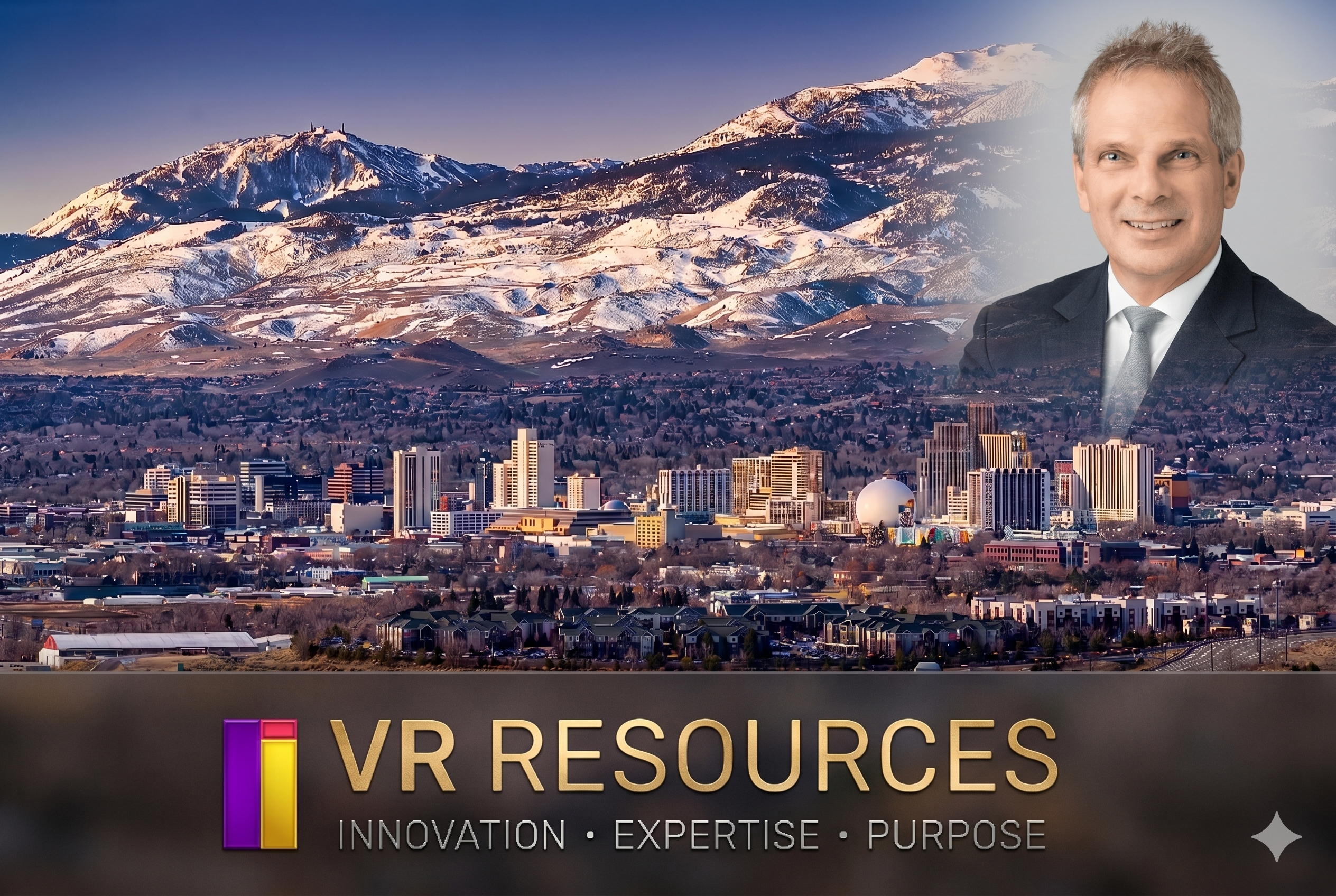
VR Resources (TSX-V: VRR | OTCQB: VRRCF): The C$1.3 Billion Discovery Team That Just Started Drilling in Nevada
Not investment advice. Disseminated on behalf of VR Resources Corp. Full disclosure at bottom.
There is a pattern in junior mining that experienced investors learn to watch for. A team builds a company, makes a discovery, sells it to a major, and then starts over with a new vehicle at a fraction of the valuation.
When that team has done it more than once, and the new vehicle is still small enough to be missed by most generalists, that is usually when the math gets interesting.
VR Resources (🇨🇦VRR / 🇺🇸VRRCF) is one of those setups.
The company is led by Dr. Michael Gunning, the discovery geologist who built Hathor Exploration and sold it to Rio Tinto for C$654 million. He then helped build Alpha Minerals, which was acquired for C$180 million. Across the CEO and the broader board, this leadership group has been involved in taking three companies from grassroots discovery to acquisition for a combined C$1.3 billion.
Today they are running a TSX-V micro-cap with roughly 39.8 million shares outstanding, three 100%-owned projects in Nevada, and a drill rig turning right now at the flagship.
The market capitalisation is a rounding error compared to what this team has built before. Whether the rest of the math adds up is what the next 6 to 12 months of drill results are designed to answer.
Why the setup is worth paying attention to
The most under-appreciated edge in junior exploration is repeat operators. Geology can be debated. Project economics depend on commodity prices that move. But teams that have already taken multiple projects from grassroots to acquisition have demonstrated, in cash, the one skill that matters most: turning a piece of ground into an asset a major company is willing to write a cheque for.
Most juniors do not have that team. VR Resources does.
The current vehicle adds a second factor that sharpens the setup. The team spent approximately ten years and roughly C$10 million building the portfolio from scratch. No back-room asset deals. No inherited problems from prior operators. Every target was generated internally by the team's own geological work.
That kind of organic pipeline is unusual. Most juniors buy projects from someone else and then spend years finding out what is actually there. VR Resources built three projects directly, kept them in-house, and is now drilling the first one.
The Nevada decision
Everything VR Resources owns is in Nevada. The state is consistently ranked among the top mining jurisdictions globally, with established infrastructure, a clear permitting framework, and a regulatory environment that understands what mining contributes to the state economy.
VR Resources recently finalised its strategic concentration by selling its Ontario properties (Empire and Silverback). Proceeds and management attention have been redirected to the Nevada portfolio.
For a company at this size, narrowing the geographic footprint is a feature, not a limitation. Juniors that stay spread across multiple jurisdictions tend to spend more on overhead, lose focus, and confuse generalist investors. VR Resources is now a single-state story with three distinct deposit types and one near-term drilling catalyst.
New Boston: drilling now, critical metals in the ground
The flagship is New Boston, a polymetallic porphyry-skarn system in Lander County, Nevada. As of May 7, 2026, drilling is underway. The current program calls for 1,500 metres across two to three holes at the historic Jeep Mine area.
What separates New Boston from a typical porphyry story is the metal suite. The system carries molybdenum, tungsten, copper and silver. Molybdenum and tungsten both appear on the U.S. Critical Minerals List, the federal designation for materials considered essential to national security and economic competitiveness.
That designation is not symbolic anymore. Washington has been actively building policy to secure domestic supply chains for exactly these inputs. A Nevada-based project with verified molybdenum and tungsten in the ground sits directly in the path of that policy push, and the optionality is real even before considering the copper and silver contribution.
The geological case is supported by prior work. In 2024, VR Resources drilled Hole 002 at New Boston and intersected continuous mineralisation across more than 1,500 feet of core. That is not a narrow vein. That is the signature of a large system, and the 2026 program is designed to extend it.
Bonita: an alkalic porphyry in Yerington country
The second project is Bonita, an alkalic porphyry copper-gold target in Nye County, Nevada. It sits in the same magmatic arc as the Yerington porphyry copper camp, one of the most productive copper districts in U.S. history.
Alkalic porphyries are the geological systems behind some of the world's largest copper-gold mines globally. Finding one in Nevada, on ground that has never been drilled by a modern explorer, is the kind of setup that historically attracts attention from larger producers building acquisition pipelines.
Bonita is drill-ready and waiting in the queue behind New Boston. Sequencing matters here. By advancing the flagship first, VR Resources funds optionality on Bonita through results rather than dilution.
Amsel: a 20-kilometre vein system in Walker Lane
The third project is Amsel, an epithermal gold-silver target in the Walker Lane structural belt. Walker Lane is one of the most prolific gold-producing corridors in North America, with deposits in the trend having collectively produced tens of millions of ounces.
Amsel hosts a vein system that extends roughly 20 kilometres across the property. It is the earliest-stage project in the portfolio, but the scale of the surface expression and the postal code are both compelling. Twenty kilometres of strike on a vein trend in Walker Lane is not the kind of footprint that gets walked away from.
A team that keeps finding things
Dr. Gunning is not only a dealmaker. He is, first, a discovery geologist. The exits at Hathor and Alpha started with finds in the field.
That capability has continued to show up at VR Resources even outside the current Nevada focus. The team identified a rare earth element project that was sold in 2024, and in 2023 they discovered a diamond-bearing kimberlite at their former Northway property in Canada. Neither was the core thesis. Both are evidence that the team continues to read geology and find things on ground they walk.
The board adds depth across the discovery-to-exit playbook. The collective leadership group has been involved in three companies that went from grassroots discovery to acquisition by major miners for a combined C$1.3 billion. That track record is the single hardest variable in junior mining to replicate, and the current vehicle is the smallest one the team has worked at in years.
Funded for the program
VR Resources closed an oversubscribed C$1.1 million private placement in April 2026. Combined with prior cash, the company's working capital stands at approximately C$2.8 million.
That is enough to fund the current 1,500-metre New Boston program with margin for general corporate purposes. As is the case for any junior at this stage, a successful drill program could justify a larger follow-up campaign that would require additional capital. Junior developers raise repeatedly. How that future capital is structured will shape per-share outcomes regardless of geological results.
What to watch
The catalyst path through the rest of 2026 is unusually concentrated for a company this small.
Drill results from New Boston. The current 1,500-metre campaign across two to three holes is the primary near-term re-rating event.
Follow-up plans. Any indication of expanded programs at New Boston or rig allocation to Bonita and Amsel. The team's stated approach is to advance the flagship first and then bring the next-best project into the queue.
Critical minerals policy follow-through. Federal initiatives that translate the existing critical minerals listing into concrete supply-chain or financing action would benefit project-stage molybdenum and tungsten exposure directly.
Capital markets activity. How the team funds the next phase, at what dilution, and on what terms.
Want our follow-up coverage when New Boston drill results come in?
Disclaimer: Disseminated on behalf of VR Resources Corp. This article is for informational purposes only and is not investment advice. It is part of a paid marketing campaign. Cashu Group was compensated by VR Resources Corp. for the creation and distribution of this content. Investing in early-stage exploration companies is speculative and involves significant risk, including the risk of loss of capital. All project details, drill results, and financial figures referenced come from the company's public disclosures. Always do your own due diligence and consult a licensed financial professional before making investment decisions.