
AeroVironment's Financial and Legal Dilemmas
ED
Editorial
Cashu Markets·4 min read
TL;DR
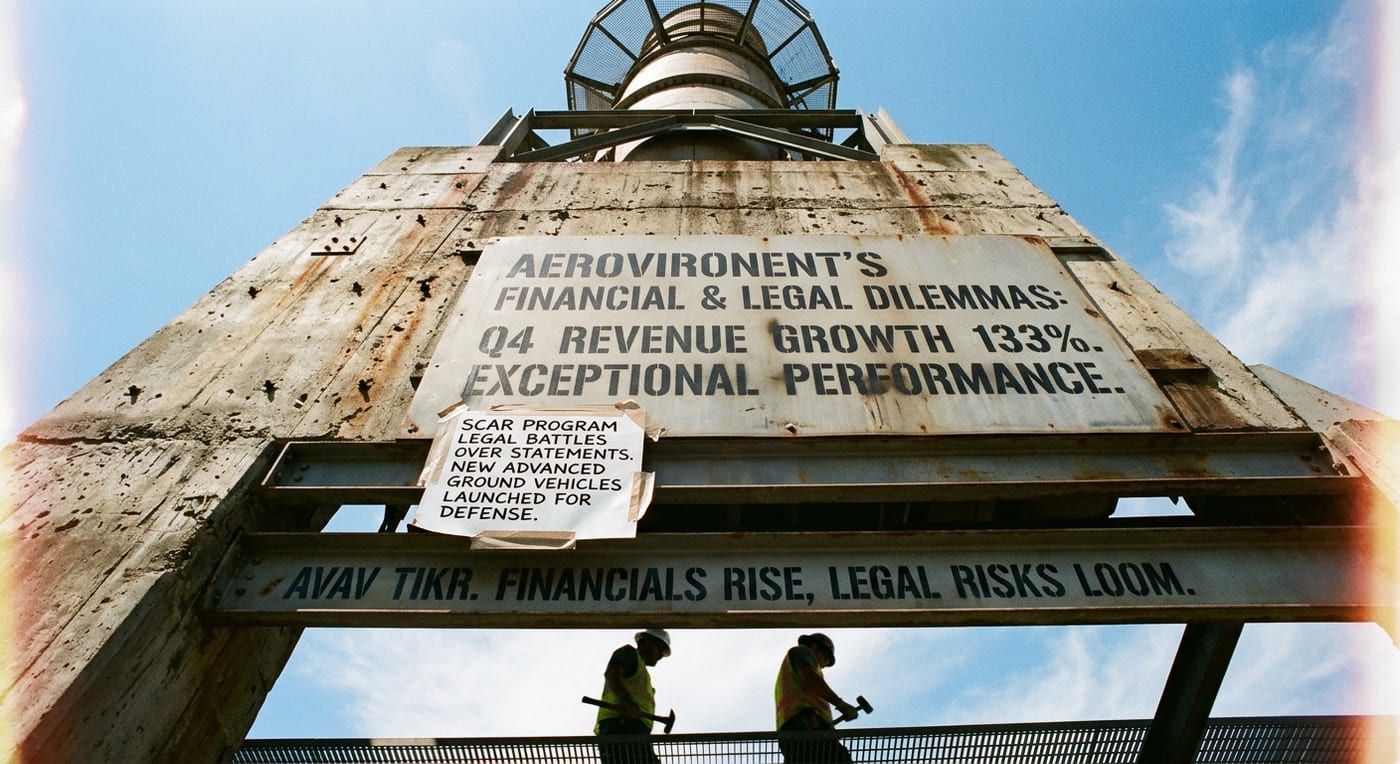
- Exceptional Q4 revenue growth of 133%.
- Engaging in legal battles over SCAR program statements.
- Launching advanced ground vehicles to meet defense demands.
AeroVironment, Inc. (AVAV) has been maneuvering in a rapidly evolving landscape where defense demand meets legal scrutiny. The company has garnered attention for its impressive financial growth, paired with troubling allegations stemming from its work on the U.S. Space Force's Satellite Communication Augmentation Resource program. This juxtaposition raises questions about AeroVironment’s future viability amidst increasing competition and ongoing legal battles.
Remarkable Financial Performance
In its latest financial report, AeroVironment showcased astounding growth with revenues hitting $641.6 million for Q4 2023, reflecting a 133% year-over-year increase. This surge is primarily attributed to heightened military demand for advanced drone systems, a trend reinforced by escalating geopolitical tensions globally. These budget increases across various nations have positioned AeroVironment favorably in a market hungry for innovation, particularly in unmanned aerial vehicles (UAVs).
Highlighting this growth trajectory, AeroVironment's strategic partnerships have paved the way for securing essential contracts. In particular, their acquisition of BlueHalo, which had previously been awarded a contract to support the U.S. Space Force's SCAR program, signaled a strategic move to bolster its technological capabilities and market presence. This alignment with key defense initiatives positions AeroVironment as a formidable player in the defense industry.
Challenges and Legal Scrutiny
Despite these robust financial indicators, AeroVironment faces significant challenges, notably a class-action lawsuit alleging deceptive practices concerning the SCAR program. This legal action revolves around claims that the company failed to disclose material information regarding potential competition and financial prospects linked to its satellite communication services. According to the complaint, statements made during a critical period misled investors about the company's trajectory. Specifically, claims of consistent revenue growth from the SCAR contract have come under scrutiny following an announcement of a stop-work order issued by the U.S. government regarding AeroVironment's agreement to deliver certain systems, leading to share price declines.
The implications of these legal issues cannot be understated. They not only threaten to tarnish the company’s reputation but also open the door for financial liabilities, especially in the wake of slumping stock prices on news of legal setbacks. AeroVironment's stock dropped substantially following public disclosures about competition and operational challenges within the SCAR program, triggering investor concerns over the company's long-term viability.
Navigating New Terrain in Robotics
In response to the evolving defense landscape, AeroVironment has not stood still. The introduction of the TOM 50 RE, an advanced unmanned ground vehicle, highlights its commitment to innovation. This launch signals AeroVironment's strategic pivot, layering their UAV technological prowess with enhanced ground robotics capabilities.
The TOM 50 RE is designed for diverse missions, catering to defense, security, and even public safety applications. Its lightweight, portable design enables tactical versatility, thereby enhancing AeroVironment's operational offerings. Such innovations are critical as military clients increasingly demand integrated solutions across air and ground platforms, reflecting a broader trend toward multirole unmanned systems in contemporary conflict scenarios.
Future Outlook and Strategic Resilience
As AeroVironment continues navigating these waters, its focus on strategic resilience appears vital. Although challenged by legal turbulence, its strong financial performance and innovation commitment could bolster long-term growth. The duality of an expanding market opportunity juxtaposed with legal challenges underscores an essential conversation about risk management and corporate governance at AeroVironment.
Investor sentiment will likely hinge on how effectively the company addresses these legal challenges while continuing to capitalize on market demand for UAV solutions. The impending outcomes from the class action lawsuit will undoubtedly influence perceptions of AeroVironment's operational integrity and leadership credibility, as stakeholders remain watchful for signs of recovery and strategic pivoting.
In summary, AeroVironment must balance its remarkable growth with effective management of legal realities that threaten its current momentum. The coming months will be crucial as the company looks to consolidate its position within the defense industry while steering through the complexities of legal scrutiny. The same pressure is reflected in recent reporting on the issue, which helps explain why the company's pricing decisions remain under scrutiny.