
AeroVironment's Legal and Financial Crossroads
ED
Editorial
Cashu Markets·5 min read
TL;DR
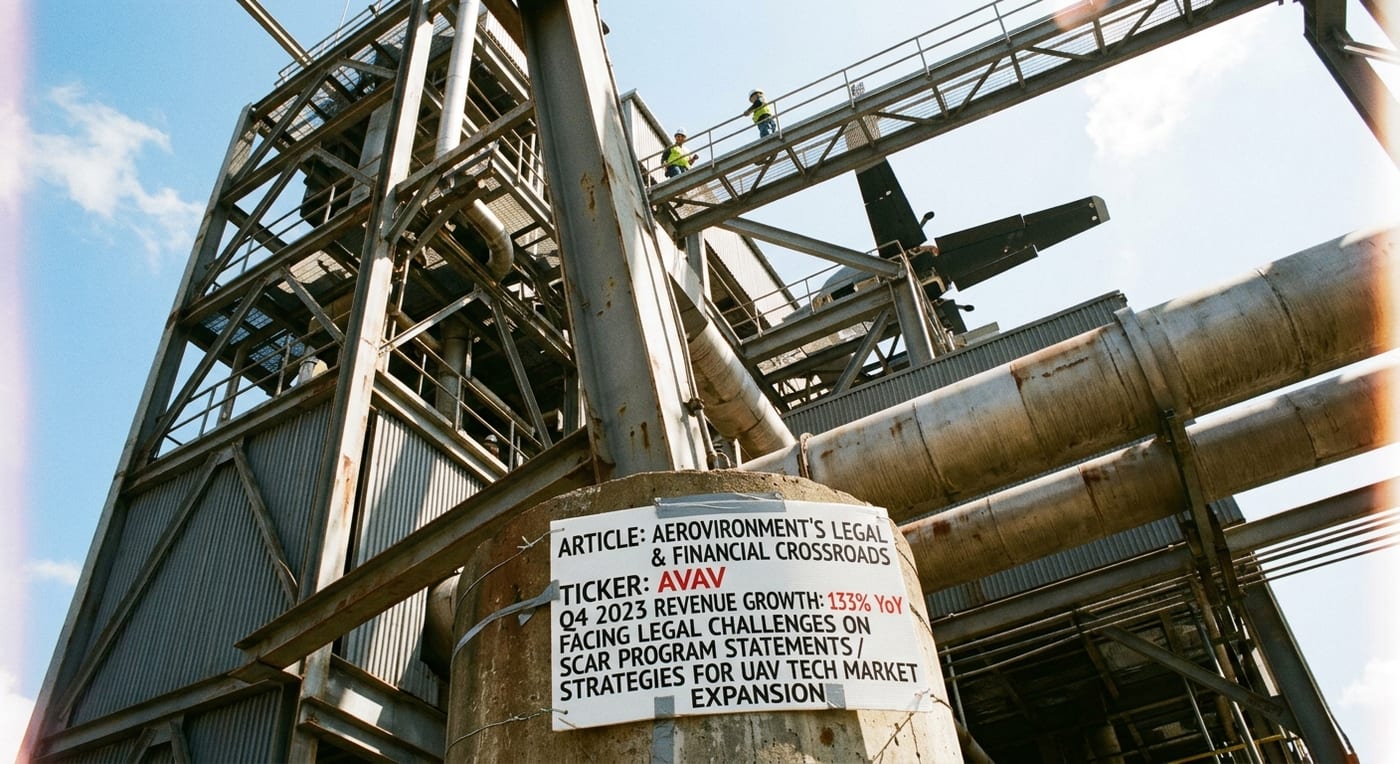
- Significant revenue growth of 133% YoY in Q4 2023.
- Facing legal challenges over SCAR program statements.
- Innovative strategies to expand UAV technology market.
AeroVironment, Inc. (AVAV) is drawing attention as the latest developments come into focus. AeroVironment, Inc. (AVAV) is currently navigating a complex landscape defined by exceptional financial growth amid considerable legal challenges. The company’s recent performance metrics have garnered attention, revealing a growth story that is both impressive and troubled. Despite reporting extraordinary revenue growth driven primarily by military demand for advanced drone systems, AeroVironment faces significant securities lawsuits stemming from allegations of misleading statements regarding its contracts, particularly in connection to its work with the U.S. Space Force's Satellite Communication Augmentation Resource (SCAR) program.
In its most recent financial quarter, AeroVironment posted revenues of $641.6 million, marking a staggering 133% increase year-over-year. This remarkable growth can largely be attributed to heightened military demand, reflecting a broader trend in defense spending amid escalating geopolitical tensions worldwide. As military budgets surge, companies like AeroVironment are uniquely positioned to capture the burgeoning market for unmanned aerial vehicles (UAVs).
However, this growth narrative is clouded by legal scrutiny. Investors are increasingly concerned about whether management adequately disclosed the risks associated with the contracts it holds, particularly in light of AeroVironment's acquisition of BlueHalo, LLC—a defense technology firm that had secured a significant contract for the SCAR program. Allegations indicate that AeroVironment’s executives inflated the growth potential of these contracts while downplaying the competition from other vendors, contributing to a misrepresentation of the company’s financial health.
Market Conditions Favoring UAVs
The demand for UAVs has skyrocketed, propelled by a global shift towards unmanned operations in defense, surveillance, and even commercial sectors. AeroVironment has become a recognized leader in this space, with its advanced drone systems gaining favor in military applications. The geopolitical landscape has spurred many nations to enhance their defense capabilities, funneling resources to firms that demonstrate technological superiority.
Given the nature of its contracts, AeroVironment's revenue trajectory appears promising, as sustained military expenditure is anticipated. As detailed in AeroVironment: Navigating Growth Amid Legal Challenges, the company’s innovative technology placements and agreements with various defense agencies bolster its growth outlook significantly. However, the question remains whether this growth can be sustained amid ongoing legal challenges—specifically, the allegations of misleading investors regarding contract viability.
Legal Turbulence Around SCAR Contracts
The current wave of legal challenges confronting AeroVironment stems from its contract with the SCAR program. Reports surfaced that the U.S. government issued a stop work order on January 20, 2026, regarding the company’s agreement to deliver BADGER systems, which are integral to the SCAR program. This news triggered a rapid sell-off of AeroVironment's stock, resulting in a substantial drop in its market valuation.
The initial reaction was a decline of 15.77% in stock price. Subsequently, on March 2, 2026, further revelations indicated that the U.S. Space Force was exploring other suppliers for the SCAR program, causing stocks to tumble another 17.42%. Investors were alarmed by the implications of these moves, prompting legal action aimed at recovering losses linked to these developments.
A series of lawsuits have been filed against AeroVironment under allegations of securities fraud, claiming that the management failed to disclose critical competition risks that could adversely impact the SCAR contract’s viability. A notable article outlines these legal aspects directly affecting the company’s stock performance and investor trust.
Strategic Innovations Amid Legal Scrutiny
Despite these hurdles, AeroVironment continues to focus on innovation. The company is developing new robotic systems tailored to augment its existing UAV portfolio. This emphasis on diversification and technological advancement is critical in mitigating the risks posed by dependency on specific contracts.
New product launches signal AeroVironment's commitment to maintaining its competitive edge within the defense sector. The firm’s strategic vision integrates an understanding of evolving market demands with a robust innovation framework—an approach that has proven successful in its recent quarterly results.
Nevertheless, with pending lawsuits that could potentially reshape the company’s financial landscape, investors remain cautious. The allegations not only threaten the company’s capital outlook but also its reputation in a competitive working environment where trust is paramount. The ongoing legal challenges serve as a stark reminder of the fragility of corporate governance and the importance of transparency with investors.
Conclusion
AeroVironment’s journey is emblematic of a larger commentary on the technological sector grappling with the dual pressures of demand and regulatory oversight. While the company's impressive revenue figures paint a picture of strong market demand for UAVs, the shadows of legal challenges loom large, potentially impacting investor sentiment moving forward.
With a looming class-action lawsuit and a focus on innovation, AeroVironment stands at a complex crossroads where its strategic decisions in the imminent future could dictate the trajectory of its business. How the company will navigate the intertwined pathways of opportunity and legal scrutiny remains to be seen, and stakeholders will need to monitor these developments closely. The same pressure is reflected in recent reporting on the issue, which helps explain why the company's pricing decisions remain under scrutiny.