
Air France-KLM: Navigating Turbulent Times
ED
Editorial
Cashu Markets·4 min read
TL;DR
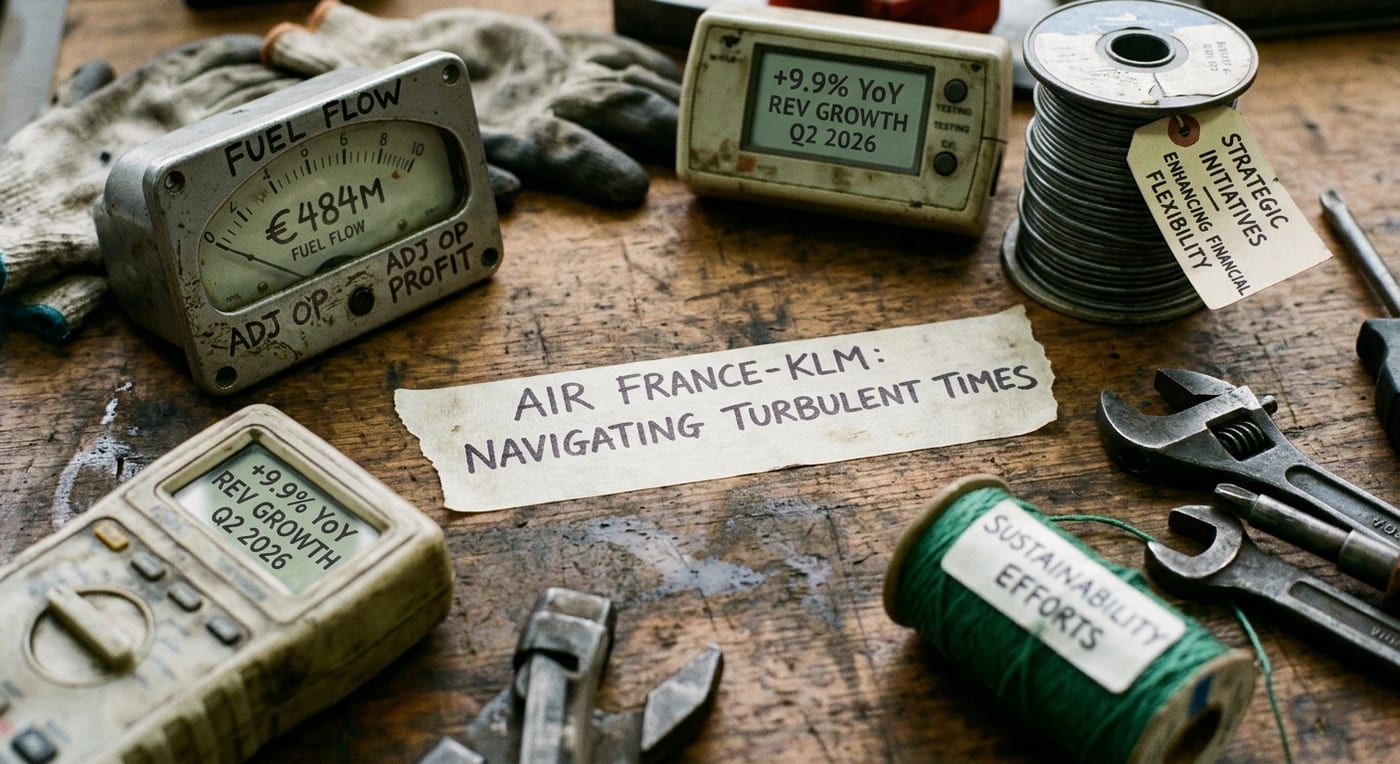
- Strong revenue growth of 9.9% year-on-year in Q2 2026.
- Adjusted operating profit of €484 million despite rising fuel costs.
- Strategic initiatives enhancing financial flexibility and sustainability efforts.
Air France-KLM S.A. ( AFLYY) continues to navigate a challenging aviation landscape shaped by high fuel prices and shifting consumer demand. The second quarter of 2026 showcased the airline's resilience and strategic adaptability despite facing significant geopolitical pressures affecting operational costs. As global airline traffic recovers post-COVID, Air France-KLM has leveraged its premium services, enhanced revenue streams, and continued operational efficiencies to maintain a solid financial footing.
Financial Highlights of Q2 2026
In the most recent financial disclosures, Air France-KLM reported a substantial growth in revenues and passenger traffic during the second quarter of 2026. The airline generated revenues of €9.3 billion, marking a 9.9% year-on-year increase. Despite a challenging environment marked by increasing fuel costs, the airline managed to achieve an adjusted operating profit of €484 million and an operating margin of 5.2%. This performance highlights the effectiveness of Air France-KLM’s agile pricing strategies and ongoing focus on premium offerings.
The geopolitical climate, particularly tensions in the Middle East, pressured fuel prices significantly, illustrating how external factors continue to impact operational metrics. Nevertheless, with a fuel recapture rate of approximately 85%, the airline demonstrated its ability to cushion the impact of these costs. Chief Executive Officer Benjamin Smith remarked on the results, noting that the company navigates a highly volatile environment and reaffirms its commitment to long-term strategic goals centered around consolidation and sustainability.
Growth Strategies in Focus
Air France-KLM's approach to premiumization—enhancing customer experiences in first-class and business-class segments—has contributed significantly to revenue growth. The passenger network unit revenue per Available Seat Kilometer (ASK) rose by 8.7% year-on-year, driven by robust demand from Asian and North American markets. This revenue strategy has been particularly beneficial as competition in the aviation space remains fierce.
In addition to premium travel, the airline also reported strong performance in its cargo sector. The cargo business, benefiting from higher unit revenues, experienced a remarkable 26.7% increase at constant currency when compared to the previous year. This segment’s growth illustrates Air France-KLM's ability to tap into diverse revenue streams, further enhancing its financial stability amidst rising operational costs.
Capacity and Operational Metrics
Throughout the second quarter, Air France-KLM welcomed 28.3 million passengers, reflecting a year-on-year growth of 3.9%. The airline increased capacity by 2.6%, accompanied by a 2.5% increase in traffic. The airline's overall load factor sat at a robust 87.7%, indicating effective utilization of available capacity. As global demand rebounds, these metrics underscore Air France-KLM's effective management of its fleet and routes.
Notably, operational discipline has limited unit cost growth to just 1.0%, showcasing the airline's commitment to maintaining cost efficiency while enhancing service offerings. The increase in costs is largely attributed to supply chain-related maintenance and premiumization efforts, but efficiency measures enabled the company to partially offset these impacts.
Financial Flexibility and Future Outlook
Air France-KLM has strengthened its financial position through strategic initiatives, including signing a €1 billion credit facility, which provides additional liquidity and enhances financial flexibility. Additionally, the issuance of a €500 million senior bond with a 4.25% fixed annual coupon reflects investor confidence in the airline's long-term strategy and operational stability.
The company’s long-term outlook remains optimistic, with a projected capacity increase of 2% to 3% in 2026, supporting its commitment to growing passenger and cargo operations. Additionally, cost per unit guidance has remained stable, reflecting the firm's focus on balancing growth with financial prudence. The airline plans to continue investing in its fleet renewal, as 38% of its aircraft now consists of newer generation models, which bolster operational efficiency and reduce environmental impact.
For further information about Air France-KLM's financial performance, stakeholders can review the full Q2 results available here. The resilience of Air France-KLM’s business model is evident, proving to be essential as the aviation industry continues to recover in uncertain conditions.
Conclusion: Building a Stronger Future
In conclusion, Air France-KLM S.A. is well-positioned to navigate the complexities of the current aviation market. With its emphasis on premium travel and a strategic vision committed to resilience and sustainability, the airline aims to solidify its presence as a leading global carrier. As global travel demand continues to grow, Air France-KLM’s proactive management strategies and adaptable business model will be critical in fostering long-term success in the evolving landscape of the airline industry. The same pressure is reflected in recent reporting on the issue, which helps explain why the company's pricing decisions remain under scrutiny.