
Air France-KLM's Strategic Resilience
ED
Editorial
Cashu Markets·4 min read
TL;DR
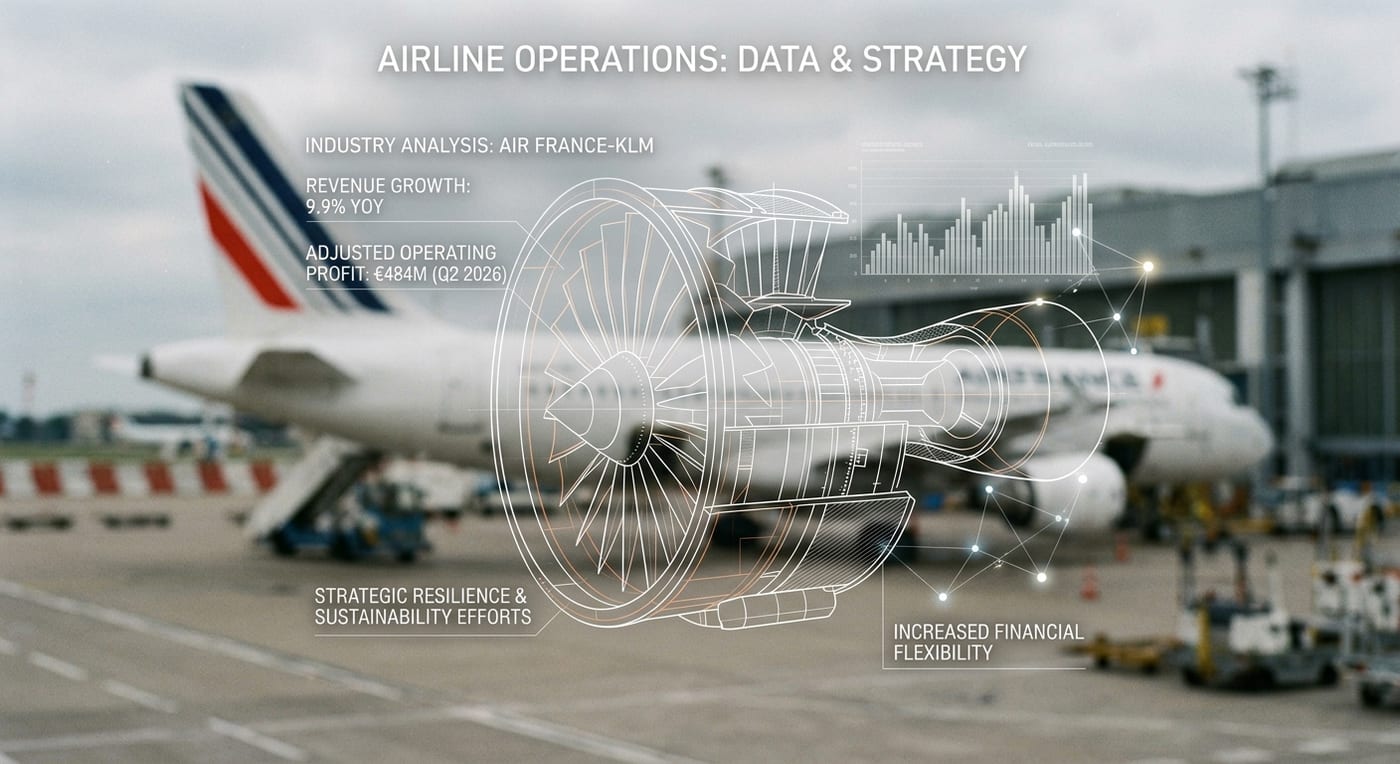
- Strong revenue growth of 9.9% year-on-year in Q2 2026.
- Adjusted operating profit of €484 million despite rising fuel costs.
- Strategic initiatives enhancing financial flexibility and sustainability efforts.
Air France-KLM S.A. ( AFLYY) continues to navigate a challenging landscape in the aviation sector marked by fluctuating fuel prices and evolving consumer demands. The airline has shown remarkable adaptability through strategic initiatives aimed at enhancing its market position while maintaining strong financial performance. In the second quarter of 2026, Air France-KLM reported significant growth in revenue, achieving €9.3 billion, a robust increase of 9.9% year-on-year. Despite the volatile market conditions, particularly high fuel costs driven by geopolitical tensions, the company secured an adjusted operating profit of €484 million with a margin of 5.2%. This performance not only underscores the resilience of Air France-KLM's business model but also illustrates its ability to implement effective pricing strategies and enhance premium services.
Financial Performance Overview
Air France-KLM's second-quarter results reflect a commendable growth trajectory despite significant challenges. The airline successfully attracted 28.3 million passengers, up 3.9% from the previous year, highlighting its ability to leverage premium offerings against a backdrop of constrained industry capacity due to geopolitical strife. The adjusted operating profit of €484 million, although down from €735 million the previous year, indicates the company's proficiency in cost management amidst rising fuel expenses, which had an estimated impact of €804 million. The airline’s capacity grew by 2.6%, while unit revenue experienced an 8.7% increase on a constant currency basis, driven largely by a shift towards premium services. This strategy has not only improved revenues but has also fortified the company's competitive edge in premium travel segments across markets like Asia and North America. As mentioned in previous insights, Air France-KLM continues to embrace a flexible operational framework to navigate these turbulent times effectively.
Strategic Pricing and Premiumization
In light of rising fuel costs, Air France-KLM has adeptly implemented its agile pricing strategy to recapture lost revenues, achieving approximately 85% of the fuel costs through strategic fare adjustments. The geopolitical situation has led to heightened fuel prices, yet the company's strong revenue generation capabilities have helped mitigate these effects significantly. This balancing act between pricing and operational efficiency showcases Air France-KLM's robust business model that aligns closely with evolving market demands. Through premiumization, the company has successfully attracted higher-paying passengers, particularly in lucrative international markets. This shift towards offering enhanced services has been pivotal for sustaining profitability and may play a crucial role in shaping the future trajectory of Air France-KLM within the competitive airline sector.
Competitive Landscape and Market Position
The airline industry is fiercely competitive, and Air France-KLM's focus on premium services has allowed it to differentiate itself from competitors. As global airline traffic continues to rebound post-COVID, the company is well-positioned to leverage this upward momentum. Companies that fail to innovate or react swiftly to changing consumer preferences risk falling behind. Air France-KLM understands this reality and is doubling down on its commitment to premium offerings, which have seen robust performance, especially in the Asian and North American markets. This strategic decision not only aligns with market trends but also promises to produce long-term benefits in terms of customer loyalty and revenue growth.
Future Outlook and Strategic Initiatives
Looking ahead, Air France-KLM remains cautious but optimistic about the challenges and opportunities that lie ahead. The airline has revised its capacity outlook for 2026, projecting an increase of 2% to 3% compared to 2025, while maintaining its focus on cost management. The leverage ratio is expected to remain stable between 1.5x and 2.0x, reflecting sound financial health despite increased operating costs. Underpinning these strategic initiatives is a strong focus on sustainability. Benjamin Smith, the Group CEO, has reaffirmed the commitment to operational excellence and sustainability as core focuses that will drive future initiatives. The company's decision to prioritize a fleet renewal strategy, aiming for 38% new-generation aircraft, underlines its dedication to improving operational efficiency and minimizing carbon footprints. Long-term investments in sustainable practices not only resonate with environmentally conscious consumers but also position Air France-KLM as a leader in responsible air travel.
Conclusion
Air France-KLM’s recent performance highlights both resilience and strategic foresight in navigating a complex and rapidly changing aviation environment. While challenges such as rising fuel prices and geopolitical instability persist, the company’s proactive strategies in premium services and cost management have allowed it to maintain a solid financial foundation. With a clear vision for sustainability and an unwavering focus on adaptability, Air France-KLM is poised to strengthen its position as a key player in the global aviation market. As the company continues to execute its strategic priorities, it underscores a promising future ahead for investors and stakeholders alike, proving that the airline’s commitment to quality and efficiency will ultimately yield significant returns. The same pressure is reflected in recent reporting on the issue, which helps explain why the company's pricing decisions remain under scrutiny.