
Amazon Launches Less-Than-Truckload Freight Service to Disrupt $80 Billion Logistics Market
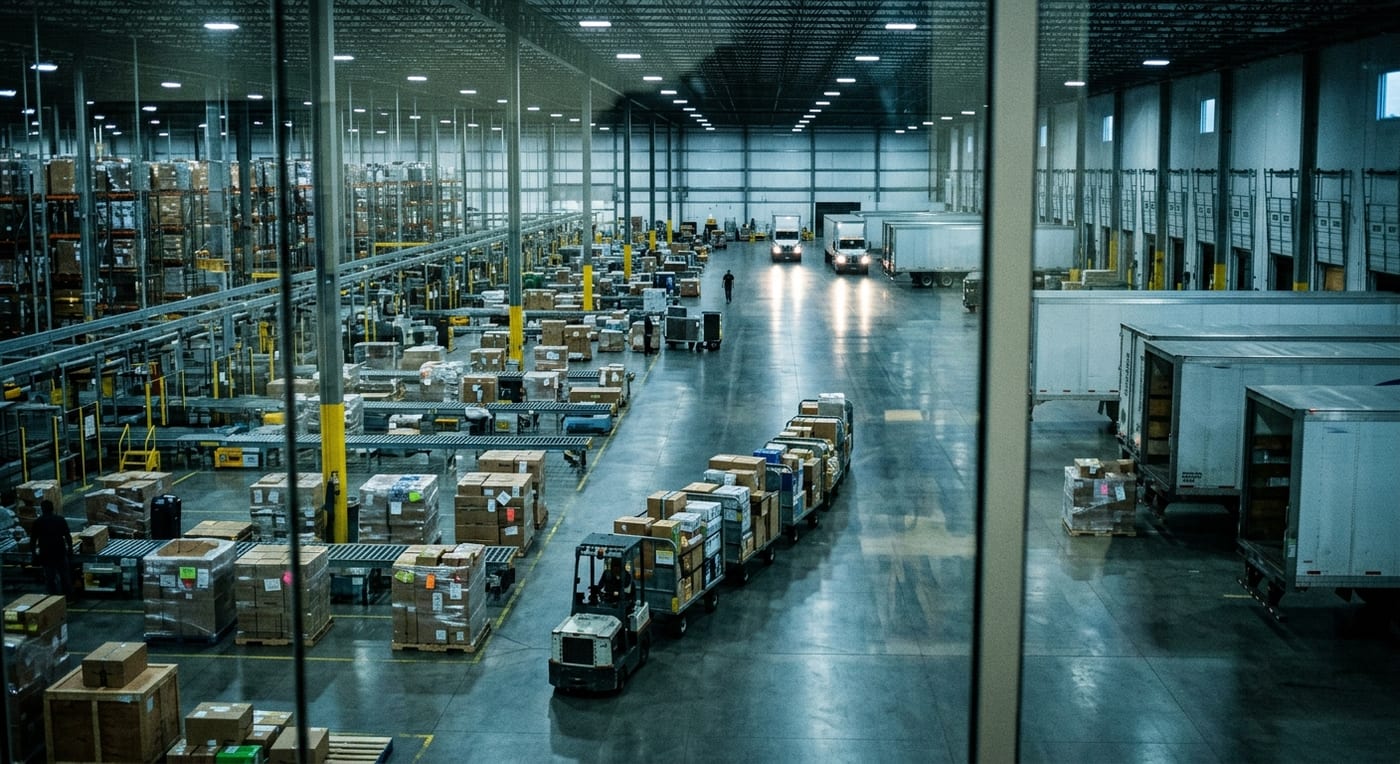
- Amazon.com launched a less-than-truckload (LTL) freight service for businesses in the United States.
- The service allows third-party warehouses and retailers to use Amazon's logistics network.
- Amazon aims to disrupt the $80 billion LTL transport market and challenge established freight companies.
Amazon.com (AMZN) has made a strategic move in the logistics sector by officially launching its less-than-truckload (LTL) freight service for businesses across the United States. This comprehensive offering allows third-party warehouses and retailers to utilize Amazon's extensive logistics network, effectively creating a one-stop solution for freight services. By entering the approximately $80 billion LTL transport market, Amazon seeks to disrupt existing freight dynamics, posing a significant challenge to long-standing industry players.
Transforming Freight Solutions
The new LTL service enables companies to share trailer space, thereby optimizing shipping efficiency while reducing costs. This initiative reflects Amazon's commitment to enhancing shipping technology and improving the reliability of logistics services for its partners. With advanced features like electronic proof of delivery and automated scheduling, Amazon positions itself as a forward-thinking leader in logistics, catering to the growing demand for streamlined shipping solutions.
Impact on Industry Dynamics
Following the announcement, established freight carriers have experienced notable selloffs, with concerns emerging about the competitive implications of Amazon's expanded logistics capabilities. Analysts suggest that Amazon’s entry into the LTL market could lead to increased competition, potentially lowering prices for consumers seeking freight services. As Amazon continues to scale its logistics operations, the impact on traditional freight companies could reshape the landscape of the shipping industry.
Broader Implications for Amazon
This foray into the LTL space aligns with Amazon's broader strategy to bolster its logistics network, allowing it to further capitalize on its vast operational capabilities. As the demand for efficient freight solutions rises, Amazon aims to leverage its technological edge to maintain a competitive advantage. By continuously expanding its service offerings, Amazon is strategically positioned not just as a retail giant but as a formidable player in the logistics sector.
In conclusion, Amazon's launch of LTL freight services marks a pivotal moment in its logistics strategy, reflecting the company's ambition to disrupt traditional freight markets. With a focus on innovation and efficiency, Amazon seeks to address the evolving needs of businesses while enhancing its position in the dynamic transportation landscape.
Related Cashu News

RH's Q1 2027 Shows Mixed Results but Signals Potential for Recovery and Growth
RH experiences a challenging first quarter in 2027, but significant growth metrics hint at recovery. The company's reported revenue stands at $800.3 million, a minor drop from the $814 million recorde…

Lands' End Boosts Value Score Amid Inflation Concerns Despite Year-to-Date Stock Decline
Inflation concerns are reshaping consumer behavior in the United States, and apparel brand Lands' End Inc. (Ticker: LE) is navigating this landscape with a notable boost in its value scoring. The bran…

Lithia Motors Achieves No. 123 Ranking on Fortune 500, Demonstrates Resilience in Automotive Retail
Lithia Motors (Ticker: LAD) continues to make headlines as it secures a notable ranking in the automotive retail landscape. The company climbs to No. 123 on the Fortune 500 list for 2026, marking a si…

DICK'S Sporting Goods Partners with Lids for Enhanced In-Store Retail Experience
DICK'S Sporting Goods (Ticker: DKS) announces a significant partnership with Lids to enhance its retail offerings. A Strategic Partnership with Lids This collaboration aims to establish dedicated Lids…