
Amazon's AI Strategy Fuels Transformation
ED
Editorial
Cashu Markets·4 min read
TL;DR
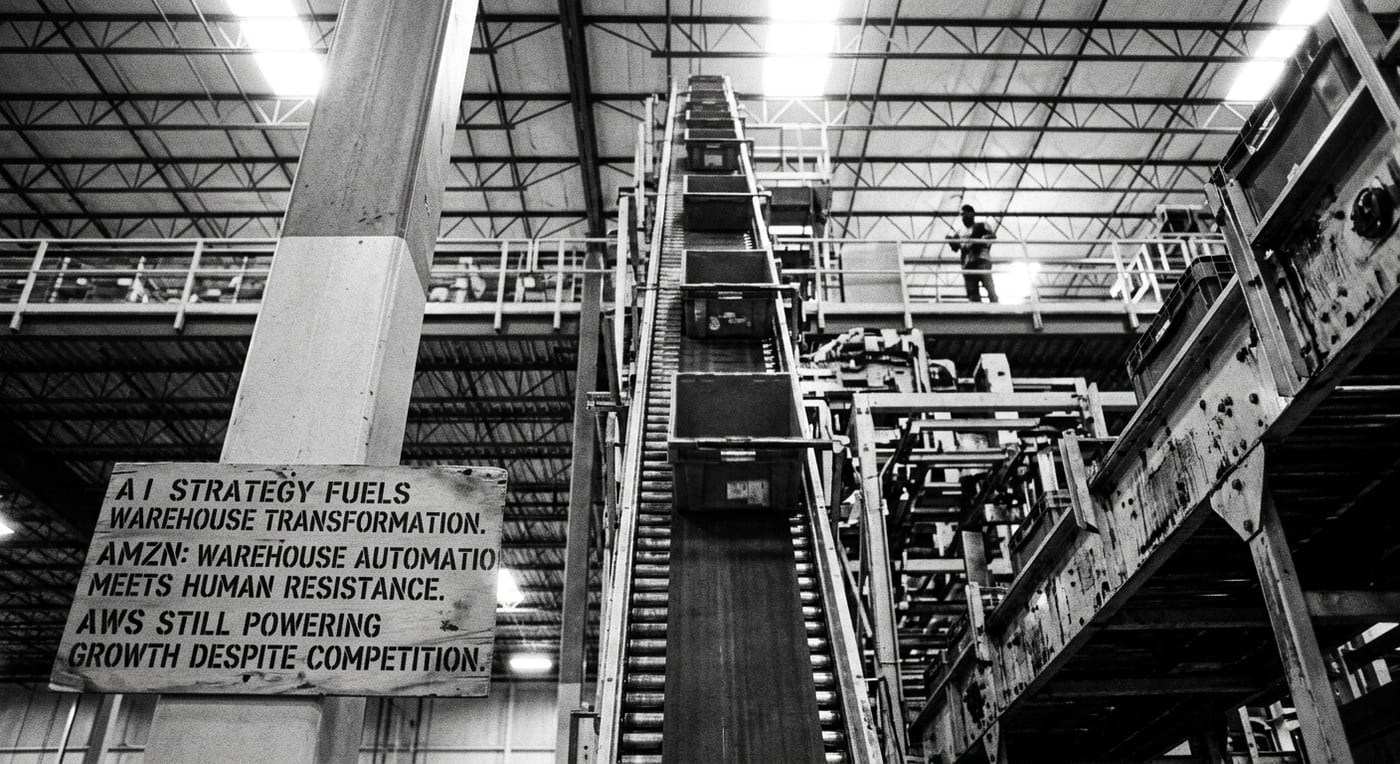
- Amazon's heavy investments in AI are reshaping its business model.
- Warehouse automation faces human resistance amidst technological advancements.
- AWS continues to generate strong revenue growth, despite rising competition.
In recent years, Amazon has set its sights on becoming not just a leader in e-commerce but also a dominant force in cloud computing and AI. The company's ambitious plans to invest heavily in AI have not only underscored its significance in improving operational efficiencies but also its potential to reshape consumer interactions with technology.
AI-Driven Growth: The Core of Amazon's Strategy
Central to Amazon's vision is its cloud computing arm, Amazon Web Services (AWS), which has consistently outperformed other segments in terms of revenue growth. AWS reported an impressive 28% year-over-year revenue growth, resulting in $37.6 billion during the first quarter of 2026, demonstrating the increasing reliance on cloud services in today's digital economy. This growth is closely tied to Amazon's significant investment of $25 billion intended for developing its data centers and harnessing its AI capabilities. As highlighted in previous analyses, these investments put Amazon in a position to leverage AI not just for its profitability but also to enhance user experiences and operational agility. That backdrop echoes earlier coverage of the issue, especially around how pricing, strategy, and demand feed into the current story.
Challenges in Warehouse Automation
However, the journey toward full automation has not been without hurdles. Reports reveal a growing friction between Amazon's AI-driven labor management systems and human oversight in warehouses. Some managers have expressed concerns that the automated staffing recommendations from systems like DOPLERS are not adequately reflecting the on-ground realities of operations. Internal communications reveal managers overriding the software to maintain what they believe is necessary staffing, reflecting a broader challenge of trust in technology over human judgment. The conflict indicates that while algorithms can inform decision-making, human adherence remains crucial for operational success.
Competition and Market Dynamics
As Amazon navigates these complexities, it faces increasing competition from emerging players like Meta Platforms, which is reportedly seeking to enter the cloud service market. This shift in the competitive landscape could pose new challenges for AWS, although Amazon's established position and comprehensive service offerings should provide it with the resilience needed to withstand competitive pressures. As noted in previous discussions, AWS's expansion is not solely reliant on AI services but encompasses a broader array of cloud solutions that cater to diverse business needs.
Furthermore, industry analysts predict significant growth in AI infrastructure spending, potentially exceeding $1 trillion by 2029. This burgeoning market presents both opportunities and challenges for Amazon, as competition will intensify across various segments of AI and cloud services. The necessity for Amazon to maintain its edge in cloud computing while also investing strategically in its AI capabilities will be vital for future growth.
Strategic Investments in AI and Operational Efficiency
Beyond warehouse automation, Amazon's commitment to AI is transforming its entire operational framework, from logistics to customer service. The integration of sophisticated AI models into its product offerings aims to enhance customer experience, ensuring that Amazon retains its competitive advantage in the e-commerce sector. The introduction of the new AI-powered version of Alexa, known as Alexa+, serves as an example of this strategic innovation, enabling more intuitive user interactions and services.
Moreover, these innovations in AI are not just limited to Amazon's customer-facing applications; they also extend internally, aiming to optimize supply chain management and reduce costs throughout the organization. With Amazon's commitment to continuous iteration and testing of its AI systems, stakeholders can expect ongoing enhancements that align with the company's long-term growth strategy.
Future Outlook
As Amazon embraces AI as a pivotal aspect of its business strategy, it is also navigating the need to balance technological advancements with the human elements of its workforce. Successful integration of these strategies will be critical as Amazon seeks to maintain its dominance in a rapidly evolving landscape rife with competition. Investors and market analysts will be closely monitoring the effectiveness of Amazon's AI initiatives, its ability to resolve internal resistance to automation, and its ongoing response to competitive pressures from rivals like Meta.
In conclusion, Amazon's trajectory is characterized by a blend of innovation and challenge, particularly as it transitions towards an AI-centric business model. The company's actions today will undoubtedly set the stage for its future success in both e-commerce and cloud computing, defining its role within an increasingly competitive marketplace. The same pressure is reflected in recent reporting on the issue, which helps explain why the company's pricing decisions remain under scrutiny.