
AMD's Ascension in the AI Semiconductor Market
ED
Editorial
Cashu Markets·5 min read
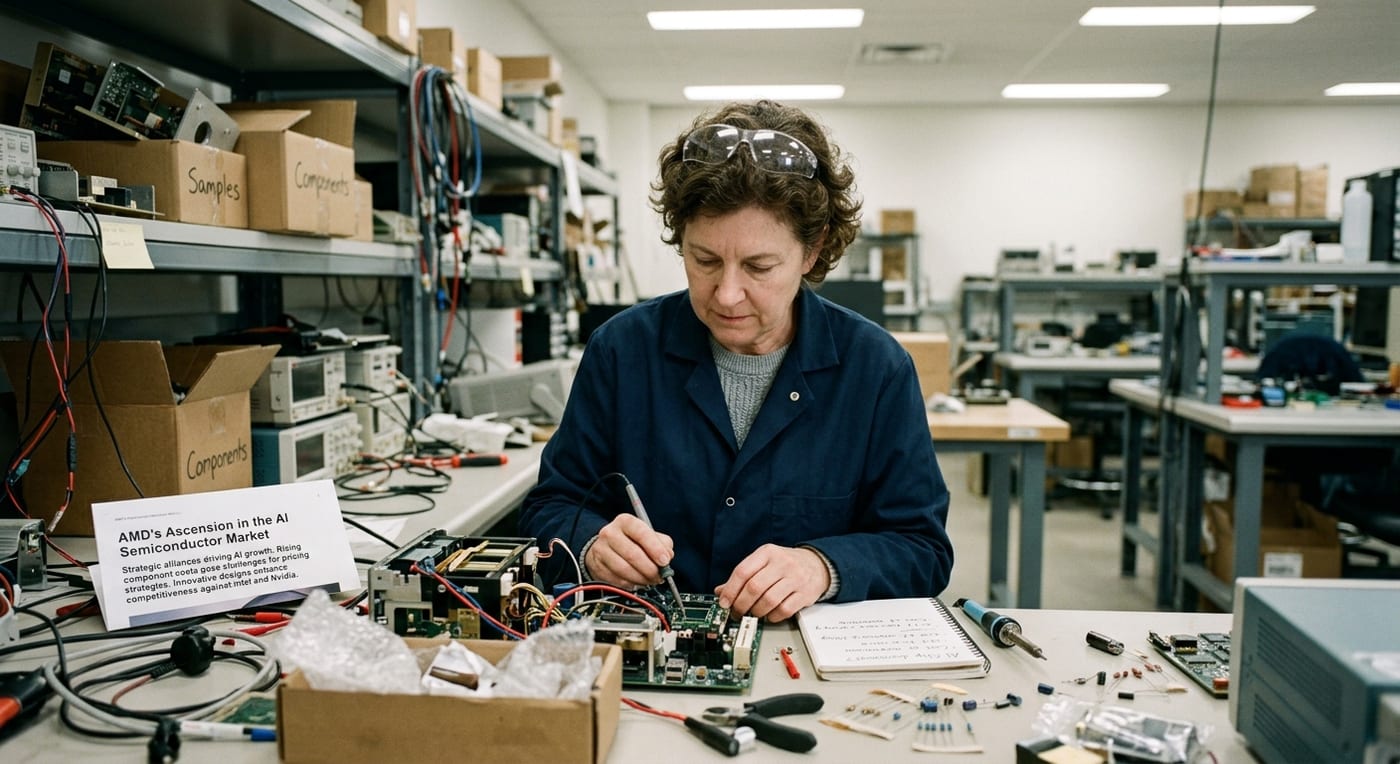
TL;DR
- AMD strengthens its AI position through strategic alliances.
- Rising component costs pose challenges for pricing strategies.
- AMD's innovative designs enhance competitiveness against Intel and Nvidia.
Advanced Micro Devices, Inc. (AMD) is drawing attention as the latest developments come into focus. Advanced Micro Devices, Inc. (AMD) is firmly establishing its position within the rapidly evolving landscape of artificial intelligence (AI) and semiconductor technology. As the demand for advanced computing capabilities surges, AMD's strategic maneuvers, robust partnerships, and innovative product introductions are significant components driving the company's growth trajectory. Amidst competitive pressures from industry giants like Nvidia and Intel, AMD is not merely adapting but thriving, positioning itself to capture a larger share of the lucrative AI market.
Riding the AI Wave
AMD's commitment to excelling in the AI space is evident through its recent partnership with Rackspace Technology. This multi-year agreement allows AMD to deploy its cutting-edge solutions across data centers worldwide, further bolstering its capabilities in AI-powered computing. The synergy between AMD's high-performance processors and Rackspace's data center expertise is a potent combination that aligns with growing demands for enhanced AI functionalities. This strategic collaboration showcases AMD's proactive approach in addressing the burgeoning AI market sector, which is anticipated to become a $200 billion industry in the coming years.
As articulated in previous reports, AMD's innovative advancements and strategic partnerships are pivotal in not just keeping pace but potentially outpacing competitors in the AI ecosystem. As AMD works to enhance its AI capabilities through such collaborations, its stock performance reflects the increased investor confidence stemming from these initiatives.
Competitive Landscape
While AMD navigates these opportunities, it also faces significant challenges amid rising operational costs and fierce competition. The semiconductor market is notorious for rapid technological changes and pricing pressures, a domain where AMD has historically battled larger competitors like Intel. However, recent trends indicate that AMD is gaining ground, slowly but surely capturing market share from Intel, particularly within the data center CPU sector.
The company has introduced its Venice architecture, which can support up to 256 cores, making it an attractive option for AI applications reliant on expansive computing power. This advancement not only positions AMD competitively against Intel but also caters to the emerging needs of AI applications, which depend heavily on multi-core CPU designs to manage complex computations and operational tasks efficiently.
Furthermore, AMD’s strategic acquisition of memory optimization technology provider MEXT underscores its commitment to enhancing product offerings. This acquisition opens pathways for innovative chiplet designs that facilitate greater memory capacity, a crucial requirement in the burgeoning AI inference market. AMD's collaboration with key players like OpenAI and Meta Platforms exemplifies its increasing footprint in AI-driven demand segments, ensuring it remains relevant and competitive in this rapidly evolving sector.
Navigating Rising Costs
Despite these advances, AMD is confronted with the challenge of rising component costs, particularly for memory chips, driven by the heightened demand stemming from AI-focused data centers. As detailed in later analyses, adjusting pricing structures without alienating its customer base is a critical balancing act for AMD. The pressing need for price management becomes evident as industry rivals also grapple with inflationary pressures on semiconductor prices.
AMD is forced to rethink its approach not only with product pricing but also in managing supply chains effectively to meet the escalating demand without sacrificing quality or performance. Successful navigation through these cost challenges is not merely a short-term goal but a necessity for sustained leadership in the AI semiconductor space.
This scenario emphasizes the wider industry pressures facing AMD and aligns with narratives presented in earlier discussions, notably regarding AMD's strategic adaptations in response to supply chain challenges and mounting production costs. The recent challenges underscore the importance of strategic R&D investments that reinforce AMD's operational frameworks.
Future Outlook
Investor optimism surrounding AMD's future is heightened by the expectation of significant growth driven by AI demands. The company’s position as a frontrunner in advancing AI infrastructure is bolstered by the consistent improvements in stock performance and robust quarterly results. This optimism is further amplified by anticipations building around future innovations showcasing at industry events, like the forthcoming Advancing AI conference, which promises to outline AMD's next steps in leveraging AI advancements.
As the company solidifies its role in the AI domain, analysts are keenly observing AMD's market movements and strategies. The broader implications of AMD's strategic positioning within the AI semiconductor market reflect an increasingly adaptive company, ready to meet the evolving needs of its customers while fostering strong investor engagement.
AMD’s ongoing initiatives to enhance its product lineup, capitalize on AI insights, and foster collaborative partnerships are vital strategies ensuring its competitive edge persists. Harnessing innovation while effectively managing costs could prove instrumental for AMD as it strides forward in a landscape marked by rapid advancements and an insatiable demand for AI-enabled computing power.
Conclusion
In closing, AMD's evolution within the AI sector exemplifies a tightly woven narrative of innovation, resilience, and strategic foresight. By consistently enhancing its capabilities through partnerships and technology advancements, AMD is strategically poised to meet current demands while anticipating future market trends. As it navigates through challenges posed by rising costs and competition, AMD remains committed to maintaining its growth trajectory and capturing a significant share of the expansive AI market. The same pressure is reflected in recent reporting on the issue, which helps explain why the company's pricing decisions remain under scrutiny.