
Apple's Resilience Amid Rising Costs
ED
Editorial
Cashu Markets·5 min read
TL;DR
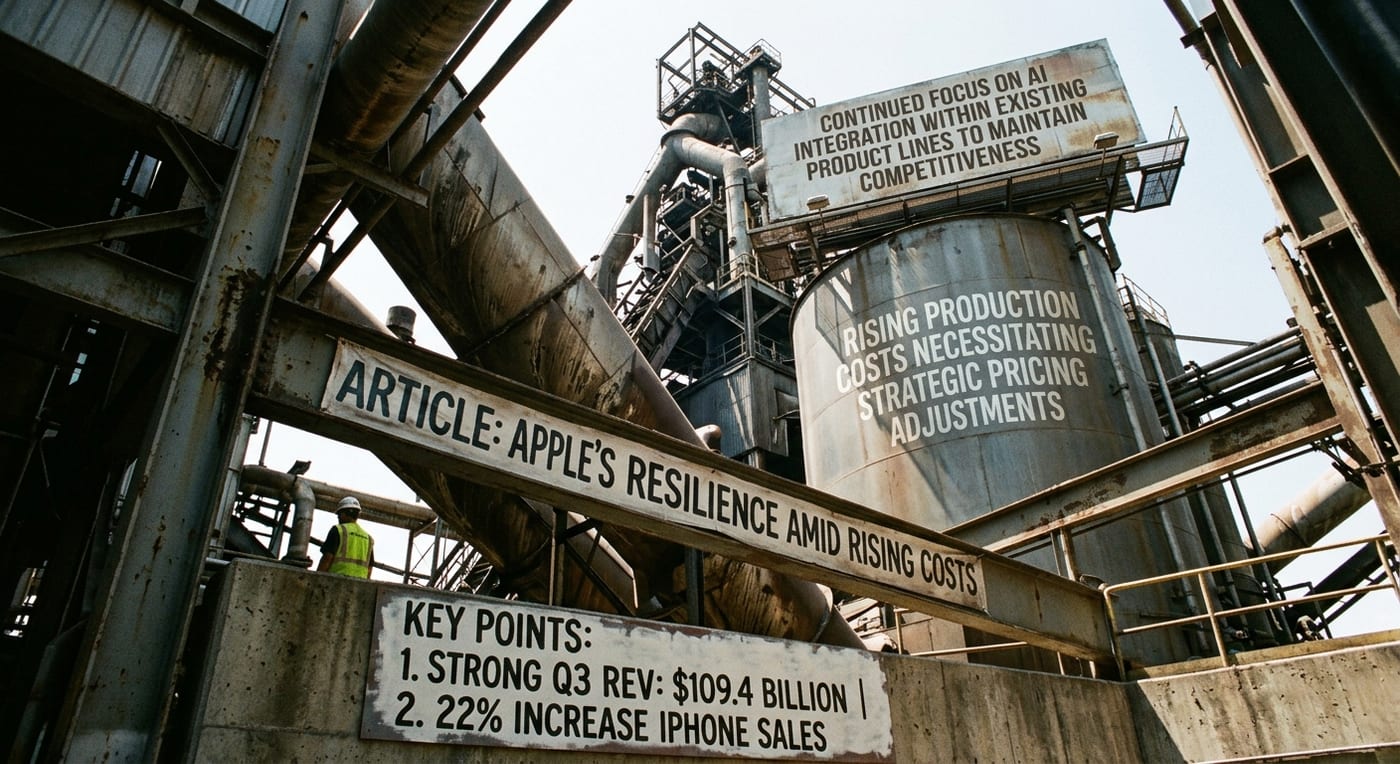
- Strong Q3 revenue of $109.4 billion and 22% increase in iPhone sales.
- Rising production costs necessitating strategic pricing adjustments.
- Continued focus on AI integration within existing product lines to maintain competitiveness.
Apple Inc. (AAPL) is drawing attention as the latest developments come into focus. Apple Inc. (AAPL) continues to showcase remarkable resilience and agility in the face of increasing production costs and competitive pressures. The latest quarterly earnings report highlights significant gains, driven primarily by a surge in iPhone sales. As the company navigates obstacles such as inflationary pressures and supply chain constraints, its strategic maneuvers reveal a keen focus on maintaining market leadership in an ever-evolving tech landscape.
Record Financial Performance
In its fiscal third quarter of 2026, Apple reported record revenue of $109.4 billion, marking a phenomenal 16% increase year-over-year. The results were driven largely by a 22% surge in iPhone sales, which alone contributed approximately $54.3 billion to the total revenue. This performance underscores the resilience and enduring popularity of the iPhone, strengthening Apple's position in the competitive smartphone market.
Despite these impressive figures, the company is not without challenges. Rising production costs stemming from various factors have necessitated strategic adjustments across its product lines. As Apple seeks to stabilize its supply chain while bolstering its manufacturing capabilities, the lessons learned during this quarter will be crucial for future operations. Such price adjustments have become a common theme in discussions surrounding tech giants, particularly as the industry grapples with inflation.
An insightful study compared Apple's consistent revenue model with that of rapidly growing companies within the tech space, noting that Apple's controlled, stable revenue contrasts sharply with the explosive, yet volatile, growth of competitors like CoreWeave. These insights reveal how Apple’s strategic emphasis on managing cyclical revenue patterns allows the company to maintain its competitive edge in a challenging market environment here.
Navigating Production Challenges
Rising production costs have become a pressing concern for Apple, as they have for many companies worldwide. Various components required for device manufacturing have seen spikes in prices, largely attributed to inflation and supply chain disruptions caused by geopolitical tensions and the aftereffects of the COVID-19 pandemic. These pressures are forcing Apple to reassess its pricing strategy, particularly given the heightened costs of raw materials and labor.
As noted in previous analyses, Apple is enhancing its domestic manufacturing capabilities as a strategic response to these challenges. This initiative aims to mitigate supply chain issues while ensuring that Apple can deliver quality products without significant delays. Such adaptability in production highlights Apple's commitment to maintaining profitability and customer satisfaction amidst fluctuating market conditions.
The iPhone's Dominance
The iPhone remains the cornerstone of Apple's revenue model, comprising over 50% of the company's total income. Recent reports indicate that demand for the latest iPhone models remains robust, with the iPhone 17 family experiencing particularly high sales volumes. This trend reflects Apple's strong brand loyalty among consumers, ensuring that even in a market impacted by rising costs, the demand for its flagship product remains stable.
CEO Tim Cook has previously emphasized that Apple’s unique approach to integrating artificial intelligence into its hardware ensures that it can provide an unparalleled user experience. This, combined with the broad ecosystem Apple has created, solidifies its market position against potential competition. referencedCashuNewsId.
Looking ahead, maintaining the iPhone's lead as a primary access point to digital services becomes crucial. The smartphone's enduring success is tied to Apple's ability to innovate and adapt, ensuring it meets consumer expectations while navigating the challenges presented by a rapidly changing technological landscape.
Strategic Future and AI Integration
Apple's approach to artificial intelligence (AI) differs from that of many of its tech contemporaries. Rather than engaging in significant capital expenditure to build extensive AI infrastructure, Apple is focusing on integrating its AI strategies within existing product lines. Known internally as Apple Intelligence, this strategic pivot aims to enhance user experience rather than overhaul its entire model.
Unlike many tech giants investing billions into new AI ventures, Apple's relatively modest investment in this area exemplifies a cautious, yet strategic, method of maintaining profitability and innovation. By prioritizing developmental costs that promote user satisfaction without diluting resources across too many fronts, Apple has positioned itself uniquely in the evolving tech sector. This strategy may not drive immediate revenue as dramatically as other companies might experience but reflects a long-term vision aimed at sustainable growth. source article.
Conclusion
As Apple navigates the complex interplay of rising production costs, market competition, and strategic innovation, the company's performance remains a reflection of its resilience and adaptability. While global macroeconomic conditions pose challenges, Apple's strong fiscal position and robust sales figures indicate that it continues to thrive under pressure. The sound execution of strategic initiatives, particularly within its flagship product line, positions Apple favorably for the future, ensuring that it remains a leading force in technology and consumer electronics. As the market looks ahead, investors and consumers alike will be watching closely how Apple continues to forge its path in the ever-evolving landscape of technology.