
Apple's Resilient Response to Production Challenges
ED
Editorial
Cashu Markets·4 min read
TL;DR
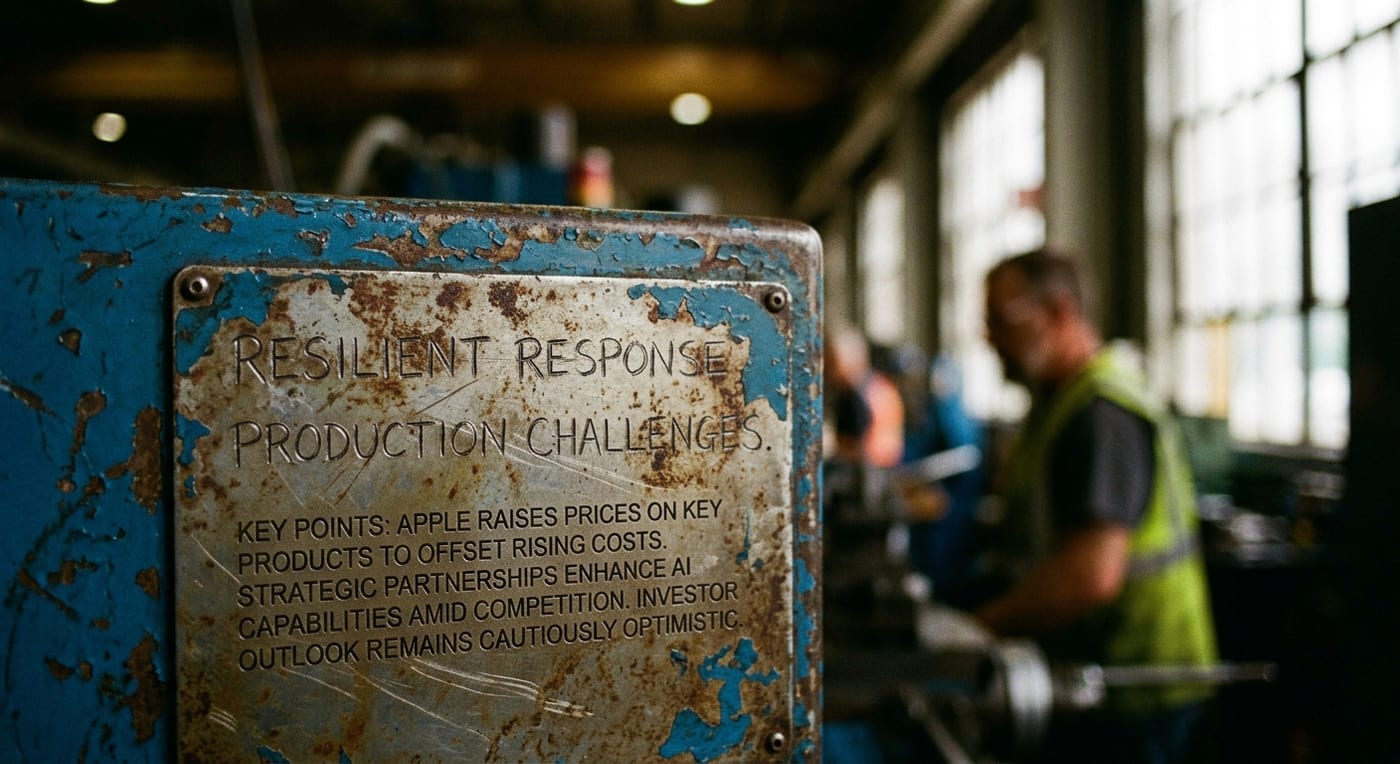
- Apple raises prices on key products to offset rising costs.
- Strategic partnerships enhance Apple’s AI capabilities amid competition.
- Investor outlook remains cautiously optimistic despite pricing increases.
In a period marked by economic fluctuation and supply chain disruptions, Apple has made notable adjustments to its pricing strategy. The persistence of high production costs has led to price increases across its flagship products, such as the MacBook Air and iPad Air. The MacBook Air has risen in price from $1,099 to $1,299, while the iPad Air now costs $749, up from $599. These changes highlight the broader challenges posed by the global semiconductor shortage, which has tightened supply across the electronics sector.
The Impacts of Global Supply Chain Issues
The global shortage of components such as memory chips has compelled Apple to recalibrate its pricing strategies. This environment not only affects the cost structure but also raises questions about consumer willingness to purchase higher-priced items in a volatile economy. The company is facing intense scrutiny as it balances these rising costs with consumer demand and competitive pressures. Interestingly, these constraints align with earlier discussions surrounding Apple's innovative strategies amid rising costs, where it was noted that strategic partnerships are vital for navigating market conditions.
By leveraging collaborations with industry giants like Alphabet and Nvidia, Apple aims to enhance the AI capabilities of its devices without significantly increasing its overhead costs. This collaborative approach to technology integration is a prudent move, particularly in an era where standalone investments in AI infrastructure could lead to excessive financial exposure. These partners are making extensive capital expenditures on AI; for instance, both Alphabet and Amazon plan to invest around $200 billion in AI infrastructure by 2026.
Strategic Pricing Adjustments
As discussed in previous coverage of Apple's evolving market strategies, price increases for key products—such as the MacBook Air and iPad Air—are a direct response to rising production costs resulting from supply chain constraints. These adjustments reflect not only a tactical response but also a longer-term strategy to maintain profit margins amid competitive pressures. Investors are closely monitoring these shifts to determine their impact on future sales dynamics.
Furthermore, Apple’s introduction of a leasing program is expected to enhance customer engagement and potentially boost iPhone revenues, even as prices for its core products rise. This strategy not only aligns with recent trends in consumer finance but also positions Apple to be more adaptable in a fluctuating economic landscape.
Market Reception and Consumer Sentiment
Despite the recent price hikes, investor sentiment towards Apple remains cautiously optimistic. The company has reported significant demand for its high-end products, which many analysts attribute to brand loyalty and the extensive integration of ecosystem services. By maintaining high-quality standards and innovative product design, Apple continues to attract a robust consumer base that is willing to absorb some of the price increases.
As Apple ventures further into on-device AI applications to enhance user experience, it becomes important to examine how these innovations influence consumer perceptions. Investment in AI partnerships and the seamless integration of advanced features into existing products allows Apple to stay competitive while managing costs effectively. This dual approach may mitigate pressures from rival companies like Nvidia, which have heavily invested in AI capabilities.
Looking Ahead: Investor Outlook in a Competitive Landscape
Looking ahead, the market dynamics surrounding Apple are complex. Apple’s market cap has evolved, with its stock price responding favorably despite increases in product pricing. As consumer sentiment shifts and competition intensifies, understanding how Apple navigates these challenges will be critical. There remains a cautious optimism among investors regarding Apple's resilience. The ongoing commitment to innovation and strategic partnerships will play a significant role in shaping future performance.
Additionally, investors are keen to see how Apple's operational decisions will correlate with broader economic trends and competitive responses. This balance of managing cost pressures while enhancing product offerings is vital for maintaining Apple's leading role in the tech industry.
In summary, Apple Inc. is at a pivotal moment as it adapts its pricing strategy to meet various economic challenges while remaining committed to innovating and enhancing its product ecosystem. The strategic moves made today are critical for sustaining its market leadership in the face of rising operational costs and fierce competition.