
Apple's Robust Performance Amidst Market Challenges
ED
Editorial
Cashu Markets·5 min read
TL;DR
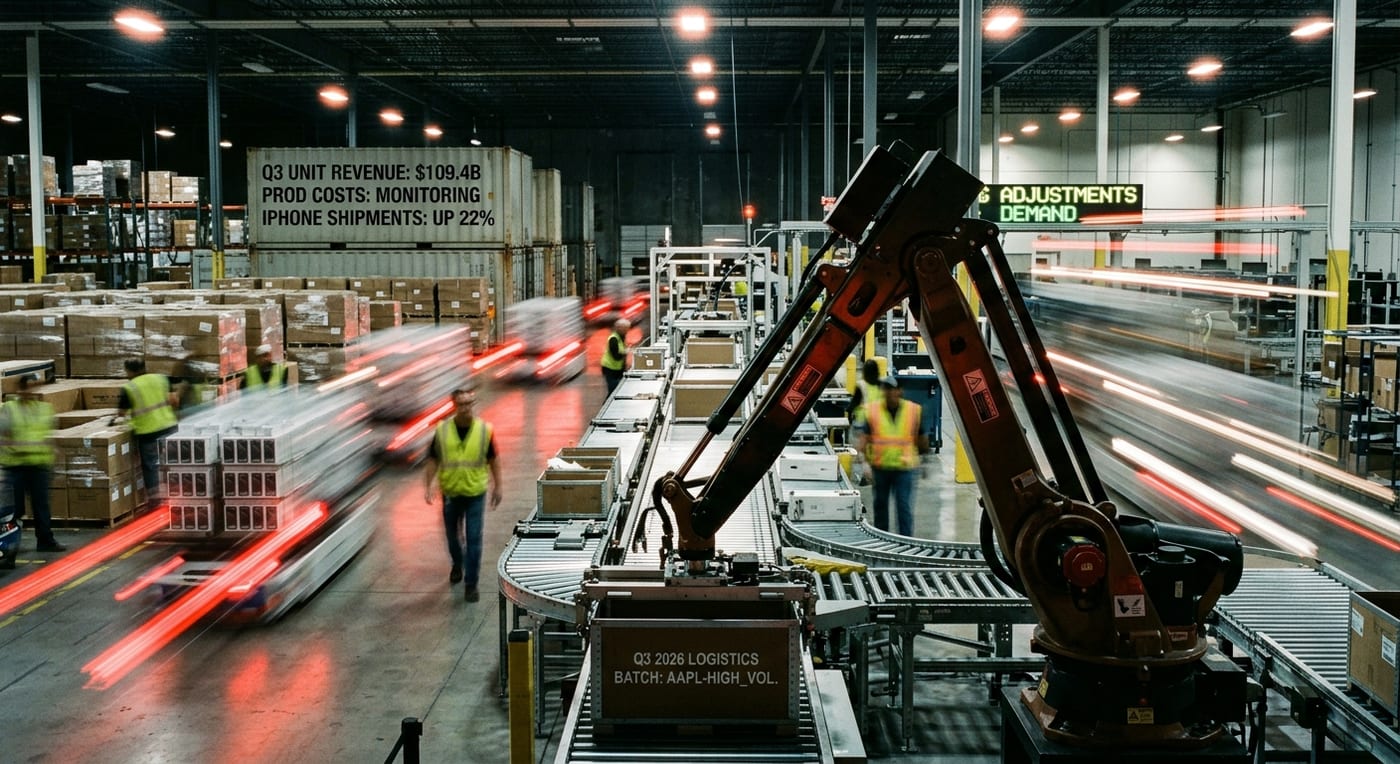
- Record revenue of $109.4 billion in Q3 2026 - iPhone sales surged by 22%, showcasing strong demand - Rising production costs prompting strategic price adjustments
Apple Inc. (AAPL) is drawing attention as the latest developments come into focus. Apple Inc. (AAPL) continues to demonstrate its agility and resilience in the ever-evolving technology landscape, navigating through challenges posed by rising production costs, competitive pressures, and market demands. In its recent earnings report, Apple reported a record revenue of $109.4 billion for the fiscal third quarter, reflecting a remarkable 16% increase year-over-year. This growth was significantly fueled by a staggering 22% surge in iPhone sales, highlighting the enduring popularity and market dominance of the iconic device. However, as Apple revels in this success, the company is also grappling with rising production costs that necessitate strategic adjustments across its product line. As the tech giant looks to stabilize its supply chain and bolster its manufacturing capabilities, its approach will play a crucial role in defining the company’s future trajectory. That backdrop echoes earlier coverage of the issue, especially around how pricing, strategy, and demand feed into the current story.
The Power of iPhone Sales
Apple's iPhone remains the cornerstone of its financial success, accounting for approximately 50% of the company’s overall revenue. With sales in fiscal 2026 reflecting over 20% year-over-year growth during the first three quarters, Apple is well-positioned to capitalize on the increasing demand for its smartphone lineup. The anticipation surrounding the release of the iPhone 17 family has drawn consumer interest, pushing the installed base of iPhones to an all-time high. This trend solidifies Apple’s competitive edge and reaffirms its strong market positioning.
Despite the substantial gains from its flagship product, Apple's reliance on the iPhone also reveals potential vulnerabilities, particularly in the face of competitive threats from emerging technologies. Analysts have speculated that advancements in artificial intelligence (AI) could reshape consumer interaction with technology, and any introduction of disruptive AI-native devices could challenge Apple's established dominance. However, for now, the iPhone's popularity and Apple's exemplary brand loyalty continue to insulate it from these potential threats.
Navigating Rising Production Costs
While Apple’s financial performance is commendable, the company faces significant hurdles due to escalating production costs. Key components crucial to the manufacturing process, driven partly by geopolitical tensions and ongoing supply chain challenges, have necessitated strategic price adjustments across various products. The urgency to confront rising costs is highlighted by previous reports indicating that Apple has sought to mitigate these pressures through adjustments in pricing for products including the MacBook and iPad.
To address supply chain disruptions, Apple is enhancing its domestic manufacturing capabilities. Recently, CEO Tim Cook announced the opening of a new manufacturing facility in Houston, aimed at producing Mac Mini computers and AI servers, which exemplifies Apple's commitment to domestic manufacturing. This initiative not only supports American jobs but also serves to stabilize the supply chain that has been significantly affected by rising costs and global competition. The factory represents a substantial investment in the U.S. manufacturing sector, aligning with Apple's broader strategy of diversifying its production footprint away from its traditional reliance on overseas manufacturing.
Exploring AI Integration
As Apple navigates these operational challenges, significant attention is being directed towards integrating AI capabilities into its existing products and services. While many tech companies are investing heavily in AI infrastructure, Apple has adopted a more cautious approach, focusing on enhancing its current ecosystem rather than creating entirely new AI divisions. CEO Tim Cook emphasized the importance of AI integration that complements Apple's existing lineup, creating a robust environment for leveraging AI technologies without compromising its core operational values.
The decision to prioritize AI integration stems from Apple's recognition of the pivotal role these technologies will play in shaping consumer experiences. Coupled with the anticipated release of the iPhone 17, which is expected to showcase enhanced AI functionalities, Apple's commitment to AI could further strengthen its competitive position in the market.
Consumer Outlook and Valuation
Looking ahead, the expectations surrounding Apple’s financial performance remain optimistic, backed by strong consumer loyalty and strategic pricing initiatives. The current pricing model, amidst rising production costs, emphasizes the critical balance Apple must maintain to ensure growth while minimizing potential consumer backlash related to elevated prices. Historical trends have shown that price increases, especially for flagship products, can lead to temporary dips in demand. Consequently, Apple’s ability to judiciously navigate its pricing strategy will be vital in retaining its loyal customer base.
Investors will also be focusing on Apple’s valuation as it continues to play a significant role in their investment decisions. With a reported price-to-earnings ratio of 35, concerns about overvaluation have surfaced, especially as market analysts begin to navigate the fine line between potential growth and current market pricing. In light of these factors, Apple's strategies moving forward will not only impact its operational metrics but will also inform investor sentiment and market perception.
Conclusion
In conclusion, Apple Inc. (AAPL) has showcased a remarkable financial performance amid rising production costs and supply chain challenges, thriving on the strength of its flagship iPhone sales. However, the company must continue to adapt its strategies to maintain its market leadership and ensure sustained growth. Balancing pricing strategies with supply chain resilience and effective AI integration will shape not only Apple's future performance but also its position in the competitive technology landscape. As Apple approaches these challenges head-on, its commitment to innovation and market responsiveness will be crucial in its journey forward.