
AT&T Faces Regulatory Scrutiny Over Service Obligations and Consumer Access in California
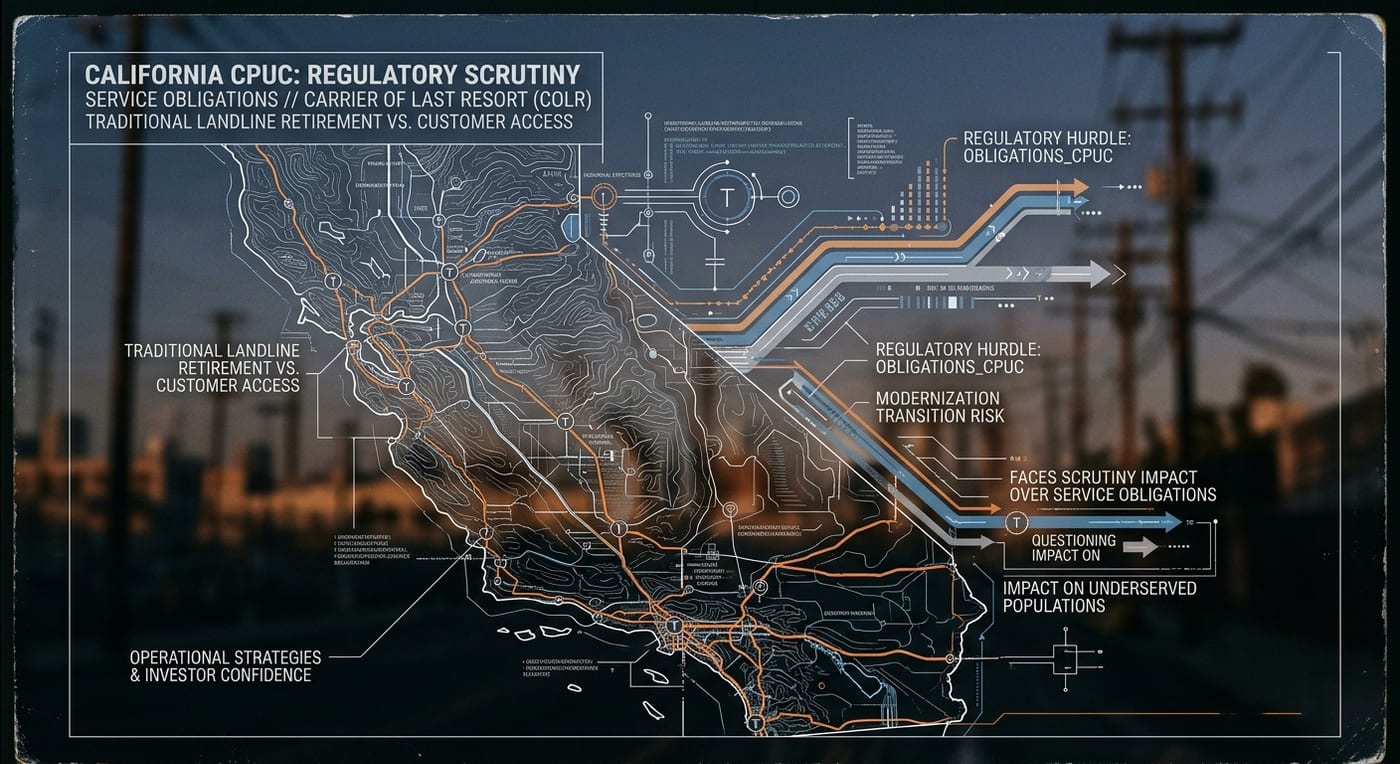
- AT&T faces scrutiny from the CPUC over its obligations as a carrier of last resort for basic phone services.
- The CPUC criticizes AT&T's proposals to stop traditional phone services, questioning their impact on underserved customers.
- Regulatory challenges may influence AT&T's operational strategies and investor confidence amid its transition to modern technologies.
AT&T (T) faces growing scrutiny from the California Public Utilities Commission (CPUC) over its obligations as a carrier of last resort, especially regarding its provision of basic telephone services. The CPUC's criticism centers on allegations that AT&T attempts to evade its responsibilities, particularly in underserved areas where customers depend heavily on reliable access to communication. This development raises serious questions about AT&T's commitment to serving all customers equitably and maintaining the quality of service that state regulations demand. The regulatory body's findings emphasize the necessity of thorough oversight in the telecommunications sector, particularly as communities continue to rely on essential services amid rapid technological advancements.
Regulatory Concerns Over Service Obligations
The CPUC's report comes as a response to the company's proposals, which include halting traditional copper-wire phone service for new customers in certain regions. Regulators argue that AT&T has not sufficiently proven that its alternative services would meet the needs of all consumers, particularly those in vulnerable positions who lack access to other options. The commission's stance highlights the importance of adhering to public utility standards and ensuring that telecommunications coverage remains comprehensive, especially during a time when corporate practices are increasingly under scrutiny. As the dialogue surrounding equitable access to technology progresses, the CPUC reiterates its role in protecting consumer rights and advocating for fundamental service commitments.
Implications for Future Strategies
As AT&T navigates these challenges, the implications for its operational strategies could be profound. The ongoing regulatory push for accountability reflects a broader commitment to upholding public service obligations in California's telecommunications landscape. With heightened regulatory oversight, AT&T is likely to face increased pressure to adapt its approach to service delivery and consumer engagement, thus impacting its long-term market position and strategy in transitioning to modern technologies. This scenario underscores the critical balance between corporate practices and regulatory requirements in the evolving telecommunications environment.
Investor Sentiment and Operational Priorities
Another significant aspect involves AT&T's interactions with institutional investors, as the company sees mixed sentiments regarding its broadband expansion and the transition from traditional phone services. With considerable percentages of shares held by large institutional investors, AT&T must navigate its modernization efforts carefully, ensuring that it maintains investor confidence while adhering to regulatory expectations. The CPUC's ongoing challenges amplify the importance of strategic planning for AT&T, as its responses to regulatory scrutiny could shape future investor perceptions and financial health in the competitive telecommunications market.
Related Cashu News

Comcast Announces Media Asset Spin-Off to Boost Shareholder Value and Operational Focus
Comcast (Ticker: CMCSA) announces a pivotal restructuring strategy aimed at separating its media assets, NBCUniversal and Sky, into independent publicly traded companies. This transformative move is s…

AT&T Upgrades Build-A-Plan for Customized Wireless and Internet Services Starting July 2026
AT&T (Ticker: T) is set to introduce an enhanced version of its Build-A-Plan service, allowing customers to customize their unlimited wireless plans starting July 7, 2026. This initiative reflects the…

Verizon Forms Joint Venture with BT Group to Boost Global Telecommunications Operations
Verizon Communications Inc. has recently announced a transformative joint venture with BT Group, aimed at merging their international enterprise operations. This collaboration is expected to generate…

Sify Technologies Secures $71 Million Loan for Data Center Expansion in India
Sify Technologies (Ticker: SIFY) recently announces it has secured a significant sustainability-linked loan of US$71 million from the International Finance Corporation (IFC), part of the World Bank. T…