
Berkshire Hathaway's New Era Under Abel
ED
Editorial
Cashu Markets·5 min read
TL;DR
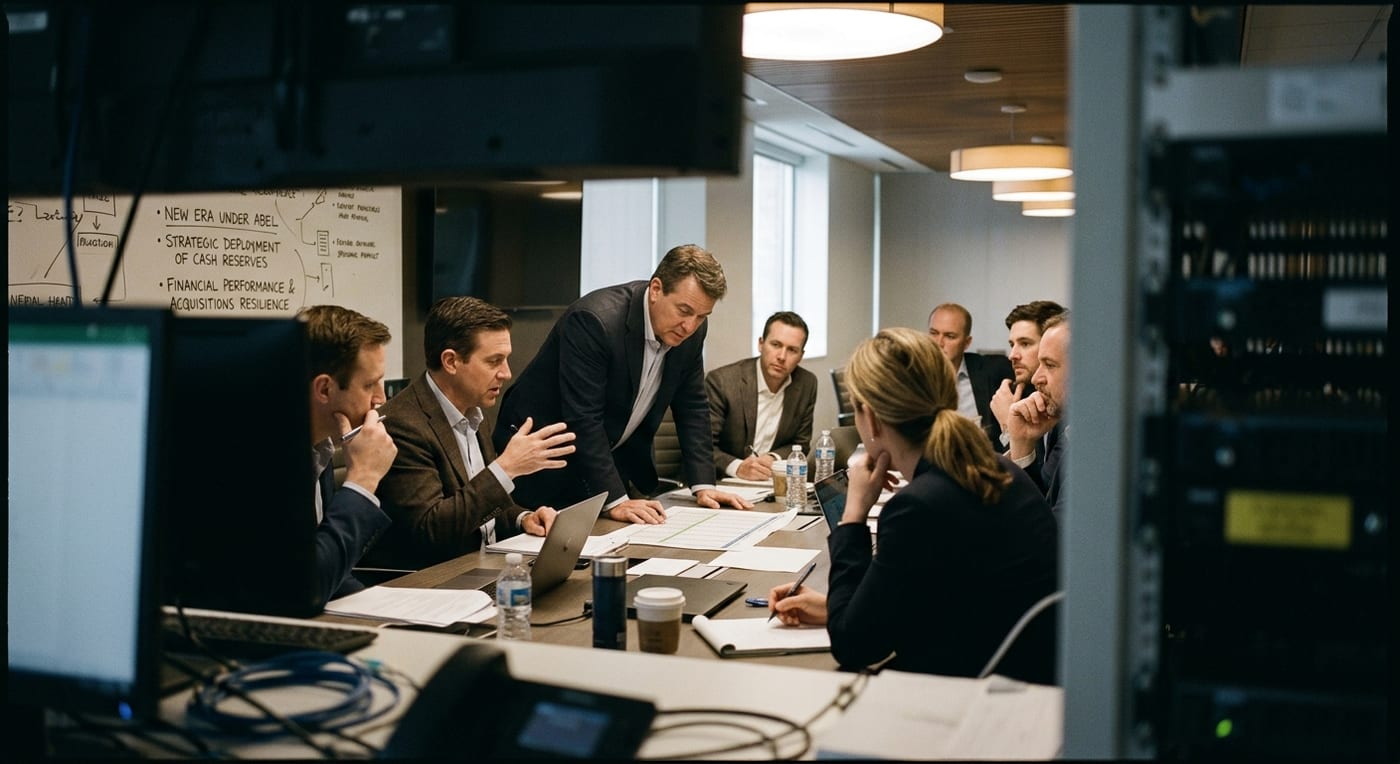
- Berkshire Hathaway embarks on a new chapter under Greg Abel.
- The company is strategically deploying its massive cash reserves.
- Financial performance and acquisitions show strong resilience in multiple sectors.
Berkshire Hathaway Inc. ( BRK-A) is embarking on a transformative journey under the leadership of CEO Greg Abel, marking a significant shift in the company’s strategies and investment portfolio. Transitioning from the legendary Warren Buffett, known as the 'Oracle of Omaha,' Abel’s actions signal a new chapter that prioritizes prudent investments and enhancing shareholder value.
Transitioning Leadership
With Warren Buffett's retirement transitioning underway, Greg Abel’s leadership represents a crucial turning point for Berkshire Hathaway. Having served as vice-chairman of the company for several years, Abel steps into a role that requires him to uphold and evolve Buffett’s legacy of wise investment and corporate stewardship. As Buffett seeks to donate his substantial shares—valued at roughly $140 billion by 2034—to philanthropic endeavors, the company finds itself in a pivotal setup for growth and strategic alignment. Abel is expected to implement a slightly more aggressive approach by leveraging Berkshire’s substantial cash reserves, which have historically been a source of strength for the conglomerate.
Financial Performance and Strategic Acquisitions
Berkshire Hathaway's latest earnings reveal its financial resilience amidst market fluctuations. In the second quarter of 2026, the company reported a notable rise in net incomes, climbing to $25.6 billion—more than double that of the previous year. The financial performance was bolstered by a variety of sectors within the conglomerate, particularly in energy, railroads, and manufacturing. Of note, manufacturing, service, and retailing sectors recorded impressive growth, enhancing the overall strength of Berkshire’s operational framework.
A clear strategy has emerged under Abel’s leadership: returning capital to shareholders through repurchase of stock while seeking new opportunities for investment. The decision to repurchase approximately $4.5 billion in shares during the second quarter and become a net buyer of equities for the first time in over three years, highlights a strategic pivot that seeks to engage more with the market after a period of selective investment. This pattern of buying back shares rather than selling them underscores a renewed ethos under Abel, embracing a more dynamic approach to capital management.
Cash Reserves Evolve
Berkshire Hathaway's treasury saw a decrease from $397.4 billion at the end of March to $365.5 billion by June. Though this may signal a diminishing cash fortress traditionally associated with Buffett's reign, the allocation of cash reflects a purposeful strategy to support mergers and acquisitions and an increased appetite for equity investments. In addition to buybacks, Berkshire recently completed its acquisition of Taylor Morrison, a homebuilder, signifying a return to significant acquisitions akin to the deals struck during Buffett's tenure.
As noted in a related article, Abel’s commentary on the importance of wielding shareholder capital carefully recounts Berkshire's investment philosophy, which revolves around weighing the potential rewards of opportunities against their risks. Berkshire Hathaway: Transition and Strategy Under Abel emphasizes this cultural shift, whereby the conglomerate is not merely holding value but strategically deploying it to enhance long-term growth.
The Bold Move into Technology
In a noteworthy maneuver reflecting a grasp of future trends, Berkshire has made significant investments in technology firms, including a $10 billion stake in Alphabet, Google’s parent company. This investment reflects an acknowledgment of the growing importance of technology in modern business operations and aligns with a broader investment thesis focusing on future growth areas. Such diversification is critical; as discussed in the article on Berkshire's resilient growth strategy, this indicates a strategic pivot that capitalizes on tech advancements while also reshaping Berkshire’s rich historical investment ethos.
Challenges Ahead
Despite the encouraging financial outlook, not all sectors are performing optimally. The insurance sector has faced its challenges, with underwriting earnings falling by 13%. This underperformance poses questions about the different business segments under Berkshire's vast umbrella and highlights the inherent risk of concentrating significant investments in a few key areas. The contrasting performances of sectors call for Abel's careful navigation to balance risk and returns as he steers the company in fluctuating economic conditions.
Moreover, as discussed in the news surrounding CEO Greg Abel's move to deploy Buffett's cash hoard, shareholder sentiment will be critical. With a share price increase lagging behind broader market indices, it remains essential for Abel to enhance shareholder confidence by consistently delivering on the promise of strategic growth.
Conclusion
As Berkshire Hathaway embarks on this new chapter under Greg Abel, the conglomerate's direction reflects both the legacy of Warren Buffett and a bold new vision for future growth. The transition emphasizes a nuanced strategy of capital deployment, diversified investments, operational resilience, and an adaptive response to market realities. With significant cash reserves and a determination to engage meaningfully with the market, Berkshire Hathaway is indeed poised to navigate the complexities of 21st-century investing while honoring the foundational principles laid down by its longstanding leadership. Investors will watch closely as Abel’s strategies unfold, keen to see how this iconic company continues to redefine itself in a rapidly changing economic landscape. The same pressure is reflected in recent reporting on the issue, which helps explain why the company's pricing decisions remain under scrutiny.