
Berkshire Hathaway's Strategic Transformation Under Abel
ED
Editorial
Cashu Markets·4 min read
TL;DR
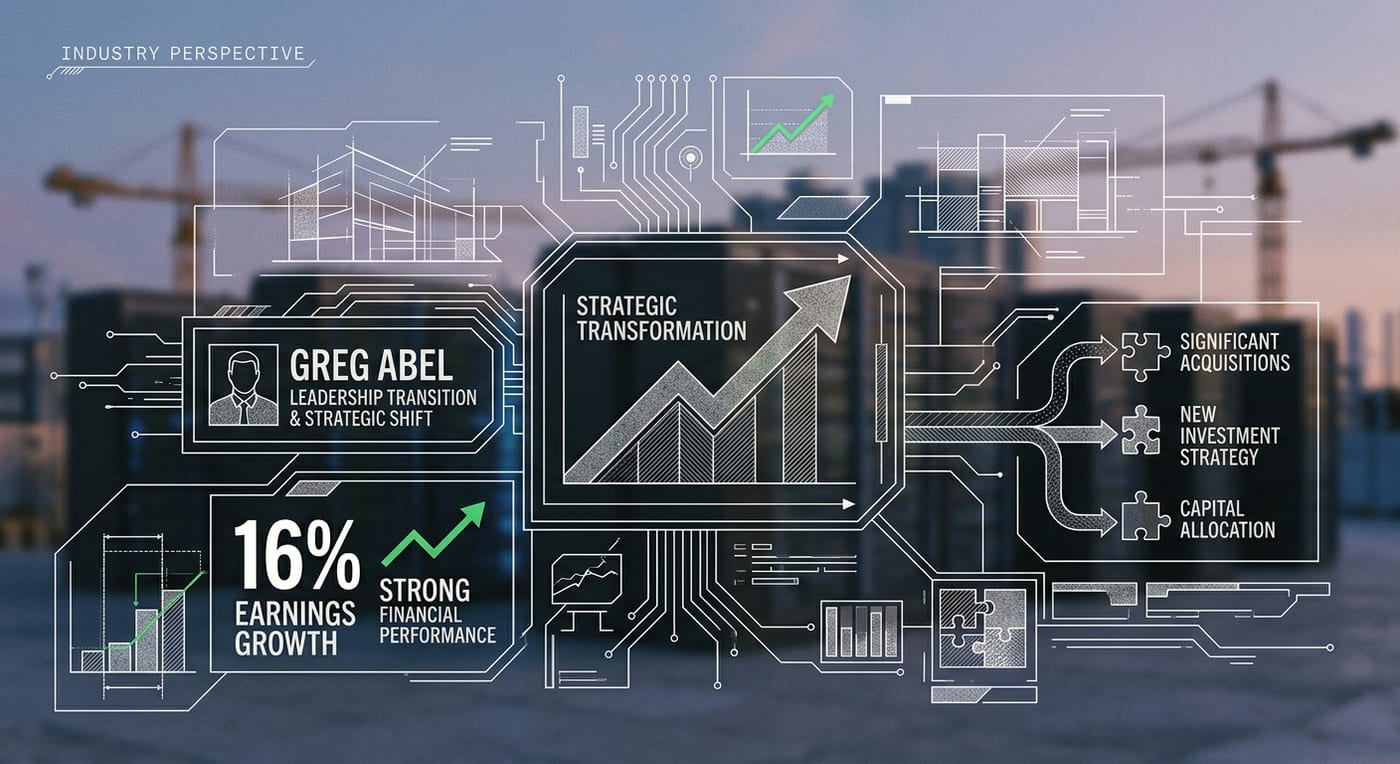
- New CEO Greg Abel leads strategic transformation - Strong financial performance with 16% increase in earnings - Significant acquisitions signal shift in investment strategy
Berkshire Hathaway Inc. ( BRK-A) has embarked on a strategic journey under the leadership of its new CEO, Greg Abel, marking a shift in investment philosophy and operational focus as it navigates through evolving market conditions and internal transitions.
Transitioning Leadership
Warren Buffett, the legendary founder and CEO of Berkshire Hathaway, has been revered for his investment acumen and leadership over several decades. As he transitions out of his role, handing over the reins to Abel, the company finds itself at a strategic crossroads. Abel, who previously served as vice-chairman, is implementing strategies that reflect a decisive pivot from Buffett’s more conservative approach.
This leadership change comes at a crucial time when Buffett has committed to donating his ownership shares, valued around $140 billion, to foundations managed by his family. This move is set to create a significant shift in Berkshire's strategic maneuvers and could also influence its approach to dividend policies in the future.
Meanwhile, Abel's strategy highlights a renewed focus on deploying Berkshire's cash reserves, which reached an unprecedented $397 billion before seeing a reduction to $365 billion in the latest quarter. This reallocation of funds is central to his vision, as it has already led to significant repurchases and new acquisitions.
Financial Performance Analysis
In the recent fiscal quarter, Berkshire Hathaway's operating earnings rose impressively by 16%, reaching $12.98 billion, as various sectors within the company showed resilience. This increase was bolstered by strong performances in manufacturing and retail, particularly within Berkshire Hathaway Energy and the BNSF railroad division. Specifically, manufacturing, service, and retail earnings surged 24%, indicating robust performance across these sectors.
However, the insurance side of the business reflected challenges, with Geico reporting a 45% decline in underwriting profits amid rising claims and increased marketing costs. This performance is essential, as the insurance segment represents a significant portion of Berkshire’s revenue, calling for careful strategic reassessment under Abel's leadership.
Berkshire's overall revenue rose by 10% to $101.81 billion, marking a critical return to growth after a period of stagnation.
Strategic Acquisitions and Investments
Abel is making headlines not only for share buybacks but also for significant acquisitions, such as the recent agreement to purchase homebuilder Taylor Morrison for $6.8 billion. This reflects a strategic pivot towards acquiring complete companies, distinguishing his approach from the more stock-centric strategies employed during Buffett’s tenure.
The acceleration of buybacks, with $4.5 billion repurchased in the second quarter alone, illustrates Abel's proactive approach to managing Berkshire's capital. Despite still being lower than previous years' peak buyback levels, it marks an important shift in management's willingness to deploy capital due to market valuations.
Abel's buyback strategy, which is conservatively determined in consultation with Buffett, has fostered confidence among investors, signaling a belief in the intrinsic value of Berkshire's shares.
Market Dynamics and Future Outlook
Amid rising macroeconomic uncertainties, including fluctuating interest rates and geopolitical tensions, Berkshire Hathaway's strategies will be crucial in steering the company through these troubled waters.
As seen in the performance of the insurance sector and the retail environment, the company's adaptability and strategic investments will be tested.
Analysts project that the transition under Abel will be closely watched as expectations grow for a more dynamic investment philosophy. Abel’s ability to navigate these changes while retaining the core principles established by Buffett will be key to maintaining investor confidence.
In conclusion, Berkshire Hathaway’s enduring resilience and strategic transformations will likely serve as a critical case study for how legacy companies can effectively modernize while honoring their foundational principles. The same pressure is reflected in recent reporting on the issue, which helps explain why the company's pricing decisions remain under scrutiny.