
Bitget Token USD: A Unified Trading Future
ED
Editorial
Cashu Markets·5 min read
TL;DR
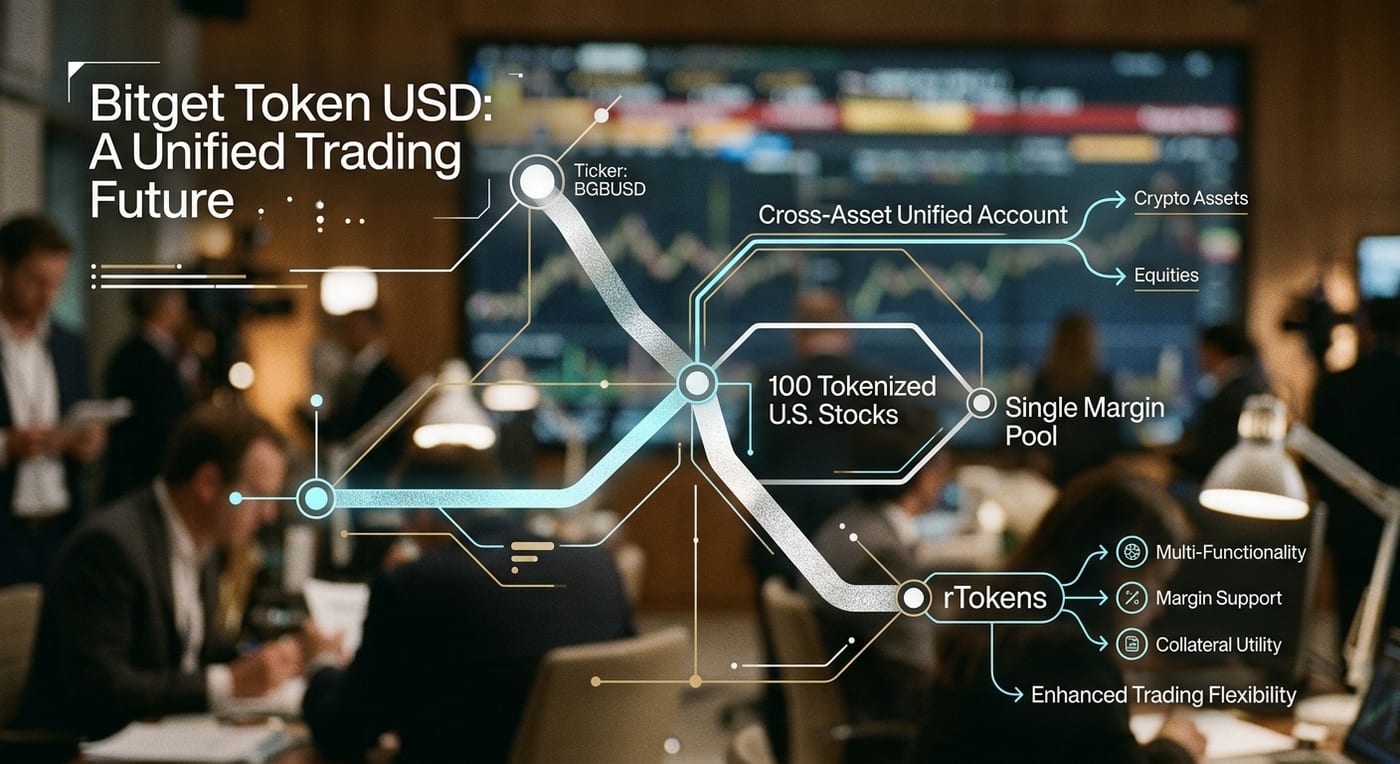
- Bitget launches Cross-Asset Unified Account for crypto and equities.
- 100 tokenized U.S. stocks integrate into a single margin pool.
- Enhanced trading flexibility with rTokens supporting multiple functions.
Bitget Token USD (BGBUSD) continues to gain traction in the ever-evolving landscape of cryptocurrency trading and asset management. Bitget, a prominent cryptocurrency exchange, has recently unveiled a groundbreaking expansion of its trading infrastructure with the introduction of the Cross-Asset Unified Account. This innovative account merges cryptocurrency holdings and tokenized U.S. equities under a single margin framework, representing a significant shift in how digital assets can be traded and utilized.
The amalgamation of over 370 eligible assets, including 100 tokenized U.S. stocks known as rTokens, indicates Bitget's commitment to enhancing financial liquidity and operational flexibility for its traders. This initiative not only streamlines the trading experience but also allows users to leverage their crypto and stock token holdings more efficiently. By integrating these diverse asset classes, Bitget responds to a growing demand for a more interconnected trading environment and the need for comprehensive financial solutions.
The Evolution of Trading Accounts
The Cross-Asset Unified Account marks a pivotal moment in Bitget's strategy, expanding on its existing Unified Trading Account that allowed multiple cryptocurrencies to be pooled. With this new structure, qualified cryptocurrency and tokenized stock holdings can utilize a shared collateral reserve. This means traders can engage in margin trading, derivatives, and borrowing without the burden of maintaining separate accounts or dividing their capital. The significance of this advancement is reflected in Bitget CEO Gracy Chen's assertion that the real breakthrough is allowing tokenized stocks to function with the same flexibility as cryptocurrencies.
Traditionally, cryptocurrency exchanges have designed their accounts to segregate collateral across distinct products and market positions. However, Bitget's Cross-Asset Unified Account allows for a single, coherent trading interface where users can manage both their crypto and tokenized stock portfolios seamlessly. In a market that increasingly favors systemic efficiency and cross-asset trading, this approach places Bitget at the forefront of innovation in the crypto trading space.
Expanding Functionality of rTokens
The newly launched Cross-Asset Unified Account facilitates greater functionality for rTokens, which are linked to popular U.S. equities like Apple, Amazon, and Tesla. These tokens can now be used not just for trading, but also as collateral for loans and futures market positions. This dual utility empowers traders to retain exposure to their underlying equity investments while utilizing the liquidity of their assets through borrowing or margin trading. Notably, holders of rTokens can also collect cash dividends when applicable, adding an extra layer of value to their holdings.
Bitget's integration of rTokens into its trading infrastructure showcases a strategic vision that blurs the lines between the conventional stock market and the cryptocurrency space. With collateral discount rates of up to 95% and borrowing costs that adjust based on market dynamics, Bitget positions itself as a forward-thinking exchange catering to both traditional and crypto-savvy investors.
The Reality Infrastructure Behind rTokens
The foundation of Bitget’s Cross-Asset Unified Account is its Reality platform, which facilitates the functionality of rTokens. Launched earlier this year, the Reality framework allows rTokens to be launched and traded in a manner akin to conventional equities. According to the company, the rToken ecosystem has surpassed $100 million in assets under management within its first month of operation. The seamless process of converting conventional equities to tokenized formats fosters a more fluid trading experience.
Liquidity remains a critical concern in tokenized markets, and Bitget has made strides to enhance this aspect through its innovative trading solutions. Reports indicate that trading volume for specific tokenized assets has increased significantly, with some markets achieving liquidity depths approaching 75% of traditional Bitcoin trading volumes. This improvement underscores Bitget's strong market presence and commitment to providing a robust trading environment for its users.
Investor Outlook and Market Implications
The introduction of the Cross-Asset Unified Account could signal a transformative era for how investors engage with both cryptocurrencies and traditional assets. As the demand for integrated trading platforms rises, Bitget is proving that it can adapt and meet evolving market needs. This adaptability is critical in a financial landscape where regulatory changes and technological advancements are frequent.
Investors looking to capitalize on this transition may find themselves in an advantageous position, as Bitget continues to integrate real-world assets and enhance the utility of its platform. While the long-term effects of these changes remain to be seen, Bitget's proactive strategy positions it favorably within the competitive cryptocurrency exchange market. As financial innovations like the Cross-Asset Unified Account are embraced, users may benefit from improved trading experiences, greater access to liquidity, and enhanced financial outcomes.
Conclusion
In summary, Bitget Token USD (BGBUSD) stands at the intersection of traditional financial instruments and digital cryptocurrencies, leading the charge toward a more integrated trading future. By launching the Cross-Asset Unified Account and expanding the functionality of rTokens, Bitget not only addresses current market demands but also anticipates future trends in trading infrastructure. As the landscape continues to evolve, Bitget’s innovative approach may well redefine the way traders interact with their assets and navigate the complexities of the crypto economy. The same pressure is reflected in recent reporting on the issue, which helps explain why the company's pricing decisions remain under scrutiny.