
Blaize Holdings: Innovation Amid Legal Headwinds
ED
Editorial
Cashu Markets·5 min read
TL;DR
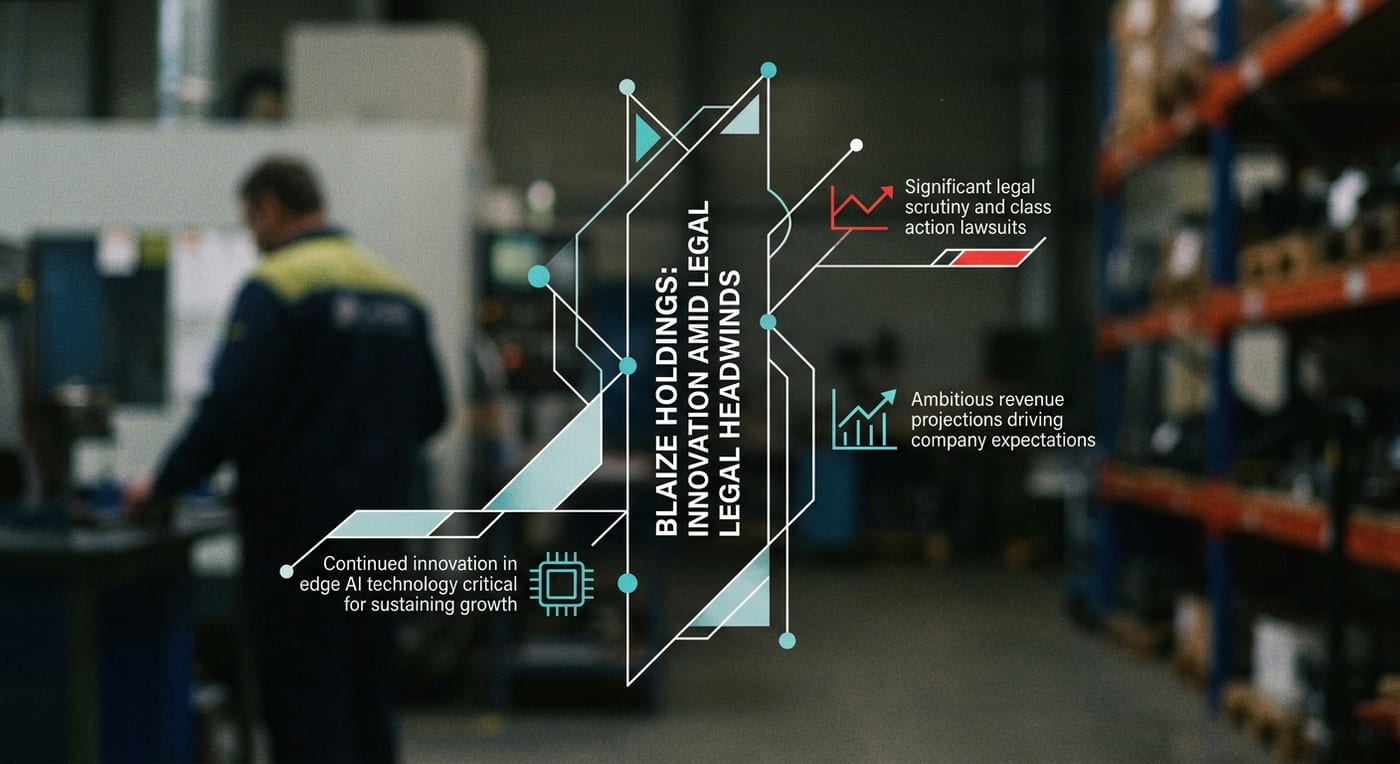
- Blaize Holdings facing significant legal scrutiny and class action lawsuits.
- Ambitious revenue projections driving company expectations despite challenges.
- Continued innovation in edge AI technology critical for sustaining growth.
Blaize Holdings Inc. (BZAI) is navigating a complex landscape marked by ambitious growth forecasts and mounting legal challenges. With its eyes set on a significant revenue increase projected to reach between $105 million to $140 million by 2026, the company is simultaneously grappling with several class action lawsuits from investors alleging misleading practices.
Legal Challenges Impacting Growth
The scrutiny surrounding Blaize Holdings has intensified in recent months, primarily stemming from allegations that the company misled investors about its growth strategies and business viability. The class action lawsuits assert that Blaize entered into agreements with entities that lacked the capability to execute substantial business, creating an illusion of growth. This unsettling narrative raises questions about the integrity of the company’s revenue generation practices and casts a shadow over its ambitious projections.
As discussed in earlier analyses, Blaize's ability to sustain substantial growth amidst these challenges hinges on its innovation in edge AI technology. The company is developing advanced solutions crucial for real-time decision-making at the network edge, a demand that continues to expand across various sectors, including automotive and smart cities. However, the burden of legal disputes may distract from these initiatives and strain its operational resources.
Revenue Growth Amid Legal Scrutiny
Despite the emerging legal pressures, Blaize Holdings maintains an optimistic outlook on its revenue potential. The company projects that its revenues will soar from the estimated $19 million to $50 million in 2025 to an impressive $105 million to $140 million by 2026. This growth may largely depend on how the company navigates its ongoing legal issues and the subsequent impact on investor confidence.
The lawsuits point to a stark picture: Investors allege that Blaize created a fabricated growth narrative linked to partnerships that failed to generate meaningful revenue. This issue surfaces amidst broader concerns regarding transparency, which could further fuel ongoing investor skepticism. In a previous report, it was highlighted that Blaize announced transactions with entities unprepared for genuine business engagements, amplifying worries that these actions were a deliberate attempt to mislead investors about the company's growth trajectory.
Innovation in Edge AI: A Double-Edged Sword
While legally embroiled, Blaize Holdings is intensifying its focus on innovation within the edge AI landscape. The rising demand for AI-driven solutions presents an expansive opportunity, albeit one that may be overshadowed by the firm's current challenges. The success of its innovative ventures depends on its ability to regain investor trust, which is crucial for long-term sustainability.
Company leadership, notably CEO Dinakar Munagala, emphasizes the importance of leveraging their cutting-edge technology to seize market opportunities. Blaize's technological advancements in AI solutions have positioned it at the forefront of an industry that is increasingly reliant on rapid data processing and efficient energy consumption. Nevertheless, the correlation between ongoing innovations and potential revenue growth remains tenuous when weighed against the backdrop of legal adversity. A recent report showed that this innovative prowess has been somewhat dampened by the cloud of litigation surrounding the company.
The Investor Sentiment and Future Outlook
Despite the existing hurdles, the market sentiment towards Blaize Holdings has displayed a mix of caution and optimism. The company's ambitious revenue projections demonstrate its confidence in operational potential and the anticipated demand for edge AI technologies. However, without resolving current legal dilemmas, such aspirations may seem hollow in the eyes of current and potential investors.
Furthermore, there is a growing consensus that Blaize must take proactive steps to reassure the market about its compliance and transparency. Past class action lawsuits have amplified the scrutiny of Blaize's public statements, and any misstep could result in further declines in investor confidence, exacerbating their situation. The need for regulatory compliance is echoed in each lawsuit as accountability becomes a key issue.
Previous articles have pointed out that Blaize's management's commitment to comprehensive compliance and ethical business practices is essential for weathering this storm. However, the continuous developments regarding legal challenges highlight an urgent need for Blaize to ensure that its operational strategies are transparent and in line with investor expectations.
Conclusion
Blaize Holdings Inc. stands at a critical juncture in its evolution, marked by ambitious growth plans intertwined with significant legal challenges. While its innovative edge AI technologies offer promising avenues for growth, the future of BZAI hinges on how effectively it can address investor concerns and navigate the ongoing legal scrutiny. In the coming months, the company's approach will be crucial in determining whether it can emerge stronger or if these legal challenges will stifle its growth ambitions.
Amidst mounting pressure, Blaize Holdings continues to showcase its capability to innovate and expand within the edge AI sector, yet the looming shadow of investor lawsuits signifies a pivotal challenge that could alter its trajectory. As the company moves forward, stakeholders will be keenly observing its strategies, financial outcomes, and compliance with the legal frameworks governing its operations. The same pressure is reflected in recent reporting on the issue, which helps explain why the company's pricing decisions remain under scrutiny.