
Bloom Energy's Legal Trials and Market Dynamics
ED
Editorial
Cashu Markets·5 min read
TL;DR
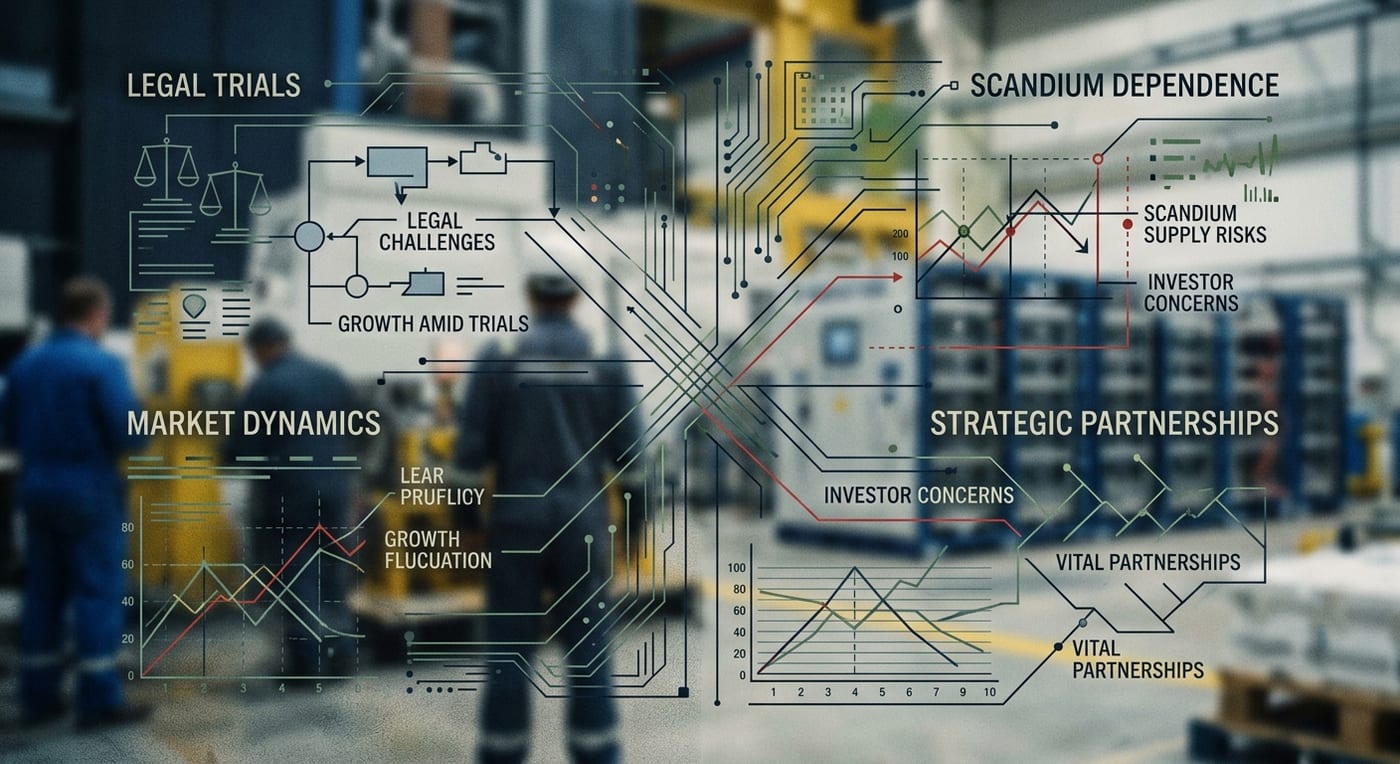
- Bloom Energy faces serious legal challenges amid growth.
- The company's dependence on scandium raises investor concerns.
- Strategic partnerships could prove vital for future success.
Bloom Energy Corporation (BE) finds itself at a critical juncture as it navigates a series of legal challenges that threaten to undermine its position in the lucrative clean energy market. The company, known for its innovative solid oxide fuel cell technology, has reported significant revenue growth, including its first billion-dollar quarter. However, looming legal issues and questions of operational transparency have stirred concern among its investors.
Background on Bloom Energy
Founded in 2001, Bloom Energy has positioned itself as a leader in the alternative energy sector, particularly through its cutting-edge fuel cell technologies that convert various fuels, including natural gas and hydrogen, into clean electricity. Despite its growth and technological advancements, the company faces scrutiny over its supply chain practices amid ongoing legal proceedings.
Legal Challenges Impacting Financial Stability
The class-action lawsuit against Bloom Energy, initiated in August 2026, has become a focal point of concern for investors. Allegations within the lawsuit assert that the company misrepresented its sourcing of scandium, a critical rare earth element used in fuel cell production. Specifically, Bloom is accused of concealing its reliance on Chinese sources for scandium through intermediaries, which contradicts the company's public assertions about supply chain independence. The case has serious implications for Bloom's credibility and overall investor confidence.
In a detailed complaint, it is claimed that Bloom affirmed its independence from Chinese supply chains multiple times during the class period, only for these statements to come under fire following revelations in a report by Hunterbrook Media. The report suggests that Bloom's supply chain includes scandium sourced from China, a claim that led to a significant decrease in stock value of nearly 6% immediately following the news. Such allegations directly relate to the viability of Bloom Energy's business model and its future opportunity in the clean energy landscape.
Investor Confidence Under Threat
The pending litigation has understandably created anxiety among current and potential investors. The class-action lawsuit highlights not just accusations of misleading statements, but also the broader implications of dependency on international resources in a volatile global market. Transparency regarding sourcing and supply chain logistics is becoming increasingly vital as stakeholders emphasize sustainability and ethical practices. Investors are particularly concerned about how these legal challenges could impact Bloom's long-term profitability and strategic goals.
Bloom Energy's responses to these legal challenges are critical, as seen in previous articles analyzing the company's legal vulnerabilities. The previous discussions underscore the significance of transparency and open communication with investors. Without a demonstrable commitment to ethical sourcing and operational integrity, the company risks alienating its stakeholder base amidst mounting skepticism.
Positioning in Growing Market Opportunities
Despite the current turmoil, Bloom Energy has been actively pursuing market opportunities that align with the increasing demand for sustainable energy solutions. The threat of power constraints for modern data centers driven by AI and cloud computing has opened avenues for companies capable of providing reliable and efficient power. Bloom's technology is particularly well-suited for addressing these demands, as its systems can utilize a variety of fuels, offering flexibility that traditional solutions may lack.
The immense demand for energy from data centers, particularly those relying on high-density AI chips, further positions Bloom Energy in a favorable light, given its contracts with major players like Oracle and Brookfield Asset Management. The company's strategic infrastructure agreement valued at $25 billion underscores its potential to meet the needs of power-hungry enterprises, provided it can assuage investor fears related to legal issues and transparency in its operational practices.
The Financial Landscape and Future Outlook
As Bloom Energy prepares for its upcoming earnings report, all eyes will be on how the company communicates its financial health and addresses the ongoing legal challenges. The pressure is on to demonstrate not only resilience in securing contracts and market share but also a commitment to resolving the controversies plaguing its operations.
Investors will closely evaluate the clarity of Bloom's disclosures regarding sourcing practices, particularly concerning scandium, in light of the allegations presented in the lawsuit. The degree of transparency in these matters will likely influence investor confidence moving forward. The importance of these dynamics is echoed in the discussions surrounding Bloom's strategic approach amidst fierce market competition and regulatory scrutiny.
When evaluating Bloom's capacity to navigate these waters, it is crucial to consider the industry trends highlighting the push towards cleaner energy solutions. The overarching narrative is one of transformation—a shift from fossil fuel dependency to innovative technologies that meet both economic and environmental needs. If Bloom can effectively tackle its current legal challenges and reinforce its commitment to ethical practices, it may just secure its foothold as an indispensable player in the energy sector.
The ongoing legal proceedings, paired with the company's innovative technology, illustrate the delicate balance Bloom must maintain. Balancing growth opportunities with investor trust will be paramount as it seeks to overhaul public perception and emerge stronger in the clean energy market. Overall, Bloom Energy Corporation stands at a critical crossroads, where clarity, transparency, and strategic foresight will determine its path forward in an ever-evolving energy landscape. The same pressure is reflected in recent reporting on the issue, which helps explain why the company's pricing decisions remain under scrutiny.