
Burger King's Revival: A New Chapter for QSR
ED
Editorial
Cashu Markets·5 min read
TL;DR
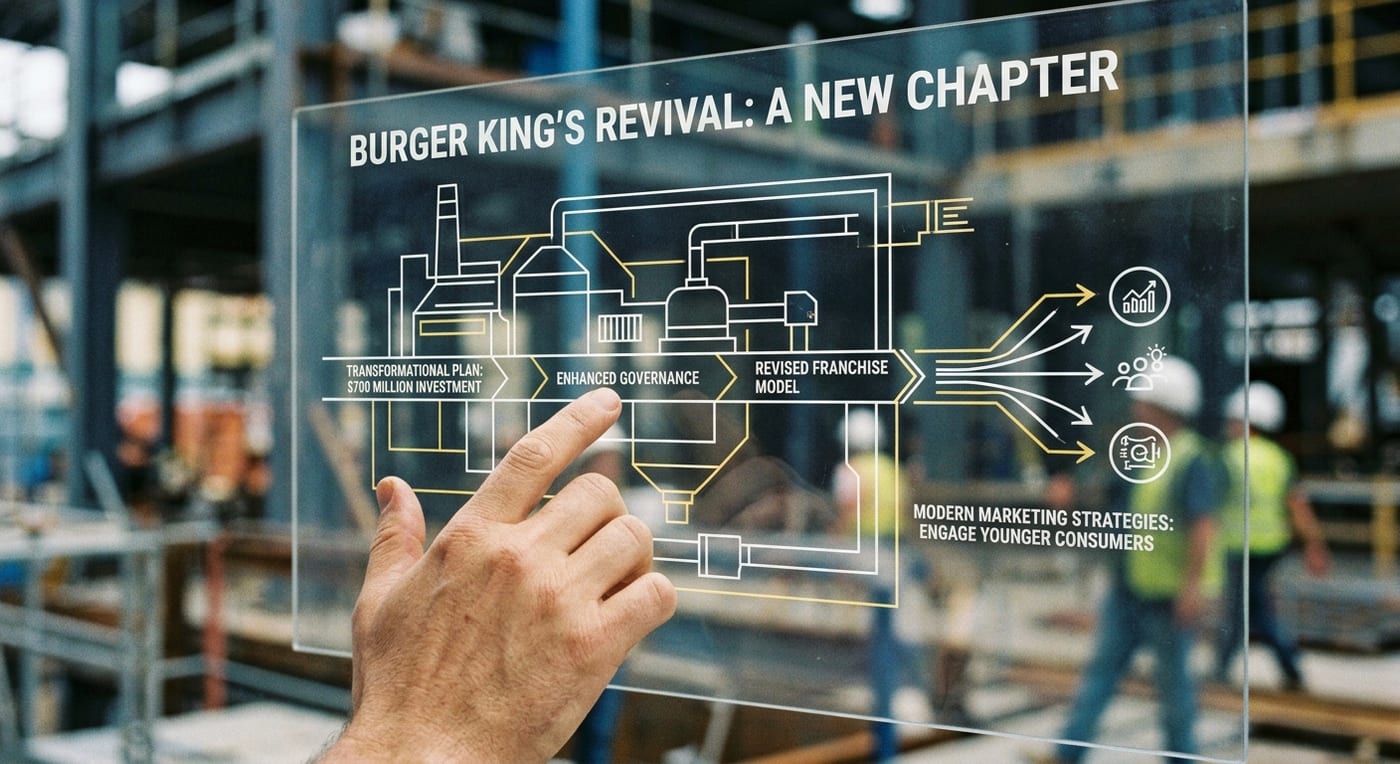
- Transformational plan for Burger King involves $700 million investment.
- Enhanced governance to address franchise model scrutiny.
- Modern marketing strategies aim to engage younger consumers.
Restaurant Brands International Inc. (QSR) is drawing attention as the latest developments come into focus. Restaurant Brands International Inc. (QSR) is on a transformative journey as it embarks on a major revitalization initiative for its flagship brand, Burger King. Amidst a fiercely competitive quick-service restaurant (QSR) sector, where major players like McDonald's and Wendy's dominate, QSR is making strategic investments to reclaim its market position and appeal to evolving consumer preferences. With a bold plan to invest up to $700 million by 2028, the 'Reclaim the Flame' program aims to modernize Burger King's infrastructure and enhance its marketing efforts.
A Strategic Renewal for Burger King
The 'Reclaim the Flame' program, which was initiated in 2022, is crucial to the future success of Burger King. This comprehensive strategy focuses on upgrading store infrastructure, implementing modern kitchen technologies, and reinvigorating marketing to appeal to a younger, health-conscious demographic. The program is a response to the increasing pressures from rivals and changing consumer trends, where quick-service diners are gravitating towards brands that can offer not just quick solutions but also quality and sustainability.
With the ongoing investments, QSR is not merely adopting a catch-up approach, but is signaling its commitment to innovation and modernization, fundamental elements that will secure its competitive edge in a market that thrives on rapid evolution.
Navigating Competition
In the highly saturated quick-service landscape, where companies constantly innovate to maintain relevance, QSR acknowledges the urgency of these changes. Brands like McDonald's and Wendy’s are not just formidable competitors; they are continually adjusting their strategies to retain their loyal customer bases while attracting new ones. For instance, McDonald's focuses on menu diversification and sharper marketing tactics, which are pivotal for driving foot traffic.
QSR's aggressive investment strategy for Burger King is not just reactive; it is also a proactive measure to reclaim customers who may have wandered to competitors' offerings. Reports have shown that new initiatives under the 'Reclaim the Flame' initiative have been well received, indicating a positive shift in public perception. The indicators of recovery are not just presumptive; they suggest that the steps taken so far resonate with consumers looking for both tradition and modern dining experiences.
Strengthening Governance and Oversight
Restaurant Brands’ commitment to strong governance practices, alongside its revitalization efforts, has culminated in the election of board member Marcia Smith. This development reflects the company’s strategic intention to enhance oversight and address potential investor concerns regarding its franchise-heavy business model. By integrating experienced leadership into its governance, QSR aims to navigate scrutiny effectively while building trust within its investor community.
Smith's experience with corporate governance is apt for guiding the board through the complexities associated with franchise operations and ensuring that the restaurant chain’s expansion strategies do not compromise operational integrity. The focus on governance is timely; as franchises continue to be the backbone of QSR, maintaining a strong oversight becomes paramount in mitigating potential risks inherent to the model.
Embracing Modern Marketing Tactics
In conjunction with physical renovations and operational upgrades, QSR has also ventured into innovative marketing strategies. The company's refreshingly modern approach seeks to engage younger demographics who are increasingly influential in shaping trends within the food service sector. Clever social media campaigns and partnerships with cultural icons have positioned Burger King not only as a fast-food option but as a brand that understands contemporary consumer culture.
These marketing endeavors are underscored by the lessons learned from market studies that emphasize the importance of brand engagement, especially with Gen Z and Millennials. QSR's recent campaigns have shown positive outcomes in terms of engagement and foot traffic, demonstrating that a brand can rejuvenate its image while staying true to its core identity.
Looking Ahead: Financial Implications
From a financial standpoint, the efforts to modernize and rebrand Burger King are expected to improve both revenue and profitability margins down the line. While the initial investments might weigh on the balance sheet in the short term, the long-term implications of increased brand equity and customer loyalty could outweigh these costs significantly. Should the execution of 'Reclaim the Flame' prove effective, it may reshape investor sentiment leading to a more robust share performance.
Investors are closely monitoring QSR’s moves, particularly in light of its proactive governance changes and aggressive investment strategy. Such precautions may not only stabilize investor confidence but also provide a foundation for long-term growth and shareholder value.
Conclusion
As Restaurant Brands International Inc. navigates this critical phase, the transformations taking place within Burger King speak to a broader trend of revitalization in the fast-food sector. With substantial investments, refined governance, and innovative marketing strategies, QSR seems poised to turn the tide and enhance its position in a competitive market. All eyes will be on how effectively these initiatives intertwine to create not just a stronger Burger King, but a rejuvenated Restaurant Brands International for the future. The pathway forward, as reflected in the strategic actions, appears promising, indicating a potentially bright future for QSR’s brands amid an era of intense competition and evolving consumer tastes. The same pressure is reflected in recent reporting on the issue, which helps explain why the company's pricing decisions remain under scrutiny.