
Celanese Shifts Operations, Closes Ulsan Facility to Enhance Sustainability and Efficiency
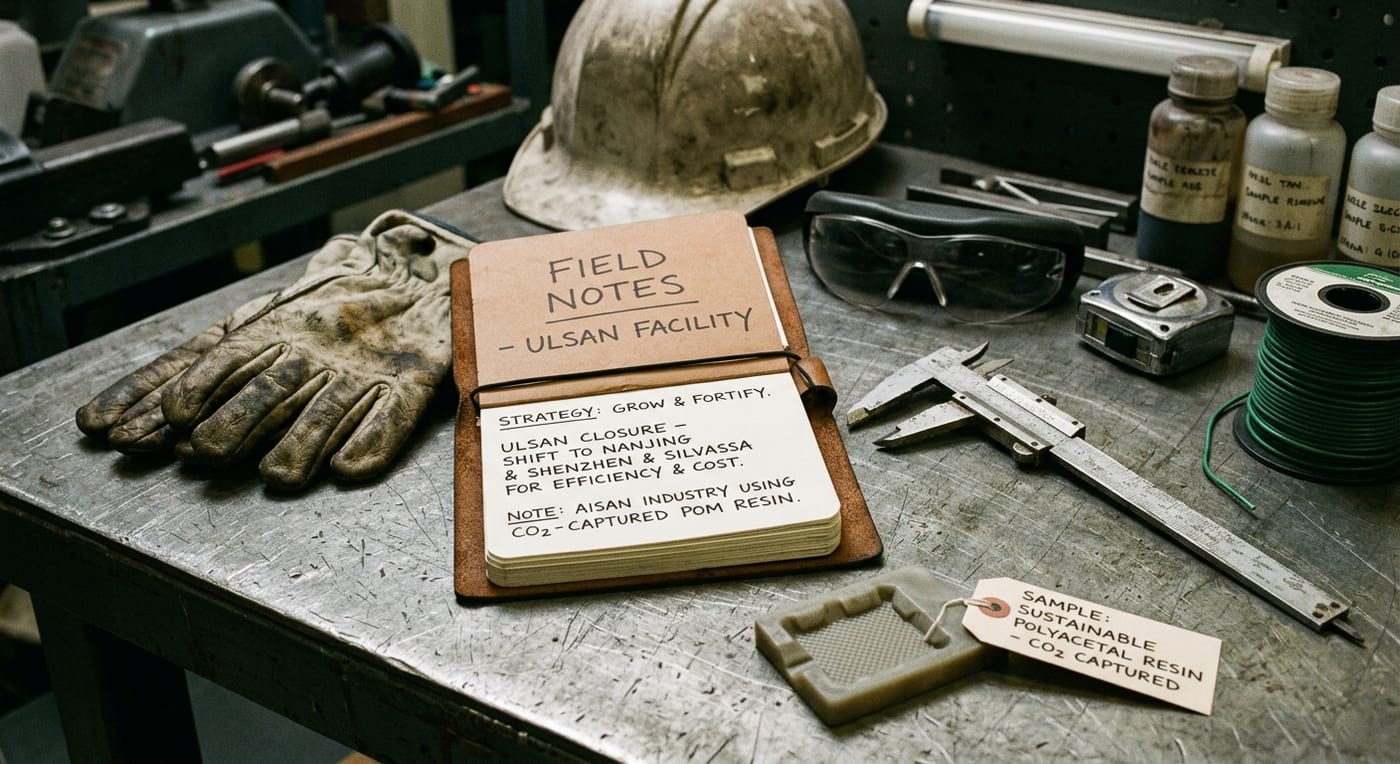
- Celanese closes its Ulsan facility as part of the 'Grow & Fortify' strategy for operational efficiency and sustainability.
- Production is redirected to Nanjing, Shenzhen, and Silvassa, consolidating operations and optimizing cost advantages.
- The move aligns with sustainable practices, evidenced by Aisan Industry using Celanese's CO2-captured polyacetal resin in vehicles.
Celanese Corporation (CE) undertakes a strategic operational shift that sees the closure of its Engineered Materials compounding facility in Ulsan, South Korea, as part of its 'Grow & Fortify' production network optimization strategy. This initiative is directed at enhancing both operational efficiency and sustainability within the company's manufacturing processes. By redirecting production to more strategically positioned facilities in Nanjing and Shenzhen, China, and Silvassa, India, Celanese aims to consolidate its operations while potentially clarifying cost advantages in its production dynamics.
Furthermore, this transition aligns with market trends favoring sustainable manufacturing practices. In a significant development linked to this strategy, Aisan Industry Kentucky, LLC has begun utilizing Celanese's innovative polyacetal resin produced from captured CO2 in their automotive fuel pump modules. This adoption is a clear indicator of the growing demand for lower-carbon solutions, particularly in the automotive sector, which increasingly seeks to lessen its carbon footprint and enhance sustainability practices.
As Celanese continues to adapt its operational framework, the closure of the Ulsan facility raises critical questions around the implications for long-term sustainability and environmental responsibility. While the immediate benefits may include enhanced production efficiency and a stronger foothold within the automotive sector, stakeholders are urged to consider the broader environmental impact of production consolidations in the evolving landscape of chemicals and materials manufacturing. The commitment to sustainability must remain at the forefront as Celanese navigates these operational changes, ensuring that any efficiencies gained do not compromise its environmental goals and responsibilities.
Related Cashu News

CRH Plc Appoints Tony Will to Strengthen Governance and Drive Growth Strategy
CRH Plc (Ticker: CRH) makes a significant governance shift by appointing Tony Will, the former chief executive of CF Industries, to its Board of Directors. This strategic change is aimed at enhancing…

McEwen Mining Advances Grey Fox Project with Promising Pre-Feasibility Study and Investment Plans
McEwen Mining (Ticker: MUX) announces a major development with the release of a Pre-Feasibility Study for its Grey Fox gold project, strategically located in Timmins, Ontario. This project is vital as…

BHP Shifts Focus to Copper Amid Rising Demand for Sustainable Technologies
BHP Group (Ticker: BHP) is navigating a significant transformation in its operational focus as it shifts away from its traditional reliance on iron ore and directs its attention towards copper, in res…

Agnico Eagle Mines Launches Share Buyback Program Amidst Recent Stock Declines and Market Challenges
Agnico Eagle Mines (Ticker: AEM) pursues a strategic initiative focused on enhancing shareholder value through a renewed share buyback program. This program authorizes the repurchase of up to 25,024,4…