
Coca-Cola's Strategic Growth and Challenges
ED
Editorial
Cashu Markets·4 min read
TL;DR
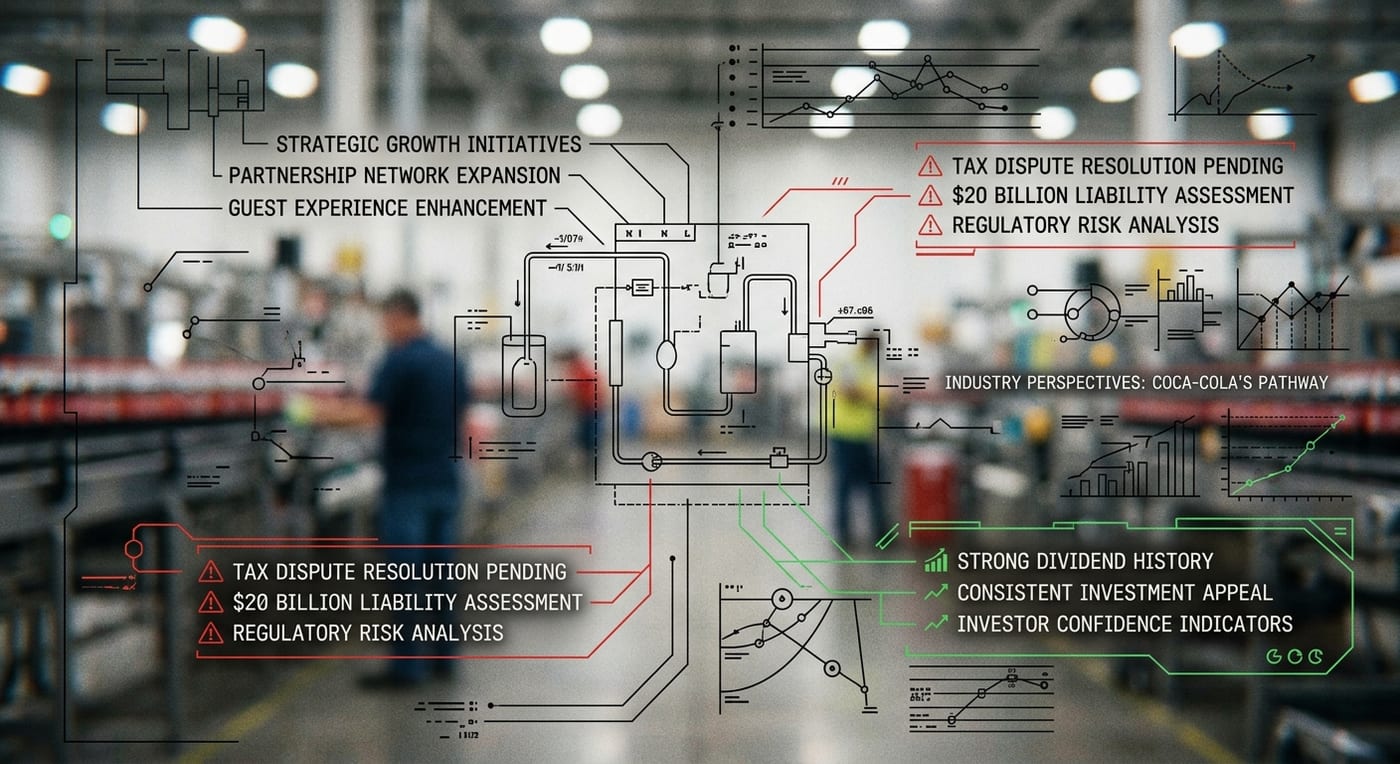
- Coca-Cola continues to enhance guest experiences through partnerships.
- The company is navigating a significant $20 billion tax dispute.
- Strong dividend history supports Coca-Cola's investment appeal.
The Coca-Cola Company (KO) continues to navigate a complex landscape of growth opportunities and challenges as it seeks to maintain its status as a leading global beverage manufacturer. With an impressive track record of increasing dividends and a strategic partnership with Marriott to enhance guest experiences, Coca-Cola is poised to capitalize on emerging markets and consumer trends, particularly in India and at major global events like the FIFA World Cup.
Diverse Strategies Drive Growth
Coca-Cola's partnership with Marriott International is designed to elevate guest experiences across Marriott properties by providing a broad selection of beverages. This collaboration is expected to enhance customer satisfaction while allowing Coca-Cola to penetrate deeper into the hospitality sector. With reports showing a strong enthusiasm for diverse beverage options from guests, this partnership will not only reinforce Coca-Cola's brand presence but potentially lead to increased revenues from this sector.
In addition to the Marriott partnership, Coca-Cola is focusing significantly on international markets, particularly India. The company plans to explore a public listing for Hindustan Coca-Cola Holdings, its largest bottler in India, by 2027. This strategic move is expected to align with India's growing beverage market, ensuring that Coca-Cola remains competitive and responsive to local consumer preferences.
Navigating Legal Challenges
Despite these promising growth initiatives, Coca-Cola is embroiled in a significant $20 billion tax dispute with the IRS. This ongoing legal battle, stemming from a disagreement over profit allocation between domestic and international operations, presents a financial risk as Coca-Cola defends its practices against tax liability claims. The company cites a historical IRS agreement from 1996 allowing profit sharing with foreign subsidiaries, which will be critical in the upcoming hearings that could shape its financial trajectory.
Maintaining Dividend Increases Amidst Financial Pressures
Coca-Cola has built a reputation as a reliable dividend-paying stock, having increased its payout for 64 consecutive years, even amidst economic fluctuations. Most recently, the quarterly dividend was raised by 4%. This kind of financial resilience is critical for investors looking for stability in their portfolios, especially as the market experiences shifts influenced by inflation and other economic conditions. The company's strong first-quarter earnings, showing a 10% increase in revenue year-over-year, bolster its ability to meet these commitments and maintain investor confidence.
Moreover, it is important to note that Coca-Cola's payout ratio stands at a comfortable 65%, demonstrating the company's ability to sustain increases while managing its overall profit sharing efficiently.
Market Trends and Competitive Landscape
As Coca-Cola accelerates its market strategies, the competitive landscape continues to evolve. The company’s association with significant global events like the FIFA World Cup 2026 positions it to leverage high visibility and engagement opportunities. Major sponsorships allow Coca-Cola to interact with a diverse global audience, reinforcing brand loyalty and expanding its reach. However, increased competition from other beverage companies who are also vying for market share adds pressure to maintain its stronghold within the soft drink sector.
In recent months, Coca-Cola's share prices have illustrated a growing valuation, even amid market uncertainties. As investors compare Coca-Cola with fast-growing tech companies like Nvidia, discrepancies in market perception indicate that Coca-Cola's premium reflects its stable but slower growth nature. The forward price-to-earnings ratio shows Coca-Cola trading at about 26 times earnings, appealing to those seeking reliable returns amidst market volatility.
This price interaction signifies the safety premium many investors are willing to pay for Coca-Cola, a brand known for its predictability versus the cyclical nature of tech stocks, which can experience larger fluctuations based on investor sentiment and market trends.
Conclusion: A Balancing Act
Overall, The Coca-Cola Company is engaging in an intricate dance navigating growth opportunities while addressing significant external challenges. Its strategic moves in hospitality, international markets, and marketing alliances position it favorably for continued growth even as it tackles legal disputes and competitive pressures in the beverage industry. That backdrop echoes earlier coverage of the issue, especially around how pricing, strategy, and demand feed into the current story.
Coca-Cola's emphasis on maintaining strong dividends, adapting to consumer preferences, and enhancing brand visibility will be vital as it seeks to reassure investors of its long-term viability. The same pressure is reflected in recent reporting on the issue, which helps explain why the company's pricing decisions remain under scrutiny.