
Deutsche Bank Boosts Presence in Panda Bond Market Amid Global Interest Rate Shifts
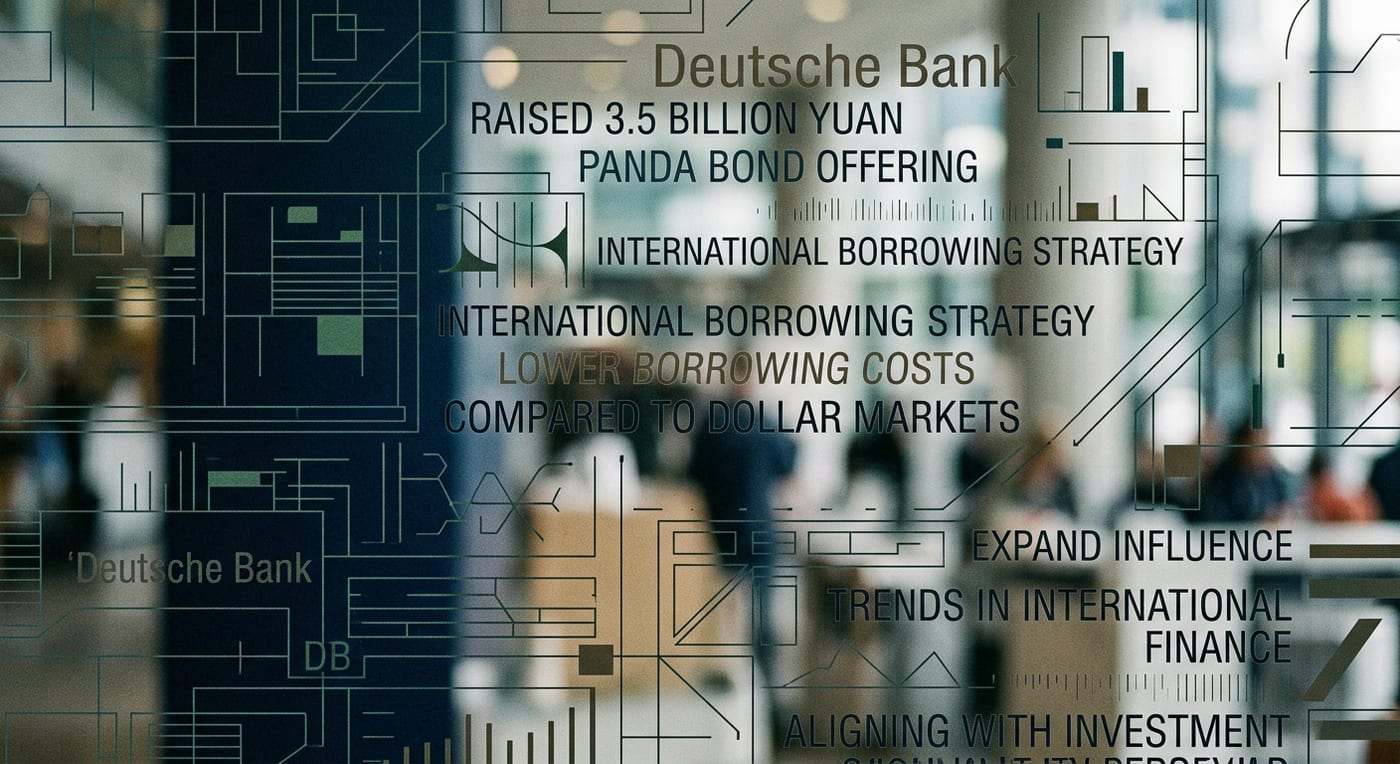
- Deutsche Bank raised 3.5 billion yuan through a successful panda bond offering, reinforcing its international borrowing strategy.
- The bank capitalizes on lower borrowing costs of panda bonds compared to dollar markets, enhancing its funding position.
- Deutsche Bank aims to expand its influence in the panda bond market, aligning with trends in international finance and investment.
Deutsche Bank AG (DB) strengthens its foothold in the burgeoning panda bond market, aiming to leverage favorable conditions for international borrowing. The bank raised 3.5 billion yuan ($518 million) through a highly oversubscribed panda bond offering in late May. This move showcases Deutsche Bank's strategic efforts to tap into the increasing appeal of yuan-denominated bonds, attracting interest from foreign governments and multinational corporations alike. The recent surge in panda bond issuance, which hit a record of 197.8 billion yuan in 2024, underscores the significant shift toward the internationalization of the Chinese currency, a trend that has sparked interest from various sectors amidst a global economic outlook characterized by shifting interest rates.
Optimizing Costs with Panda Bonds
As the borrowing costs associated with these bonds remain significantly lower than those of dollar markets—estimated between 1.7% and 2.2% for panda bonds compared to 4.5% to 5.5% for dollar bonds—Deutsche Bank and others are capitalizing on this opportunity to enhance their funding positions while minimizing costs. Analysts anticipate that this demand for panda bonds will continue to climb, largely due to economic conditions favoring lower interest rates in China. The surge in issuance reflects not only a competitive edge for companies like Deutsche Bank but also illustrates a broader trend in international finance that could reshape how debt securities are approached globally.
The Future of Panda Bonds
This proactive approach signals Deutsche Bank's commitment to expanding its capabilities in the evolving marketplace, aligning with their long-term strategy of maintaining a strong presence in international finance. As panda bond issuances from foreign entities continue to grow, the bank projects a vibrant future in this segment, with potential benefits for its operations and market positioning. Furthermore, the influx of foreign participants indicates a trust in China's market, which could elaborate on Deutsche Bank's ambitions of expanding its influence amidst global economic dynamics.
Broader Implications for the Financial Sector
In additional news, the declining dollar market rates prompt an increasing interest in foreign investment products, especially among multinationals like Volkswagen and Henkel that are exploring opportunities in Asia. As Deutsche Bank continues to play a crucial role in this landscape, the industry is likely to see enhanced collaboration between established financial institutions and newer entrants tapping into the agility of panda bonds. Analysts recognize this shift as a pivotal moment, potentially redefining cross-border financing as demands evolve within international markets.
Conclusion
With Deutsche Bank's successful entrance into the panda bond market, the financial services sector may witness an accelerated pace of foreign investment into China, aligning with the broader goals of currency internationalization and economic strategy. The bank's strategic moves reflect its adaptability and foresight, positioning it to benefit from the evolving dynamics of global finance.
Related Cashu News

Federated Hermes Launches International Leaders ETF for Global Equity Diversification and Growth.
On June 17, 2026, Federated Hermes, Inc. (Ticker: FHI) announces the launch of its new Federated Hermes International Leaders ETF, a product designed for investors looking to diversify their portfolio…

AGNC Investment Corp. Announces $0.12 Dividend Amid Economic Fluctuations and Interest Rate Concerns
AGNC Investment Corp. (Ticker: AGNC) continues to reinforce its commitment to shareholder returns despite the fluctuating economic landscape. Recently, the company announced a cash dividend of $0.12 p…

SEI Investments Appoints Matt Provencher to Enhance Global Professional Services Offerings
SEI Investments Company (Ticker: SEIC) makes a significant move in enhancing its service offerings by appointing Matt Provencher as the Global Head of Enterprise Professional Services. This newly crea…

Piper Sandler Co. Appoints New Leaders to Enhance Investment Banking Focus and Services
Piper Sandler Co (Ticker: PIPR) undergoes a significant leadership change in its investment banking division, reflecting its ambition to enhance focus and service offerings in key sectors. The firm ap…