
Ford's Electrification and Quality Transformation
ED
Editorial
Cashu Markets·5 min read
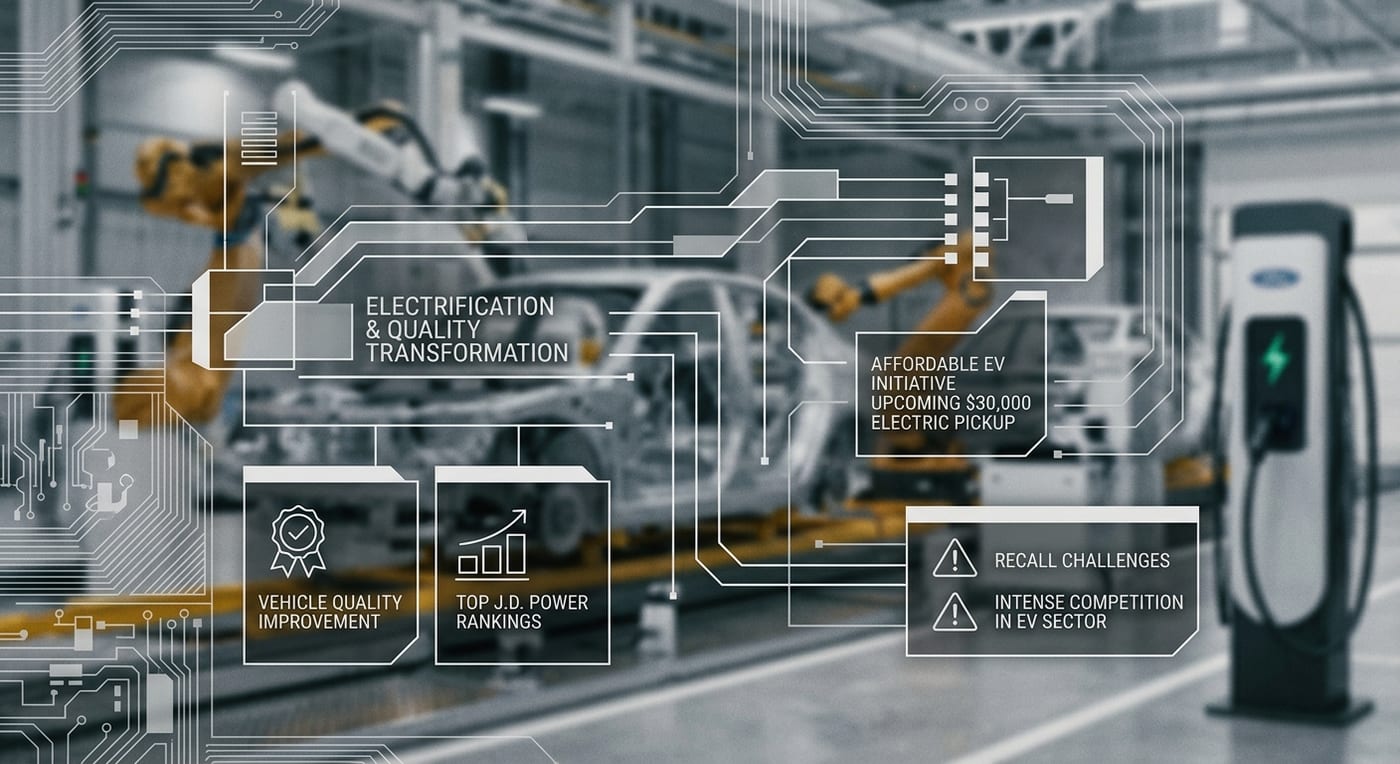
TL;DR
- Ford is improving vehicle quality, earning top J.D. Power rankings.
- The upcoming $30,000 electric pickup targets budget-conscious consumers.
- Ford's challenges include recalls and intense competition in the EV sector.
Ford Motor Company (F) is embarking on a notable transformation characterized by a strategic pivot towards vehicle quality and electrification. This journey is not just about embracing electric vehicle (EV) technology but also about rebuilding consumer trust and expanding profit margins in increasingly competitive markets. As the automotive landscape evolves, Ford's initiatives are set to redefine how it operates and competes, particularly against leaders like Tesla. That backdrop echoes earlier coverage of the issue, especially around how pricing, strategy, and demand feed into the current story.
Commitment to Quality
In recent months, Ford has significantly improved its vehicle quality, garnering recognition as the top mass-market brand in the J.D. Power 2026 U.S. Initial Quality Study. This milestone is a critical turnaround for a company that has historically faced challenges related to vehicle reliability. Ford's report of only 152 problems per 100 vehicles compared to the industry average of 175 highlights its commitment to enhancing product reliability. This focus is especially relevant as Ford seeks to regain customer confidence that had waned after past quality defects and recalls.
Amidst this improvement, Ford is not resting on its laurels. The company is actively involved in enhancing its vehicle appeal through the expansion of functionality and personalization options. Recently, Ford announced plans to produce 1,000 limited-edition Bronco models as part of its Custom Garage initiative, which offers customers aftermarket accessories and modifications. This move aims to tap into the $53 billion U.S. aftermarket industry and drive loyalty towards the brand, as it caters to 46% of new vehicle buyers who seek to customize their purchases. Such enhancements could arrive with additional costs integrated into monthly financing, making high-margin accessories a sustainable profit channel for the automaker.
Strategic Electrification
Ford's electrification strategy is pivotal in its mission to reclaim its market share in the booming EV sector. With plans for a new line of electric vehicles, including a reportedly budget-friendly $30,000 electric pickup truck, Ford is poised to attract a wider range of consumers, particularly cost-conscious buyers. This move follows the recognition of consumers' increasing demand for electric vehicles, especially as automakers worldwide redirect focus from internal combustion engines to electric propulsion systems.
Ford's revenue performance remains critical to its electrification narrative. For the quarter ending March 31, 2026, Ford reported a net income margin of 6%. This financial picture is essential as it illustrates the balance the company must maintain while ramping up EV production, which has, so far, been significantly less profitable compared to traditional vehicle sales. Ford is also generating revenue from its newly established Ford Energy division, aimed at providing battery storage solutions, indicating its diversification within the green energy sector. Moreover, the strategic insights drawn from its operational data reveal Ford's recognition of the challenges associated with EV manufacturing and market acceptance, highlighting a need for innovative approaches to appeal to reluctant buyers.
Navigating Competitive Pressures
The pressure from competitors, particularly Tesla, which has seen consistent growth and a remarkable revenue surge in its EV sector, looms large over Ford’s initiatives. Despite Ford's strong historical revenue, Tesla's aggressive pursuit of the market has underscored the need for Ford to decisively address its operational inefficiencies and market positioning. For instance, while Ford operated with a substantial revenue largely dominated by traditional vehicles, it faces velocity problems with EV sales, only generating $1.2 billion in Q1 from its EV operations versus Tesla's robust figures.
As Ford aims for broader market penetration with its electric endeavors, collaboration with technology giants signifies an attractive pathway for innovation. A notable example is Ford's partnership with Apple, which will integrate Apple Maps in its upcoming $30,000 electric vehicle. This collaboration is not just about navigation. Ford intends to incorporate advanced features that may enhance user experience and vehicle functionality, thus making its EVs more attractive in a competitive landscape. This integration of cutting-edge technology, enhancing safety and operational efficiencies through Ford's next-generation systems, could ultimately redefine its customer outreach strategy.
Challenges and Risks Ahead
However, the journey is laden with challenges. Ford faces numerous headwinds, including supply chain disruptions and escalating costs of raw materials that could hinder its march towards profitability. As the demand for lithium, cobalt, and other materials crucial for EV batteries surges, Ford's production costs could lead to significant margin pressures affecting its overall profitability.
Moreover, the brand's reputation is still marred by recent recalls—most notably affecting over 565,000 Broncos due to potential fire hazards. Such developments continue to prompt skepticism among consumers, indicating that while Ford progresses towards quality enhancements and electrification, ensuring product reliability remains paramount.
Conclusion: Building for the Future
Ford Motor Company’s commitment to refining vehicle quality and accelerating its electrification initiatives are cornerstones of its strategy in navigating a rapidly changing automotive environment. Talented leadership and strategic investments position Ford well to capitalize on opportunities within the booming EV market while restoring consumer trust through dedicated quality improvements.
As the company moves forward, balancing innovation, production efficiency, and customer engagement will be vital components of its continued relevance in the automotive sector. Ford's roadmap is ambitious, but with firm steps towards quality and electrification, it seeks not only to secure its historical legacy but to emerge as a forward-thinking innovator in the future of mobility. The same pressure is reflected in recent reporting on the issue, which helps explain why the company's pricing decisions remain under scrutiny.