
Ford's Electrification Journey and Quality Focus
ED
Editorial
Cashu Markets·4 min read
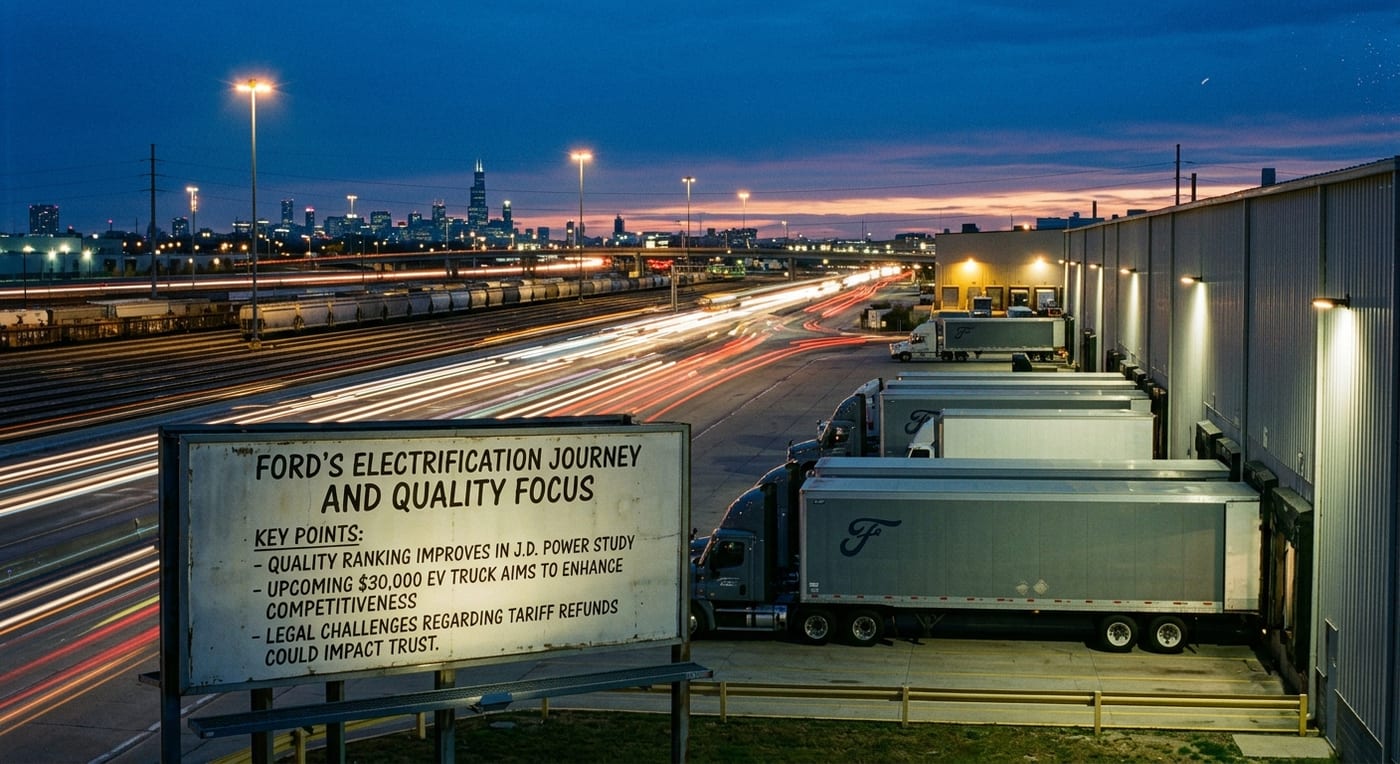
TL;DR
- Ford's quality ranking improves significantly in J.D. Power study.
- Upcoming $30,000 EV truck aims to enhance Ford's market competitiveness.
- Legal challenges regarding tariff refunds could impact consumer trust.
Ford Motor Company (F) is steering through a significant transformation as it sharpens its focus on quality and electrification. With rising competition from emerging electric vehicle (EV) makers and an evolving market, Ford is making strategic moves to enhance its vehicle offerings and rebuild consumer trust. This article delves into the critical aspects of Ford's transition, including quality improvements, ambitious EV plans, and the implications of recent lawsuit developments.
Quality Improvements: A Renewed Commitment
In recent months, Ford has made noteworthy strides in vehicle quality, a critical area for restoring brand reputation amid fierce competition. The automaker recently achieved the top position as the mass-market brand in the J.D. Power 2026 U.S. Initial Quality Study, marking a significant milestone for the company following a challenging period. The improved rating of 152 problems per 100 vehicles is a clear indication that Ford is making quality a priority in its production processes.
The turnaround is largely attributed to Ford's strategic initiatives, including the rehiring of seasoned engineers aimed at enhancing production standards and integrating their expertise with newer technologies. This shift not only underscores the importance of human oversight but also reflects Ford's commitment to rectifying past quality issues that have impacted customer satisfaction. By investing in experienced personnel, Ford is positioning itself to mitigate potential future recalls and further instill confidence in its vehicle reliability.
The Electrification Strategy: Ford's $30,000 EV Truck
As part of its extensive electrification strategy, Ford is set to release a new midsize electric pickup truck anticipated in 2027, with a competitive starting price target of around $30,000. This initiative aligns with the growing consumer demand for electric vehicles while attempting to tackle what has been historically a significant barrier: the cost differential between EVs and traditional internal combustion vehicles. This upcoming truck represents a critical test of Ford's next-generation product strategy.
Ford's endeavor to disrupt the EV cost issue is evidenced by its projected pricing strategy. If the company succeeds in offering an EV truck close to the price point of its gas-powered counterparts, it could reshape market dynamics, particularly given the struggles other automakers have faced with their more expensive EV offerings. For reference, a full-size Ford F-150 has seen pricing begin around $38,000, while previous electric variants were priced in the mid-$50,000 range.
In tandem with this product launch, Ford is implementing innovative manufacturing approaches, particularly with the development of its Universal EV Platform. This platform enables a streamlined assembly process and is expected to reduce component complexity significantly, which could translate to cost savings in production and ultimately, lower prices for consumers.
Legal Challenges: The Tariff Refund Controversy
Further complicating Ford's trajectory is a recent lawsuit alleging that the automaker is keeping a projected $1.3 billion in tariff-related benefits while continuing to charge consumers higher prices. Filed by a customer who purchased a Ford Mustang Mach-E, the suit claims that Ford's actions amount to an 'unjust windfall'. Essentially, the lawsuit posits that Ford raised prices to offset tariffs during the Trump administration and now intends to benefit from the repeal of these tariffs without adjusting prices.
This legal challenge highlights the broader implications of pricing strategies in the automotive landscape. As Ford navigates these complexities, the outcome may influence public perception and consumer trust, which are crucial for sustaining demand, particularly for its upcoming electric models. Ford has emphasized its commitment to affordability and accessibility in its vehicle lineups, framing its response to the lawsuit as part of a wider customer-focused strategy.
Conclusion: A Pivotal Moment for Ford
Ford Motor Company is at a critical juncture as it advances its quality and electrification goals while managing external legal and competitive pressures. The steps being taken to improve product quality and the ambitious plan for a competitively priced electric pickup truck illustrate the company’s adaptive strategies in a rapidly changing market. Yet, with ongoing lawsuits and significant competition in the EV sector, the road ahead is fraught with challenges that Ford must adeptly address to maintain its market position and investor confidence.
As the automotive industry continues to shift towards electrification, all eyes will be on Ford to see if it can effectively transform its offerings and secure a lasting foothold in this competitive environment. Understanding how these strategies unfold will be key for stakeholders looking to gauge the company's long-term viability and success in both the traditional and electric vehicle markets. The same pressure is reflected in recent reporting on the issue, which helps explain why the company's pricing decisions remain under scrutiny.