
Ford's Quality Revolution and EV Strategy
ED
Editorial
Cashu Markets·5 min read
TL;DR
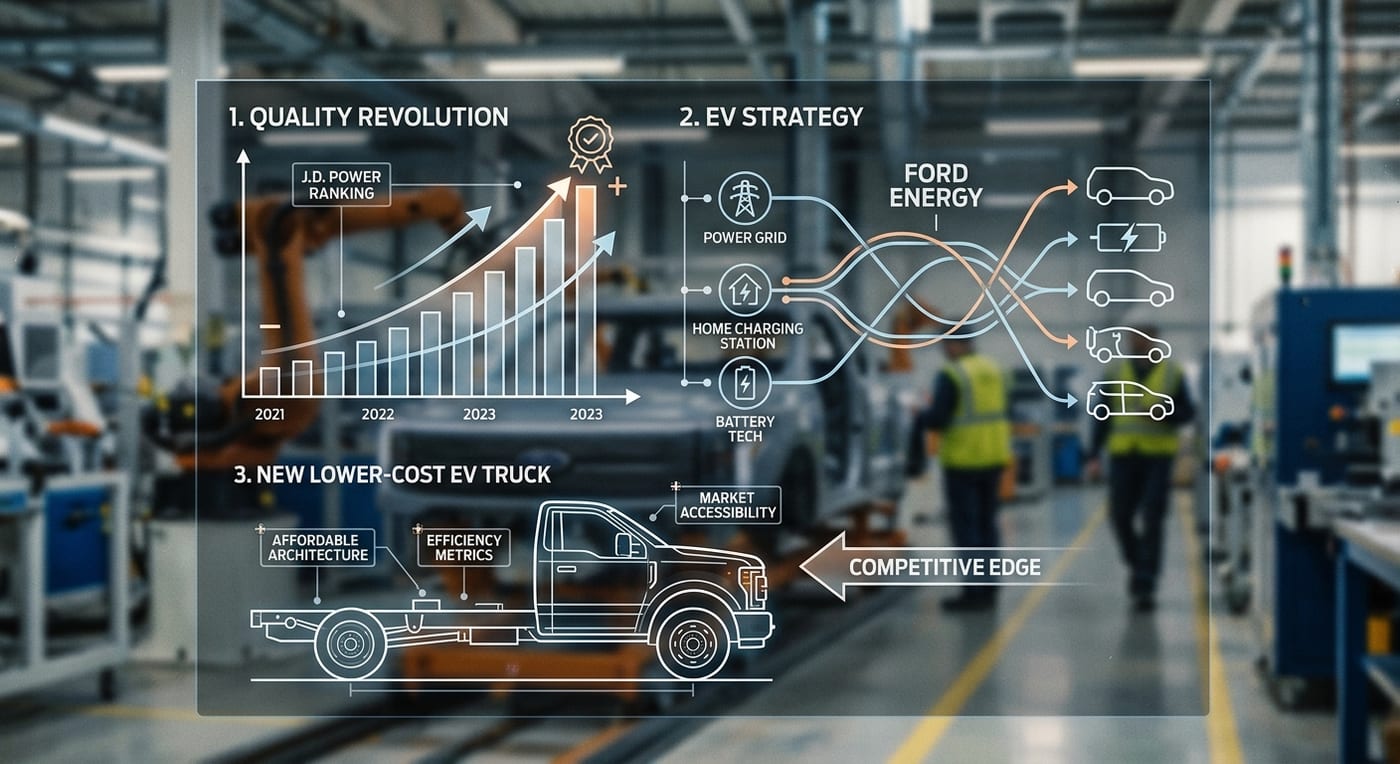
- Ford's recent J.D. Power quality ranking marks a significant turnaround.
- The company launched Ford Energy to expand its electrification strategy.
- A new lower-cost EV truck is set to hit the market, enhancing Ford's competitive edge.
Ford Motor Company ( F) is currently navigating a pivotal transition towards enhanced quality and electrification within its vehicle offerings. This journey is critical not only for reinvigorating Ford's brand image but also for securing its competitive stance in an increasingly challenging automotive landscape. With market dynamics shifting towards electric vehicles (EVs) and refined manufacturing processes, Ford's strategic realignment aims to ensure long-term sustainability and profitability.
Quality at the Forefront
One of the most significant milestones in Ford's journey is its recent recognition as the top-ranked mass-market brand in the J.D. Power 2026 U.S. Initial Quality Study. Achieving this ranking for the first time since 2010 emphasizes the successful implementation of quality improvements across its vehicle production. Ford reported a remarkable 152 problems per 100 vehicles, significantly lower than the average of 175 and showcasing a resolute commitment to quality control that had faltered in previous years. This improvement not only bolsters consumer confidence but also directly impacts Ford’s operational costs by reducing potential warranty claims.
Foremost in these enhancements has been Ford's decision to rehire experienced engineers to enhance production quality, reflecting a strategic response to earlier shortcomings related to its reliance on artificial intelligence (AI) in manufacturing processes. As detailed in previous insights, the initiative, which involved recruiting over 300 seasoned professionals, revitalizes internal quality controls, leverages mentorship, and effectively combines human expertise with technological advancements in production. This proactive stance enables Ford to minimize defects and recalls, placing the company in a stronger position as it forges ahead.
The Electrification Commitment
In parallel with its quality overhaul, Ford is doubling down on electrification through its newly launched Ford Energy initiative. This business is designed to integrate battery storage solutions that will support both Ford's growing lineup of EVs and the sustainability goals of its customers. By launching this initiative, Ford not only meets immediate market demands for eco-friendly solutions but also prepares for a future where energy-related services will become increasingly crucial to its operational model.
Ford Energy supports Ford's electric vehicle framework and offers diversified revenue streams, effectively allowing the company to capitalize on the burgeoning demand for renewable energy sources. Analysts view this initiative as strategically beneficial, predicting that it could enhance Ford’s long-term brand loyalty and overall market valuation. In tandem, the much-anticipated release of a lower-cost EV pickup truck further demonstrates Ford's commitment to addressing diverse consumer needs while reinforcing its standing as a key player in the electrification landscape. This upcoming vehicle, which is expected to retail around $30,000, signifies a notable pivot towards more affordable electric offerings catering to cost-conscious consumers amid increasing competition from companies like BYD and various American startups. Earlier articles
suggested that these developments not only aim to reclaim market position but also to reshape Ford’s narrative around innovation and affordability in the EV sector.
Navigating Competitive Pressures
While Ford robustly invests in quality and electrification, the company is acutely aware of the competitive pressures mounting from both traditional auto manufacturers and aggressive new entrants into the EV market. Ford CEO Jim Farley has openly acknowledged the formidable competition posed by Chinese EV makers, especially in light of their technological advancements and lower price points. Ford's newly developed Universal EV Platform aims to streamline production and enhance efficiency, allowing the automaker to design multiple vehicle types off the same battery architecture. However, it is imperative for Ford to balance this forward-looking strategy with immediate operational effectiveness. The automotive industry is cyclical, and demand can fluctuate significantly based on macroeconomic conditions.
Additionally, Ford's operational metrics are under scrutiny. The company's adjusted earnings before interest and taxes (EBIT) fell from $10.2 billion in 2024 to $6.8 billion in 2025, highlighting financial pressures that stem from its EV restructuring endeavors and ingredient supply chain costs. However, a rebound in first-quarter performance, with a 6% revenue increase year-over-year, signals potential for recovery as Ford works towards reducing material and warranty costs, part of an ongoing financial rebuild strategies that aim to bring long-term stability.
Looking Forward
As Ford solidifies its focus on quality and energy sustainability, investors are keenly observing how these strategies play out. The recognition from the J.D. Power survey is undoubtedly a significant boost, shining light on Ford's efforts to mitigate risks associated with recalls and enhance customer trust. Looking ahead, the company is tasked with proving that its improved quality metrics can directly correlate with enhanced profitability and reduced operational costs. With multiple safety nets in place, including diversified energy services via Ford Energy and a broader range of EVs anticipated to enter the market, Ford's holistic approach sets the stage for potential long-term growth.
In conclusion, while challenges remain, particularly regarding the volatile automotive demand landscape and competitive pressures, Ford Motor Company's commitment to quality, innovation in electrification, and strategic resource management offer a multifaceted pathway toward securing its future within the automotive industry. Investors and consumers alike will be observing closely as Ford transitions into this new era. The same pressure is reflected in recent reporting on the issue, which helps explain why the company's pricing decisions remain under scrutiny.