
Ford's Strategic Push for Quality and Electrification
ED
Editorial
Cashu Markets·5 min read
TL;DR
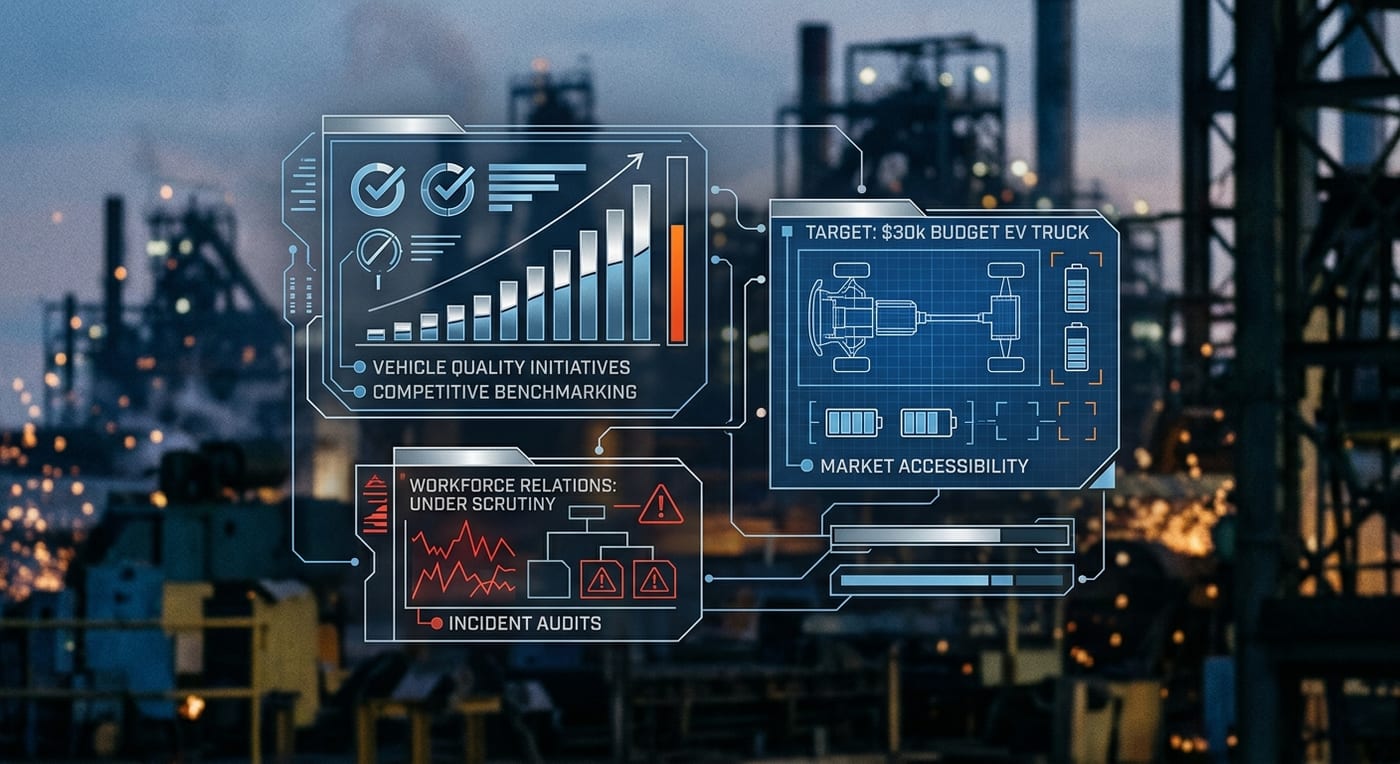
- Ford aims to enhance vehicle quality amid competition.
- New electric truck priced at $30,000 targets budget-conscious buyers.
- Workforce relations face scrutiny due to wrongful termination incidents.
Ford Motor Company ( F) is demonstrating a decisive shift towards quality enhancements and electrification, which are pivotal to its resurgence in the automotive market. As Ford navigates a competitive landscape marked by rapid innovation and consumer demand for electric vehicles (EVs), the company is implementing a series of strategic initiatives aimed at restoring its brand image and ensuring long-term sustainability. In this article, we explore Ford’s quality improvements, its electrification strategy, and the recent challenges it faces within its workforce, all of which are crucial for investors and stakeholders looking to understand the company's future direction.
Commitment to Quality
In recent months, Ford has made remarkable strides in improving vehicle quality, an essential focus for regaining consumer trust amid fierce competition. The company proudly announced its recognition as the top mass-market brand in the J.D. Power 2026 U.S. Initial Quality Study, boasting only 152 problems per 100 vehicles—significantly lower than the industry average of 175. This achievement is not just symbolic; it represents Ford's committed efforts to revamp its manufacturing processes and instill a culture of quality across its operations.
This quality turnaround aligns with Ford's ongoing transformation efforts, which include rehashing its workforce by rehiring experienced personnel to infuse quality control expertise back into the production line. These efforts underscore the company's recognition that quality is not just a departmental issue but a strategic imperative that can drive sales and rebuild customer loyalty. This approach resonates with the insights from previous articles on Ford's transformation through quality and electrification, emphasizing the critical nature of quality in enhancing consumer trust and competitive positioning.
Furthermore, the implications of these quality improvements extend beyond mere consumer perception. As Ford looks to capture more market share in the EV segment, the company understands that demonstrating superior quality in its vehicles will be integral in differentiating itself from an increasingly crowded field of electric competitors, many of whom are emerging from tech backgrounds with innovative approaches to automotive manufacturing.
Electrification Strategies
Ford is also making significant headway in its electrification initiatives with the introduction of lower-cost EV models designed to appeal to budget-conscious consumers. The automaker plans to launch a new electric truck with a target price of around $30,000, which is expected to augment its appeal in a market where affordability often dictates buying decisions. This upcoming vehicle is a response to the growing demand for practical and accessible EVs, ensuring Ford remains competitive against both traditional automakers and new entrants—particularly those from China, which have made aggressive advancements in EV technology.
In July 2026, Ford announced a strategic collaboration with China's Geely, launching a joint venture to manufacture EVs at a Ford plant in Spain. This partnership is critical as it not only extends Ford's manufacturing capabilities in Europe but also aims to leverage Geely’s extensive experience in electric vehicle technology. With Ford holding a 66% stake in this new entity, the collaboration is expected to bolster Ford's EV offerings significantly by 2028, propelling it deeper into the European market where demand for electric vehicles is soaring.
The partnership highlights a broader trend in the auto industry where established manufacturers are entering strategic alliances to navigate the rapid technological evolution and supply chain challenges of electrification effectively. These alliances are essential as Ford strives to achieve its ambitious EV targets while managing costs and maximizing efficiencies.
Workforce Challenges and Cultural Shifts
Despite its positive trajectory towards quality and electrification, Ford faces significant challenges concerning its workforce. The recent spate of wrongful terminations related to alleged theft at self-checkout kiosks in Ford's facilities has raised significant ethical and operational concerns. Reports indicate that multiple workers, including Nick Nabozny, were wrongfully dismissed after being accused of theft involving nominal amounts—cases that have resulted in public outcry and scrutiny of Ford's internal processes and treatment of employees.
These incidents spotlight the cultural shifts that Ford must navigate as it strives to regain its footing in both innovation and employee trust. As the company adjusts its operational mechanisms, including reviewing the functionality of self-service kiosks, it must also reassess its internal policies on employee treatment and support. Employee morale can significantly impact output quality and, consequently, Ford’s market position. Hence, establishing an equitable environment where employees feel valued and protected is critical for the company's long-term success.
Additionally, as Ford implements more stringent quality controls, the human aspect of manufacturing and the role of its workforce cannot be overlooked. The balance between technological advancements and human expertise will define Ford's future, especially in the intricacies of EV production, where quality assurance is paramount. A commitment to restoring workforce confidence coupled with their transformation initiatives will likely lead to enhanced production standards and better employee engagement.
The Road Ahead for Ford
Looking forward, Ford Motor Company ( F) is strategically positioned at a crossroads of opportunity and challenge. By focusing on quality enhancements across its production lines and advancing its electrification efforts, the company is taking significant steps towards reclaiming its stature as a leader in the automotive industry. However, to achieve its ambitious goals, Ford must address current workforce issues and cultivate a corporate culture that prioritizes both quality and employee welfare.
In this fast-evolving landscape, Ford's ability to adapt and respond to both market demands and internal challenges will be crucial in shaping its trajectory. As investors closely monitor these developments, the implications for Ford’s profitability, market share, and brand reputation continue to unfold, promising a transformative journey for one of America's most iconic automakers. The same pressure is reflected in recent reporting on the issue, which helps explain why the company's pricing decisions remain under scrutiny.