
Frontline Plc Sees Cautious Optimism Amid Improved Maritime Safety in Strait of Hormuz
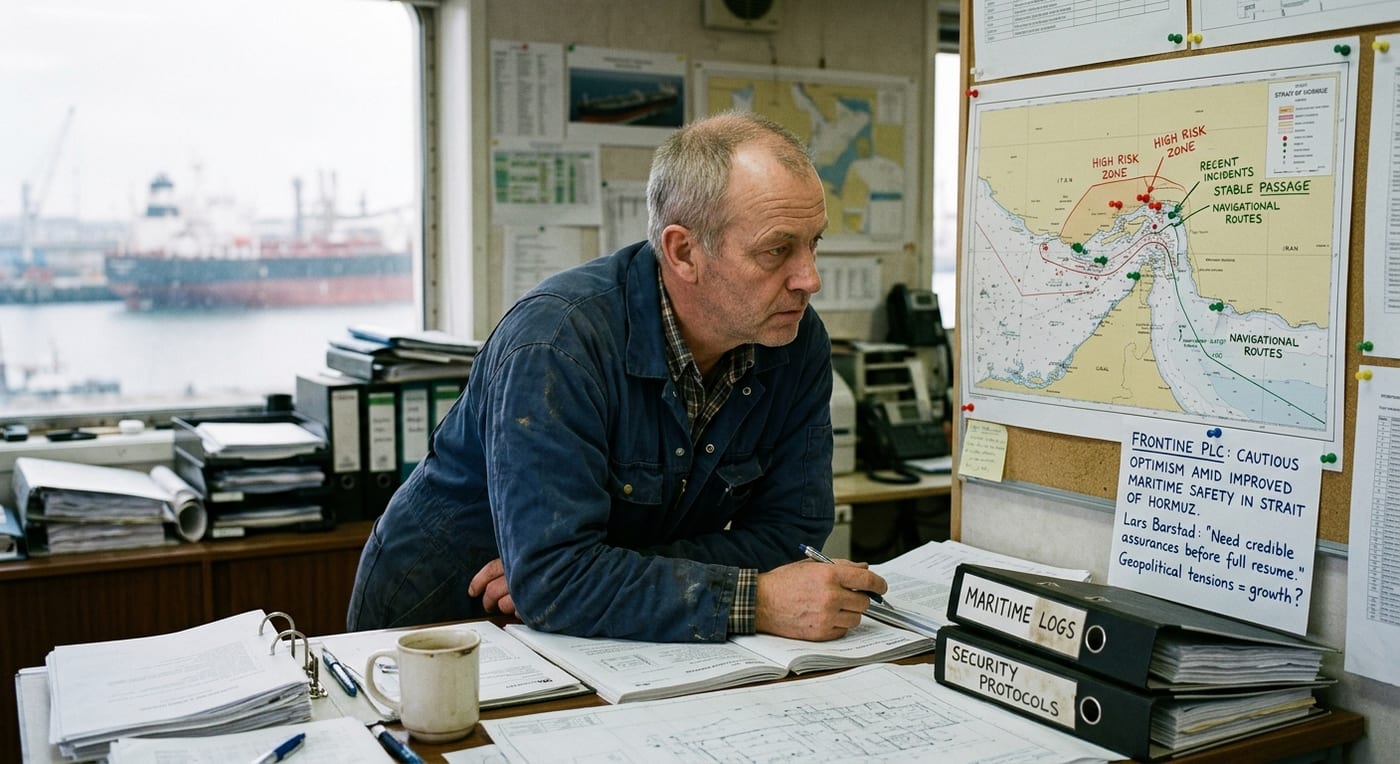
- Frontline Plc is cautiously optimistic as the threat level in the Strait of Hormuz improves due to a U.S.-Iran deal.
- CEO Lars Barstad emphasizes the need for credible assurances before fully resuming shipping operations in the strait.
- Ongoing geopolitical tensions could create opportunities for growth and stability within Frontline and the wider shipping industry.
Frontline Plc (FRO) navigates a complex maritime landscape as recent developments emerge in the Strait of Hormuz. The Joint Maritime Information Center (JMIC) in Bahrain reduces the threat level for ships transiting this crucial waterway from "severe" to "substantial" following a recently announced U.S.-Iran deal aimed at improving maritime safety. While this reduction presents a glimmer of hope for shipping operations, JMIC remains cautious, noting that the possibility of attacks and the risk posed by mines still loom large. On a positive note, recent data reveals that six tankers and 13 commercial ships managed to successfully traverse the strait, a stark contrast to the dramatic decline in traffic observed during heightened geopolitical tension marked by the February 28 attacks from Israel and the U.S. on Iran.
Future Maritime Operations in Flux
In light of the anticipated U.S.-Iran deal, which is expected to lift the naval blockade and restore normal shipping activities in Hormuz—an area critical to the global oil supply—Frontline’s CEO, Lars Barstad, comments on the cautiously optimistic sentiment within the shipping community. Many shippers remain hesitant to navigate the strait fully until they see a substantial decrease in risk levels. Industry group Bimco adds a note of skepticism, citing the historical precedent of "overly optimistic reassurances" about safety in the region and calling for credible assurances before normal traffic levels can be confidently resumed.
Navigating Complex Challenges Ahead
Though the situation is improving, the maritime security landscape remains intricate and volatile, requiring ongoing vigilance from stakeholders in the shipping industry, including Frontline. With approximately 20% of global oil supplies passing through the Strait of Hormuz, the actions taken in the coming weeks will significantly influence operational risk for companies like Frontline and their peers. The cautious optimism highlighted in recent statements and the ongoing complexities of geopolitical factors will determine the pace and volume of maritime traffic as stakeholders navigate these challenges moving forward.
Resilience Amidst Market Fluctuations
Additionally, amid this fluctuating environment, broader trends in the shipping industry become evident. Despite recent declines in oil prices, the resilience of shipping stocks has been noteworthy, as companies such as Teekay Tankers maintain stable performance. Analysts emphasize that strong fundamentals in the shipping market stem from rising global oil demand and restrained fleet growth rates, insulating the sector from crude price downturns.
Future Opportunities in Shipping
With rising geopolitical tensions and the potential for supply disruptions, shipping demand could remain buoyant, presenting opportunities for growth for firms like Frontline. Stakeholders are thus encouraged to look beyond immediate market fluctuations, recognizing that varying dynamics within the energy sector may impact shipping differently, enabling prospects for continued development and success.
Related Cashu News

Midstream Stocks Offer Growth Opportunities Amid Market Uncertainty and Oil Price Declines
In a recent development for Oneok (Ticker: OKE), the company announces a positive turn in its business as it surpasses quarterly earnings expectations. This achievement prompts Oneok to raise its full…

Matador Resources Forms Strategic Agreements with Energy Transfer to Enhance Gas Supply and Pricing.
Matador Resources Company (Ticker: MTDR) recently announces a strategic partnership with affiliates of Energy Transfer LP focused on gas supply and NGL (Natural Gas Liquids) dedications from its Delaw…

Peabody Energy Launches A$700 Million Surety Facilities, Enhancing Financial Flexibility and Compliance
Peabody Energy (Ticker: BTU) undertakes a transformative step in its financial strategy through the establishment of new asset-backed surety facilities in Australia, amounting to A$700 million. This d…

Cheniere Energy Expands LNG Capacity Amidst Growing Global Demand and Supply Uncertainty
Cheniere Energy has recently made significant strides in expanding its operational capabilities amidst a backdrop of increasing global demand for liquefied natural gas (LNG). The company has secured a…