
General Motors Launches Battery Center and Innovative Software for Enhanced EV Performance and Sustainability
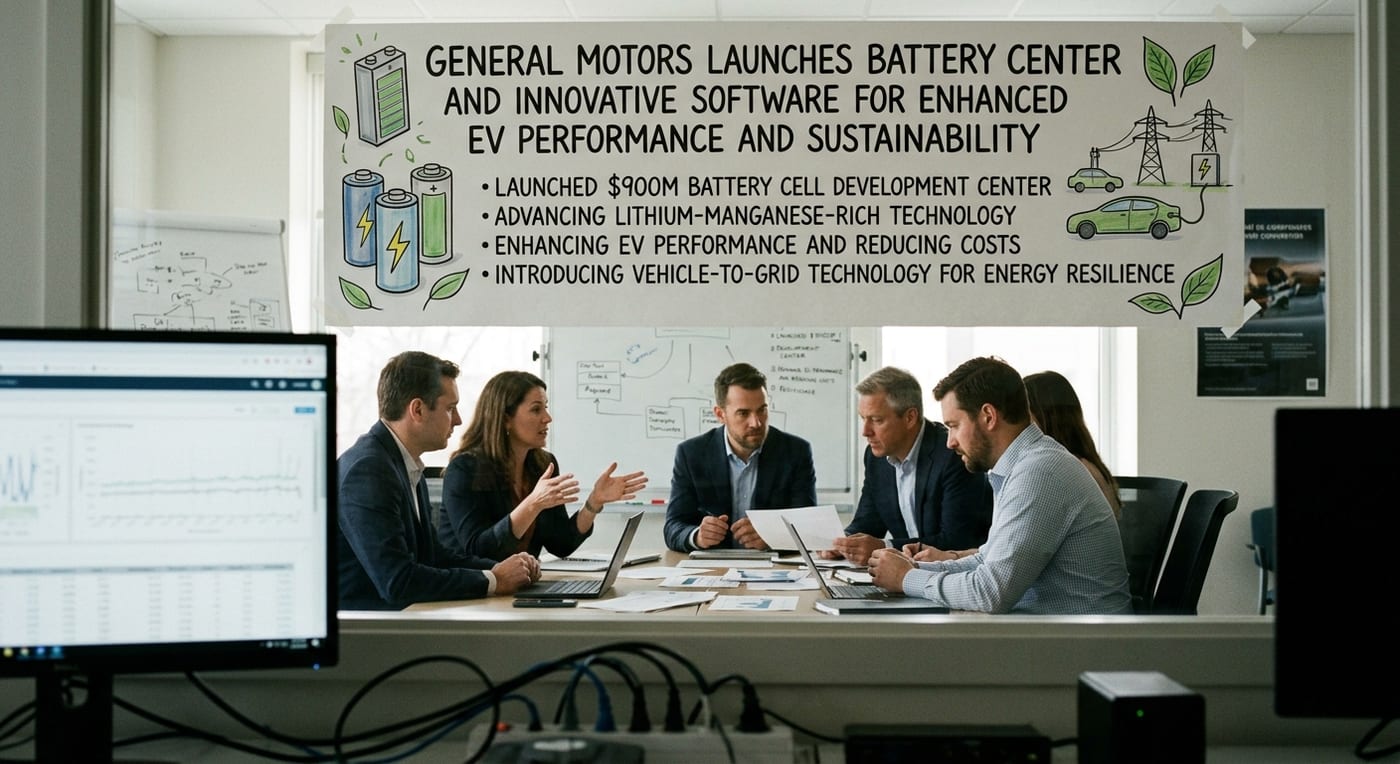
- General Motors has launched a $900 million Battery Cell Development Center to advance lithium-manganese-rich battery technology for EVs.
- GM aims to enhance EV performance and reduce battery production costs through in-house technological advancements and sustainable practices.
- The company is introducing vehicle-to-grid technology, enabling EVs to support homes during blackouts and improve energy resilience.
General Motors (GM) demonstrates its ongoing commitment to the evolution of electric vehicles (EVs) with the recent inauguration of a new Battery Cell Development Center. This facility is part of a major investment initiative totaling $900 million, aiming to advance lithium-manganese-rich battery technology. By focusing on this cutting-edge battery chemistry, GM intends to significantly enhance EV performance. The company’s investment reflects a strategic push to leverage artificial intelligence and virtual engineering, streamlining vehicle development processes to foster innovation and improve product cycles. Through these advancements, GM seeks to maintain stronger control over its electric vehicle technologies, thus reinforcing its competitive edge in the rapidly evolving EV market, which has become a priority amid growing sustainability demands from consumers and regulatory entities alike.
The announcement of the Battery Cell Development Center signifies not only an investment in technology but also a broader vision of sustainable practices at General Motors. By prioritizing efficiency in battery production, GM aims to reduce costs associated with electric vehicle batteries and extend the range of its EVs. The company's emphasis on lithium-manganese-rich chemistry is particularly noteworthy, as this technology is expected to offer better performance metrics compared to conventional batteries. As the race towards electric mobility accelerates, GM's focus on in-house technological advancements presents an opportunity to strengthen its market position, ensuring that it remains a key player in the burgeoning electric vehicle sector.
Furthermore, GM's commitment to innovation through this new development center reinforces the company's dedication to meeting the rising demands for high-performance environmentally friendly vehicles. In collaboration with ongoing research and development, the center aims to facilitate breakthroughs that could lead not only to improved battery life and efficiency but also to a more robust supply chain for electric vehicle components. As GM strives to create an ecosystem conducive to electric vehicle adoption, the establishment of this center marks a significant step toward a more sustainable automotive future, underlining the pivotal role producible battery technology will play in this transition.
In addition to its battery initiatives, General Motors announces an innovative software update for its EVs. This update enables vehicles to support homes during blackouts by allowing them to send power back to the electric grid. With over 250,000 bidirectional-capable vehicles operational in the U.S., the new vehicle-to-grid technology is designed to alleviate pressure on the electric grid during peak demand periods. GM's collaboration with utility partners aims to enhance the resilience of the energy supply while promoting consumer benefits in the process.
Moreover, GM's forward-thinking approach to integrating electric vehicles within the energy ecosystem showcases its adaptability and commitment to sustainability. By 2030, the company anticipates having more than 52,000 of its EVs actively participating in grid-balancing efforts, demonstrating GM's proactive stance in addressing the challenges posed by a changing energy landscape.
Related Cashu News

Stellantis Integrates Solid-State Battery Tech in Dodge Charger Daytona, Advancing Electric Vehicle Innovation
Stellantis N.V (Ticker: STLA) achieves a groundbreaking milestone by incorporating Factorial's FEST® solid-state battery cells into a Dodge Charger Daytona development vehicle. This integration marks…

Honda Motor Faces Major Recall of 880,000 Vehicles Over Safety Defects and Consumer Trust Issues
Honda Motor Co (Ticker: HMC) is currently facing significant attention due to a major recall affecting over 880,000 vehicles in the U.S. Significant Recall Over Safety Concerns The recall concerns a d…

Dana Merges with Eaton's Mobility Business for $5.1 Billion to Enhance Powertrain Leadership
Dana Incorporated has announced a definitive agreement to merge with Eaton Corporation's Mobility business, a transaction valued at around $5.1 billion, aiming to establish a global leader in powertra…

Motorcar Parts of America Reports Strong Q4 Growth and Improved Financial Performance
Motorcar Parts of America (Ticker: MPAA) demonstrates significant financial improvements in its latest reporting period, indicating robust operational performance and recovery in the automotive parts…