
GEO Group Seeks Changes to Federal Detention Standards Amid Rising Scrutiny and Compliance Risks
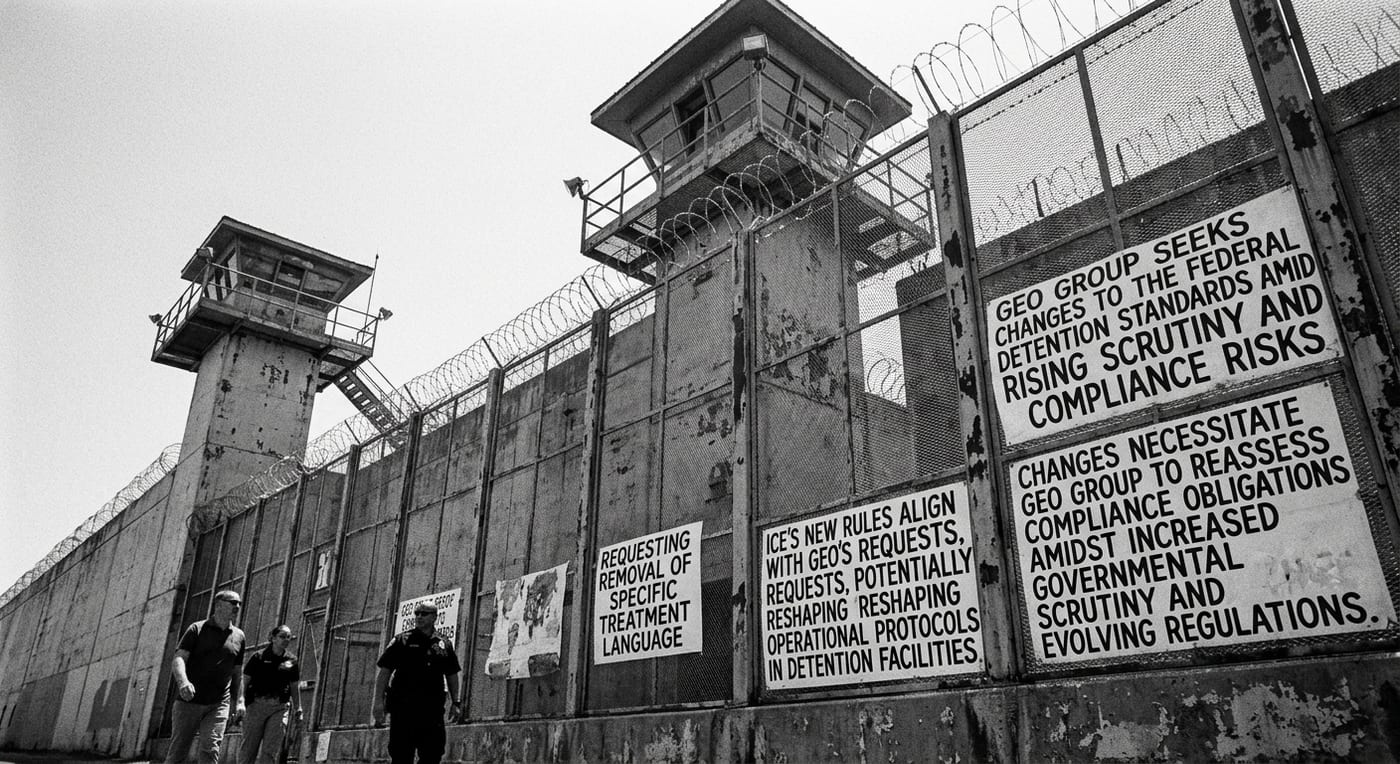
- GEO Group seeks changes to federal detention standards, requesting removal of specific detainee treatment language.
- ICE's new rules align with GEO's requests, potentially reshaping operational protocols in detention facilities.
- The changes necessitate GEO Group to reassess compliance obligations amidst increased governmental scrutiny and evolving regulations.
Recently, GEO Group (GEO), a key contractor for the U.S. Immigration and Customs Enforcement (ICE), pursues significant modifications to federal detention standards. The company requests the removal of certain language related to detainee treatment. In response, ICE publishes new rules that appear to incorporate several of these requested changes from GEO Group. This development marks a notable shift in the operational framework that governs detention facilities, raising questions about the implications for GEO's risk management and compliance strategies.
Impact of Revised Standards on Operational Strategy
The alignment between GEO Group's requests and ICE’s revised standards may redefine how the company operates its detention facilities. As a major player in the ICE contracting landscape, any changes in federal standards directly influence GEO's operational protocols, potentially impacting everything from detainee treatment practices to overall business strategy. The implications extend beyond day-to-day operations, suggesting an urgent need for GEO Group to reassess its compliance obligations amidst increasing governmental scrutiny.
Regulatory Scrutiny and Future Challenges
As concerns regarding detention center practices persist, the influence of these revised standards on GEO Group's regulatory status becomes a focal point for stakeholders. The juxtaposition of a private contractor's proposed changes and government regulations opens up discussions on the future of detention policies and the way the company can adapt to an increasingly complex regulatory environment. With the landscape of federal detention standards continuously evolving, GEO Group must remain vigilant to minimize potential legal exposure and operational risks.
Conclusion
In conclusion, GEO Group's attempts to modify federal detention standards signal an evolving landscape for private contractors. The company must navigate these changes strategically to ensure compliance and maintain its position in the industry while responding to heightened scrutiny regarding detention practices.
Related Cashu News

Leidos Holdings Faces Downgrades Amid Defense Health Agency EHR Program Shift and Market Scrutiny
Leidos Holdings (Ticker: LDOS) faces a challenging landscape as the Defense Health Agency (DHA) decides to replace the company as the lead systems integrator for the Military Health System’s electroni…

Genpact Report Highlights $18 Billion AI Potential and Urgent Need for Digital Transformation
In June 2026, Genpact (Ticker: G), in partnership with HFS Research, releases a pivotal report that uncovers the significant untapped potential of artificial intelligence (AI) within major public comp…

Verisk Analytics Enhances U.S. Tropical Cyclone Model for Improved Risk Assessment in Insurance
Verisk Analytics (Ticker: VRSK) has recently announced a noteworthy enhancement to its U.S. Tropical Cyclone Model, which significantly enhances its risk analytics capabilities. This update reflects a…

UniFirst Gains Institutional Confidence Amid Mixed Earnings and Growth Strategies
UniFirst Corporation specializes in delivering tailored uniform rental and facility service programs across multiple industries. Recently, the company has been under the spotlight due to significant i…