
IBM Faces Critical Challenges in Tech Shift
ED
Editorial
Cashu Markets·6 min read
TL;DR
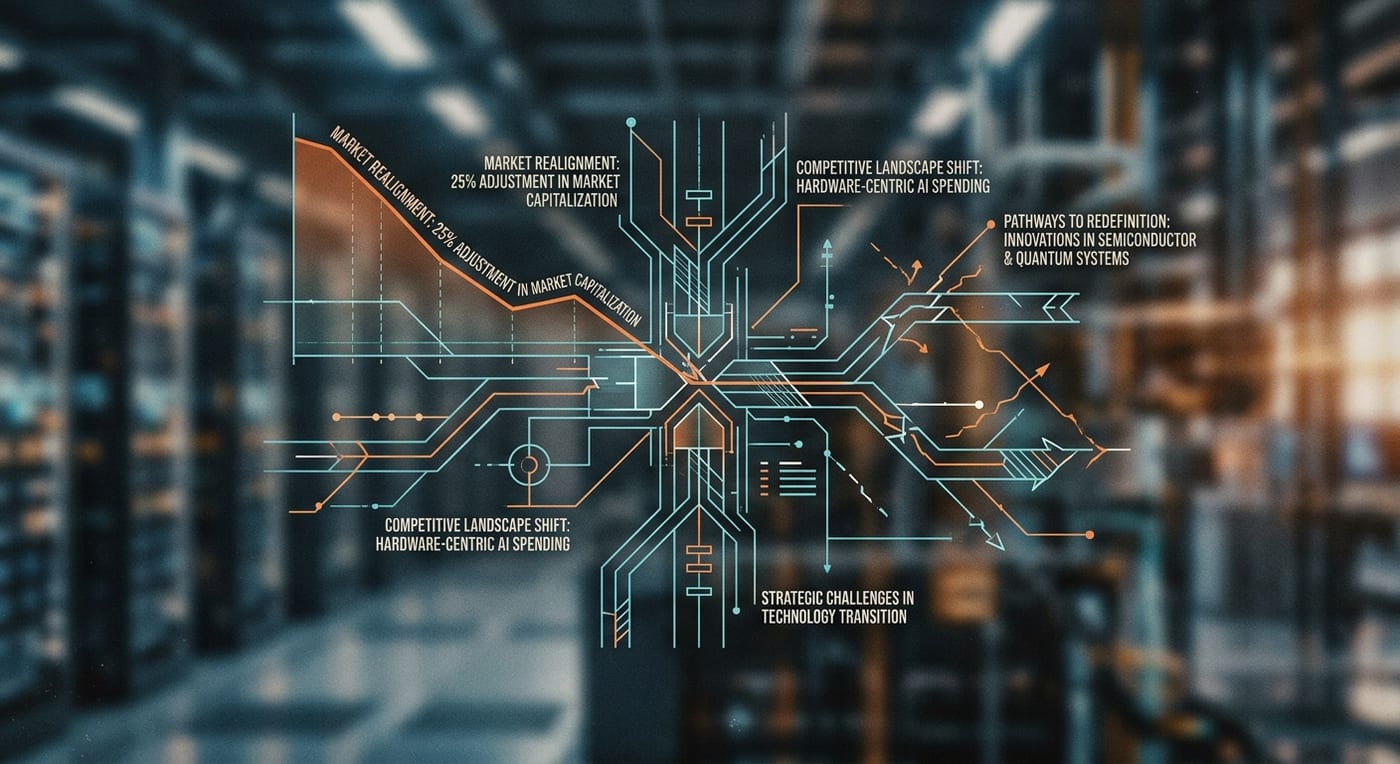
- IBM's stock dropped 25% following a disappointing earnings report.
- The company faces increased competition as AI spending shifts towards hardware.
- Innovations in semiconductor and quantum computing may redefine IBM's market position.
International Business Machines Corporation (IBM) is currently navigating through turbulent waters, marked by significant shifts in technology spending and fierce competition from peers. The company’s challenges were deeply underscored by a recent earnings warning that led to a plummet of its stock by 25%, erasing over $68 billion from its market capitalization in a single day. This article delves into IBM's recent financial struggles, the impact of changing customer priorities, and the company's outlook in the face of a rapidly evolving technological landscape.
The abrupt decline in IBM's stock was an alarming signal to investors. On July 14, 2026, CEO Arvind Krishna revealed that IBM's second-quarter revenue growth was a mere 1%, drastically missing the expectations set earlier in the year. This underwhelming performance was largely attributed to a significant shortfall in the IBM Z product line, a crucial part of its hardware offering that is renowned for reliability and processing power. The disappointing results raised questions about whether IBM had sufficiently adapted to the changing needs of its customers, particularly in the face of intensified AI infrastructure spending.
The Shift to AI Infrastructure Spending
The recent landscape of technology spending reflects a marked transition towards artificial intelligence capabilities, with many firms now prioritizing investments in memory, storage, and server infrastructure ahead of IBM's software offerings. This shift is not just relegated to IBM but reflects a broader industry trend in which enterprise customers are compelled to secure supply-constrained hardware and AI resources in anticipation of further price hikes. This has left IBM in a precarious position as it attempts to navigate a market where its traditional strengths are being challenged.
The reality of this new landscape was highlighted in a previous article that discussed the substantial impact of AI-related budgets on software sales, which have historically been a strong revenue generator for IBM. As companies seek to build out their AI capabilities, many are opting to allocate their budgets towards hardware providers like Micron Technology, which has seen a staggering increase in revenue due to the surging demand for memory chips vital to AI workloads. This diversion of resources away from traditional software spending poses a significant risk for IBM's financial health moving forward, as it struggles to retain its existing customer base and secure new deals.
Implications of the Recent Earnings Miss
The implications of IBM’s earnings miss are extensive and multifaceted. The CEO’s acknowledgment of the company's faltering execution emphasizes the urgency of adapting to these changing market dynamics. IBM had previously assured stakeholders of robust revenue growth projected at over 5% for the year, yet the recent performance appears to contradict those optimistic forecasts. If the company cannot effectively pivot and address the current spending trends of its clients, the risk of prolonged underperformance increases.
Furthermore, IBM's Z product line, designed for AI processing, faces scrutiny as its initial rollout failed to gain the expected traction. Analysts have pointed out that a significant number of large deals did not close, causing a ripple effect that contributed to the overall revenue shortfall. Krishna lamented, "We did not adapt and move quickly enough," signaling a recognition of the need for strategic realignment in the face of these new market realities.
Future Ventures and Quantum Computing Aspirations
Despite the challenges, IBM remains dedicated to pioneering excellence in technology. The company recently unveiled its groundbreaking sub-1 nanometer chip architecture as part of its strategy to enhance AI and quantum computing capabilities. This chip is expected to deliver extraordinary increases in performance and energy efficiency, aimed at industries that rely on powerful computing for AI operations. This endeavor aligns with IBM's long-term vision to regain a competitive edge amidst the ongoing technological transitions.
Moreover, IBM's establishment of Anderon, a quantum wafer foundry in the U.S., showcases its commitment to advancing quantum computing technologies while addressing demand across various applications. This push for semiconductors indicates a recognition of the profound importance of next-generation computing capabilities necessary to cater to AI needs and enhance performance metrics for tech consumers.
With these innovations underway, there is potential for IBM to redefine its market positioning. However, the success of these initiatives will largely depend on the execution and speed of implementation—issues that can make or break IBM in its quest for recovery.
Investor Outlook Amid Industry Pressure
The current competitive pressures facing IBM are significant and cannot be overlooked. Reports indicate that investments in technologies like memory and server components are currently outpacing those directed at complete solutions offered by IBM. The migration of budgets towards hardware investments not only illustrates shifting priorities but also highlights a potential long-term challenge for the company in maintaining its market share and relevance.
The tone from investors following the recent earnings announcement has been understandably cautious. As the tech industry continues to mature, the need to be proactive rather than reactive in strategy becomes imperative. The outlook for IBM in the second half of 2026 will depend heavily on its ability to navigate these exerted pressures and revitalize its product offerings to align with evolving market trajectories.
As IBM seeks to recover from this setback, its ability to communicate clear, actionable plans for improved performance will be essential. Moreover, ensuring that its new innovation pathways effectively translate into market demand will determine whether the recent challenges are short-term pitfalls or reflective of deeper, structural issues within the company.
In conclusion, IBM is at a critical crossroads, tasked with addressing present challenges while laying the groundwork for future growth. The ongoing competition within the tech landscape, combined with the rapid evolution of customer spending strategies towards AI and memory solutions, necessitates a strategic reevaluation of IBM's operational focus. As investors recalibrate their expectations, it will be crucial to watch how IBM responds to these pressing demands and whether it can once again earn back the trust of its stakeholders. The same pressure is reflected in recent reporting on the issue, which helps explain why the company's pricing decisions remain under scrutiny.