
IBM Under Fire: Financial Challenges Mount
ED
Editorial
Cashu Markets·5 min read
TL;DR
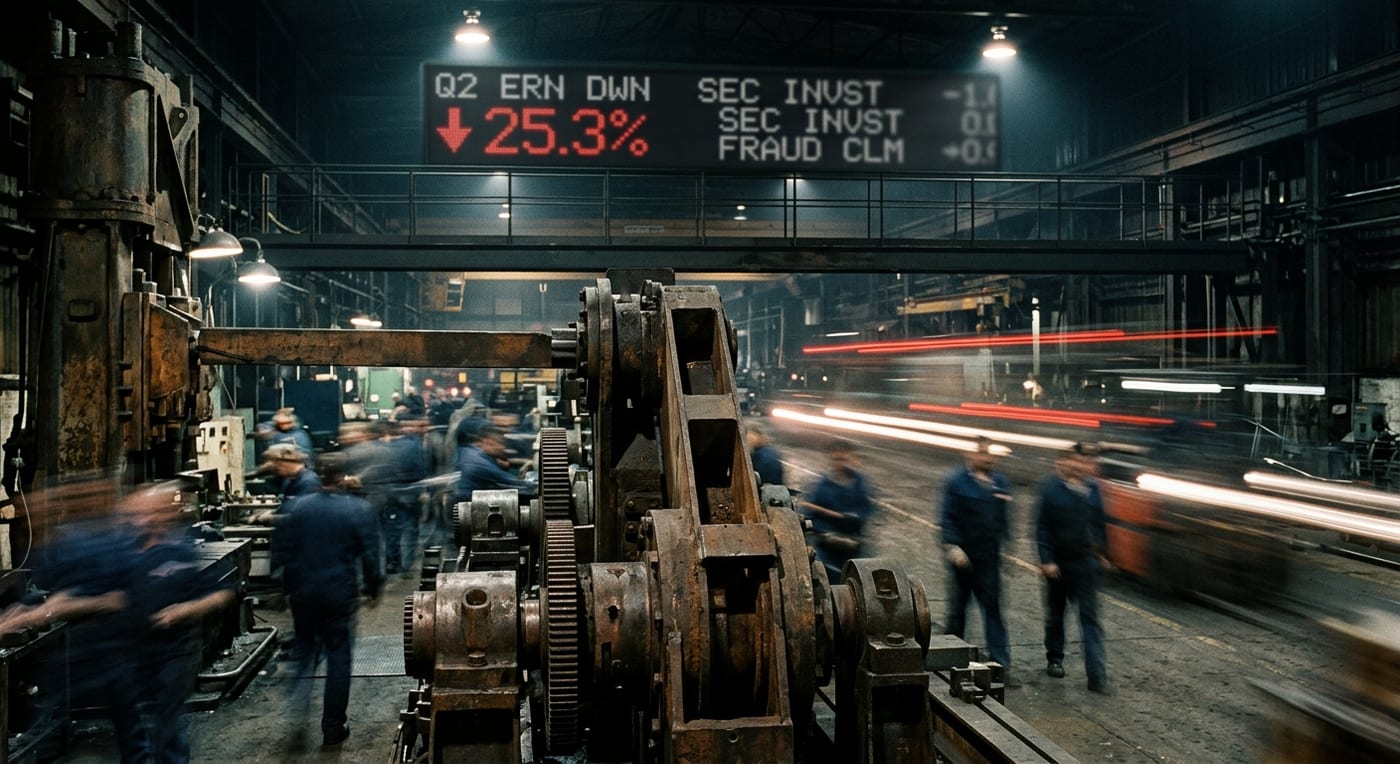
- IBM's stock dropped over 25% after disappointing Q2 earnings report.
- Ongoing investigations into potential securities fraud linked to underperformance claims.
- Strategic shifts towards quantum computing and AI essential for future recovery.
International Business Machines Corporation ( IBM) is at a crossroads, battling significant financial and operational hurdles that have drastically affected investor confidence and market valuation. The company, once dubbed the beacon of innovation in technology, has faced an unprecedented stock plunge that has raised alarms among shareholders and analysts alike. This article will delve into the intricate dynamics that have precipitated this downturn, the implications for IBM's future, and the ongoing investigations centered around its recent performance.
Stock Price Plunge and Market Reaction
In July 2026, IBM's stock price dropped by over 25% following the announcement of its Q2 earnings results, an alarming indicator of the company's rapidly deteriorating market position. The figures revealed a mere 1% revenue growth year-over-year, greatly missing the expectations of analysts who had predicted a growth rate of 5%. The reported revenues of $17.2 billion and earnings per share of $2.93 have, unfortunately, not only disappointed stakeholders but spurred a massive sell-off that erased approximately $68 billion from its market cap in a shocking single-day swing.
CEO Arvind Krishna placed the blame for the disappointing earnings squarely on the underperformance of its flagship IBM Z product line. This hybrid system, critical for numerous enterprise solutions, has struggled amidst shifting market dynamics as clients increasingly pivot towards AI and data-centric infrastructures. IBM itself noted that its failure to secure several large deals within expected timelines was a major contributor to this downturn, prompting persistent concerns about its adaptability to evolving market needs.
The Impact of AI on Technology Spending
The broader landscape of technology spending also factors heavily into IBM's struggles. As competition intensifies, particularly in the realm of artificial intelligence, corporations are reallocating budgets away from traditional software and hardware towards more speculative ventures. According to industry analysts, many firms are diverting funds towards emerging technologies, such as machine learning and cloud solutions, which places significant pressure on companies like IBM that must contend with lagging demand for legacy systems.
Furthermore, as highlighted in previous analyses, there has been a profound shift towards AI infrastructure spending, which is tugging at the foundations of IBM's established revenue streams. The company has noted a concerning correlation between customer budget reallocations towards hardware, such as memory chips, hurtling its software business to a state of stagnation. This scenario underscores the severity of the competitive landscape and shapes the call for an urgent re-segmenting of IBM's operational strategies.
Current Investigations: Securities Concerns
Adding fuel to the fire, legal ramifications are beginning to emerge amid these troubling financial developments. Multiple law firms have announced investigations into IBM for potential securities fraud due to misrepresentations surrounding the company’s ability to maintain strong growth figures. The announcement of disappointing Q2 results sparked claims that management may have misled investors regarding the robustness of its deal pipeline and the strength of its IBM Z platform. Shareholders are encouraged to explore their legal options, as the fallout from these revelations is anticipated to be significant in both financial and reputational terms.
As per the investigations, legal teams are particularly focused on whether IBM's leadership truly expected the Z product line's robust performance or if warnings had been downplayed to placate shareholders. Such scrutiny serves as an additional layer of pressure as the company endeavors to stabilize its performance and restore investor confidence.
Future Prospects and Strategic Shifts
Amidst this turmoil, IBM's strategy moving forward will likely dictate its trajectory in the tech space. With considerable efforts redirected towards quantum computing and semiconductor innovations, the company is positioning itself to embrace the next wave of technological advancements. The potential of these emergent fields remains vast, yet their associated risks cannot be overlooked.
Many industry experts believe that IBM's recovery potential hinges on a successful pivot towards hybrid cloud solutions, alongside reinvigorating its quantum and AI capabilities. These innovations are critical for redefining IBM's market relevance. Krishna remains optimistic, asserting that much of the deal pipeline that slipped in Q2 could rebound in the near term, contingent on whether the company can effectively manage the ongoing transitions in tech demand.
Ultimately, the road ahead for IBM is laden with challenges that require both strategic foresight and operational nimbleness. With competitive rivals capitalizing on shifting priorities in tech spending, IBM’s response will be closely monitored by stakeholders and analysts. As the company actively seeks to reassure investors and adjust its strategies, the landscape of the tech industry serves as both a battleground and an opportunity for revitalization.
In conclusion, although IBM finds itself in a precarious position, the actions taken in the coming months will be critical not just for averting further financial decline, but also for re-establishing its legacy in the technology sector. Investors and stakeholders alike will be hoping for a positive turnaround as these developments unfold in a rapidly changing environment. The same pressure is reflected in recent reporting on the issue, which helps explain why the company's pricing decisions remain under scrutiny.