
Kroger Innovates with Digital Shelf Labels Amid Concerns Over Pricing Transparency and Competition
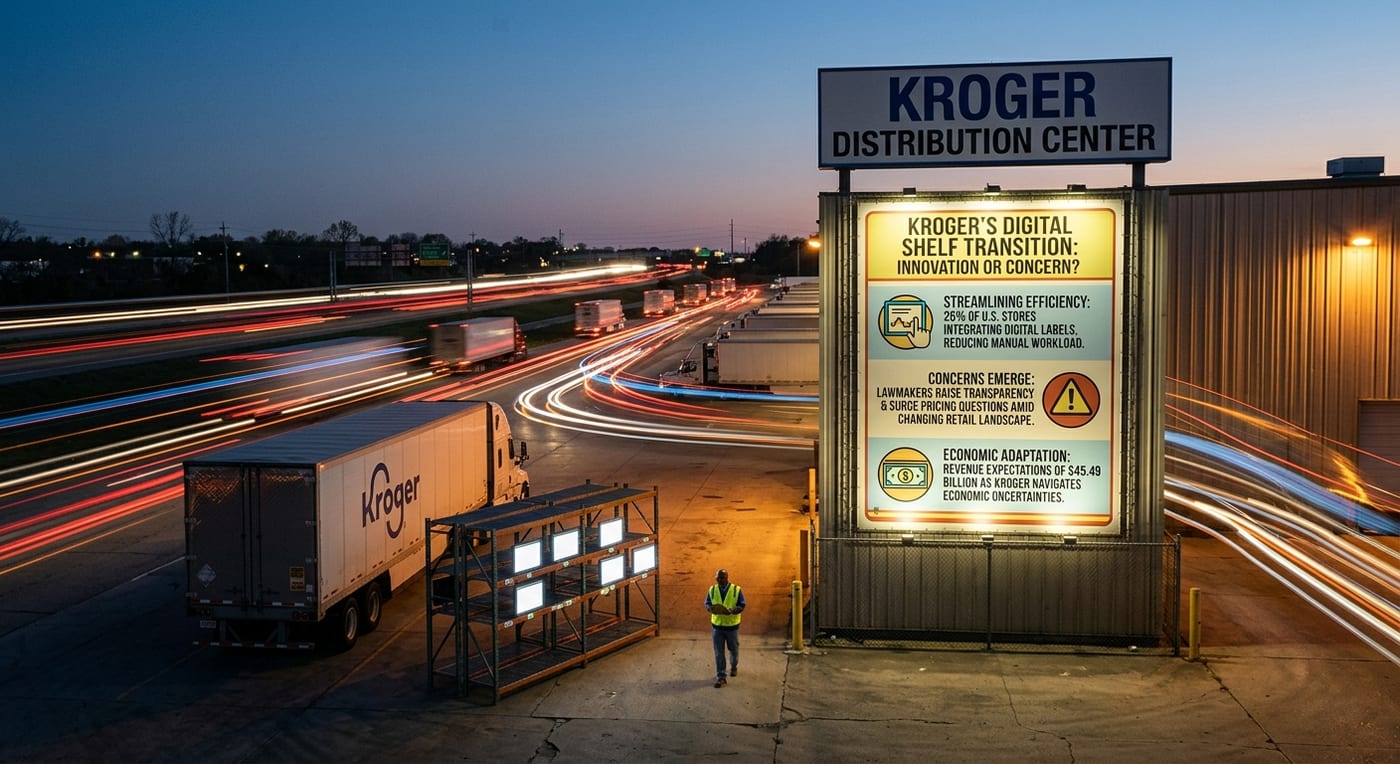
- Kroger is integrating digital shelf labels in 25% of U.S. stores to streamline price adjustments and reduce manual workload.
- The implementation raises concerns among lawmakers about pricing transparency and the potential for surge pricing affecting consumers.
- Kroger's recent earnings report shows revenue expectations of $45.49 billion as it adapts to changing consumer behaviors amid economic uncertainties.
Kroger Company (KR) is leading the path towards technological innovation in the retail sector by integrating digital shelf labels across a significant portion of its grocery stores. This initiative, now operational in about 25% of its U.S. locations, aims to streamline price adjustments and alleviate the manual workload associated with traditional shelf tagging. As grocery shopping evolves, Kroger embraces technology to enhance customer experience and operational efficiency, positioning itself as a forward-thinking player in the competitive grocery market.
Regulatory Concerns Over Surge Pricing
However, the implementation of digital pricing systems has provoked concerns among state and federal lawmakers regarding its potential effects on pricing transparency. Critics warn that such technology might facilitate surge pricing, which could obscure actual costs for consumers. As the grocery landscape transforms, Kroger must navigate these regulatory challenges while ensuring that consumer trust remains intact. The company's leadership underscores a commitment to leveraging technology responsibly as it seeks to redefine grocery shopping in the modern age.
Navigating Market Challenges
Despite these innovations, Kroger finds itself operating against a backdrop of fluctuating performance metrics. The recent earnings report reveals revenue expectations around $45.49 billion, consistent with previous year figures, as the supermarket chain adjusts to changing consumer behaviors amid economic uncertainties. As competition from rivals such as Walmart intensifies, Kroger must continue to innovate while maintaining cost-effectiveness.
Conclusion
The proliferation of digital shelf labels presents both opportunities and hurdles, with the outcome of this pioneering effort likely influencing Kroger's long-term strategy in a rapidly evolving retail environment.
Related Cashu News

Natural Grocers by Vitamin Cottage Launches Father's Day Promotion for Family Savings and Celebrations
Natural Grocers by Vitamin Cottage (Ticker: NGVC) announces a special Father’s Day promotion designed to offer customers significant savings and enhance their celebratory experiences. From June 19 to…

Target Appoints Isaac Mizrahi as Creative Director to Enhance Brand and Product Development
Target Corp (Ticker: TGT) strengthens its design identity with a key appointment, bringing renowned designer Isaac Mizrahi on board as its first creative director at large. This strategic move aims to…

Dollar Tree Reports Strong Q1 Growth and Revises EPS Guidance Amid Market Changes
Dollar Tree (Ticker: DLTR) continues to carve out a new market identity, showcasing impressive growth and a changing customer demographic in its most recent performance announcement. Strong Sales Perf…

Costco's DEI Strategies Enhance Customer Loyalty and Attract LGBTQ+ Consumers Amid Changing Market Trends
Costco Wholesale (Ticker: COST) embraces pivotal changes in consumer behavior driven by diversity, equity, and inclusion (DEI) initiatives, reflecting a broader trend that influences purchasing decisi…