
Legal Turmoil Surrounds Rackspace Technology
ED
Editorial
Cashu Markets·5 min read
TL;DR
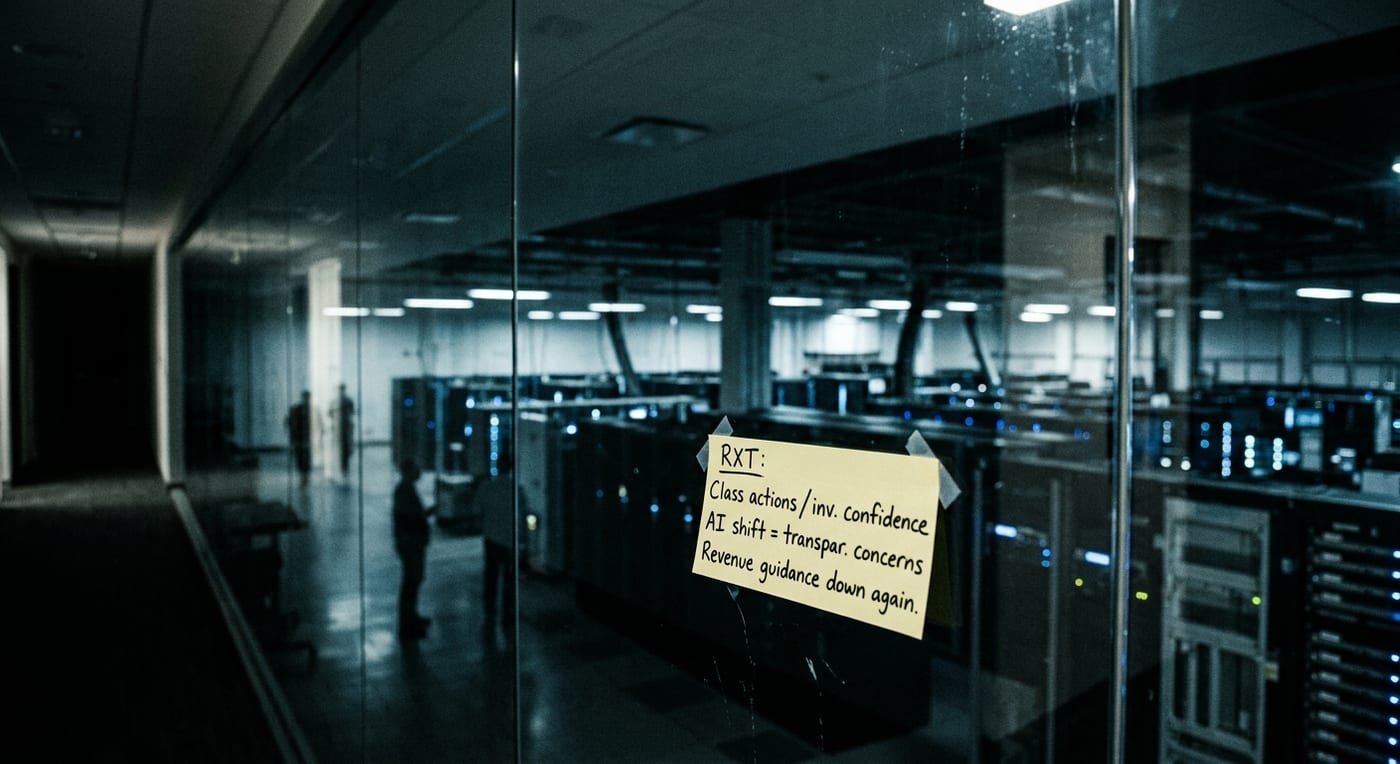
- Class action lawsuits threaten Rackspace's investor confidence - Shift towards AI raises operational transparency concerns - Significant revenue guidance cuts impact financial outlook
Rackspace Technology, Inc. RXT is currently facing daunting challenges, notably stemming from mounting legal troubles that have significantly impacted investor confidence in the company. A series of class action lawsuits, firmly rooted in allegations of securities fraud, have surfaced, threatening to overshadow the company's strategic shift towards artificial intelligence (AI) infrastructure. This article delves into the ongoing lawsuits, the implications for Rackspace's business model, and the broader investor outlook as the company navigates these troubled waters.
Class Action Lawsuits Emerge
The class action lawsuits against Rackspace are centered on allegations that company executives made misleading statements regarding the financial health and operational focus of the firm. Specifically, these allegations posit that Rackspace failed to disclose critical information about its declining Public Cloud business during a crucial time when the company was reallocating resources toward AI initiatives. This shift has raised questions among investors about the company's transparency and has exacerbated concerns regarding its future performance.
Investors who acquired Rackspace securities between May 7, 2026, and July 8, 2026, now find themselves facing potential losses as they grapple with the fallout from these legal actions. Particularly alarming was the company’s unexpected decision to cut its full-year revenue guidance by $150 million on July 9, 2026, which was attributed to an exit from low-margin resale operations and a noticeable decline in Public Cloud revenue as customers shifted towards hyperscale cloud platforms.
Analyzing the Shifts Towards AI
Rackspace's strategic pivot towards artificial intelligence has become a focal point in the allegations made against it. The shift requires significant reallocation of capital and resources away from its more profitable Private Cloud segment, raising alarms about the potential repercussions on overall revenue. During a period in which the company had previously reaffirmed its revenue guidance, the failure to disclose that the AI pivot would detract from more lucrative segments has left investors feeling blindsided.
This pivot appears to be part of a broader trend in the tech industry, where companies are seeking to capitalize on the growing demand for AI technologies. However, Rackspace's ability to integrate this shift effectively remains in question as its core infrastructure businesses experience contraction. As cited in previous discussions, the combined focus on AI growth while forsaking key revenue streams puts Rackspace at a precarious junction, risking both investor trust and financial health.
Impact on Financial Health and Investor Confidence
The financial implications of these ongoing trials are significant. With a 33.6% plunge in stock value following the revised revenue guidance, investor confidence appears to be waning. Legal experts have indicated that the outcomes of these lawsuits could heavily influence not only Rackspace's public image but also its market performance in the coming quarters.
As outlined in previous insights, Rackspace's decisions to shift focus and the accompanying lack of communication regarding its operational strategies have left many questioning how resilient its business model remains in a rapidly changing technological landscape. The consolidation of resources towards AI is not inherently negative; however, the perceived opacity of the company's operations raises concerns about management efficacy and strategic foresight.
Competing in a Crowded Market
In the current environment, where traditional cloud computing services face stiff competition from larger, hyperscale operators, Rackspace's survival largely hinges on its ability to innovate and reinvigorate its service offerings. As it attempts to carve out a position in the AI space, the company must also contend with direct competition from established players, many of whom have more robust infrastructures and deeper pockets.
Rackspace's reliance on its AI strategy will be scrutinized, particularly as the company navigates its legal challenges. Continued investor apprehension regarding the company's transparency and operational priorities will remain heightened until these issues are resolved. The court's decisions regarding the class action lawsuits will undoubtedly hold significant sway over how investors assess Rackspace in the future and reference its ability to market itself effectively moving forward.
Looking Ahead: What’s Next for Rackspace?
As Rackspace Technology, Inc. embarks on navigating through this tumultuous period marked by legal challenges, the way forward seems murky. Investors are now confronted with the dilemma of whether their trust in Rackspace can be restored given the ongoing scrutiny over its financial reporting practices and strategic decision-making processes. The upcoming months are critical, and stakeholders will closely monitor the company’s responses to legal inquiries and its overall recovery strategy. In conclusion, while Rackspace Technology is at a pivotal juncture with new strategic initiatives aiming for AI growth, the company must first address significant legal obstacles and investor concerns regarding its operational transparency. The interplay between its ambitious growth plans and investor sentiment will be critical as the situation unfolds, ultimately determining Rackspace's trajectory in the competitive landscape of technology services. If investors continue to face uncertainty, the long-term implications on both financial performance and market position could be severe. The same pressure is reflected in recent reporting on the issue, which helps explain why the company's pricing decisions remain under scrutiny.