
Lockheed Martin Advances AI-Driven Missile Defense Amid F-35 Program Scrutiny and Production Delays
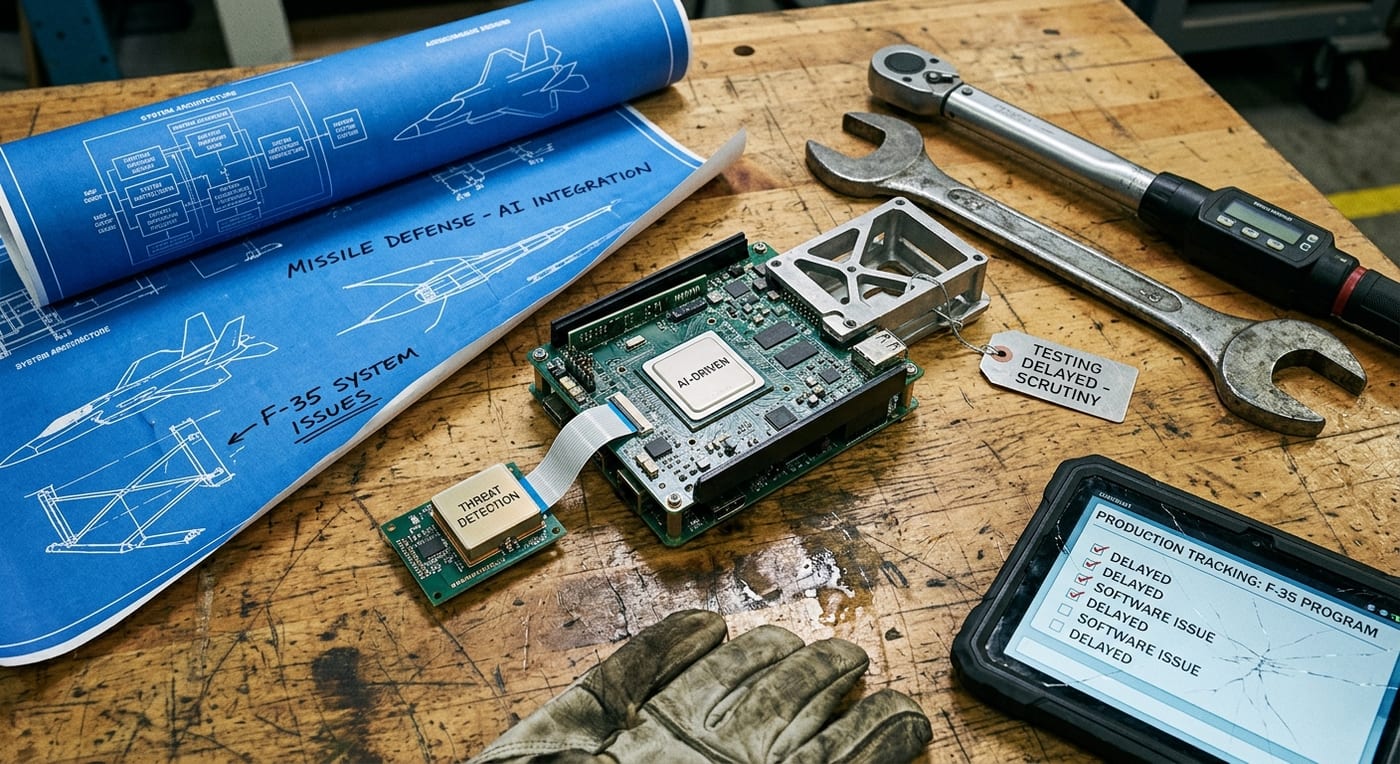
- Lockheed Martin leverages AI to enhance air and missile defense systems, enabling rapid detection and engagement of threats.
- The company’s innovative solutions adapt to advanced missile technologies, improving military responses and first-strike capabilities.
- Lockheed Martin faces scrutiny over F-35 production delays and software issues, affecting U.S. military operational readiness.
Lockheed Martin (LMT) is making significant strides in revolutionizing air and missile defense systems through the incorporation of advanced technology and artificial intelligence (AI). As threats from missiles continue to evolve, the company prioritizes the development of defense systems that can detect, decide, and engage at 'mission speed.' Recent communications from the company highlight how it is leveraging AI-enabled decision support and open architecture to enhance interconnectivity across diverse domains, including land, sea, air, and space. This integrated approach not only streamlines operations but also fortifies the overall effectiveness of defense mechanisms against emerging threats.
Lockheed Martin’s commitment to innovation plays a crucial role in adapting to the rapidly changing landscape of national security. The company harnesses its decades of expertise in aerospace and defense to create cutting-edge solutions that tackle complex challenges posed by advanced missile technologies. The emphasis on AI in decision-making processes represents a transformative shift, enabling quicker responses to potential threats while simultaneously enhancing first-strike capabilities for the military. By creating a seamless interface among various operational domains, Lockheed Martin is positioning itself as a leader in the modernization of missile defense.
The potential impact of these developments on national security cannot be overstated. As global tensions rise and missile threats become more sophisticated, the capabilities being advanced by Lockheed Martin can significantly contribute to the protection of critical infrastructure and strategic interests. The firm's focus on integrated defense systems signifies a proactive approach to security, ensuring that military forces are better prepared to meet contemporary and future challenges. This ongoing innovation not only reinforces Lockheed Martin’s standing in the defense sector but also plays an essential role in shaping the future landscape of missile defense technologies.
In addition to its advancements in air and missile defense systems, Lockheed Martin continues to face scrutiny over its F-35 fighter jet program. The U.S. military has raised concerns about production delays and unresolved software deficiencies that could affect operational readiness.
Moreover, as the Pentagon grapples with the challenges associated with the F-35, the pressures mounted on Lockheed Martin highlight the need for rapid rectification of ongoing issues, ensuring that the U.S. armed forces can maintain an advantage amid rising global security concerns. The future of the F-35 program is currently in a state of uncertainty as the company works to meet military expectations and operational requirements.
Related Cashu News

Lockheed Martin Advances AI, Autonomy, and Space Exploration for Enhanced Military Operations and Safety
Lockheed Martin (Ticker: LMT) is making significant strides in integrating artificial intelligence and autonomy to enhance the efficiency and safety of military operations. The company focuses on deve…

AeroVironment Reports 133% Revenue Growth Amid Rising Military Demand for UAVs
AeroVironment (Ticker: AVAV) has emerged as a leader in the unmanned aerial vehicle (UAV) industry, particularly amidst a heightened global focus on defense technologies. The company has achieved subs…

AZZ Inc. Earnings Report Could Impact Stock Volatility and Dividend Investor Sentiment
AZZ Inc. (Ticker: AZZ) positions itself strongly in the industrial sector with its upcoming earnings report, reflecting its financial health and dividend strategy. Scheduled for release on July 8, the…

Astronics Signs Long-Term Deal with Vertical Aerospace for Valo eVTOL Power Systems
In late June 2026, Vertical Aerospace establishes a long-term agreement with Astronics Corporation (Ticker: ATRO) to supply the low-voltage power distribution system for its Valo eVTOL aircraft. This…