
Mercury General Reveals Critical Insights on U.S. Road Safety and Injury Risks
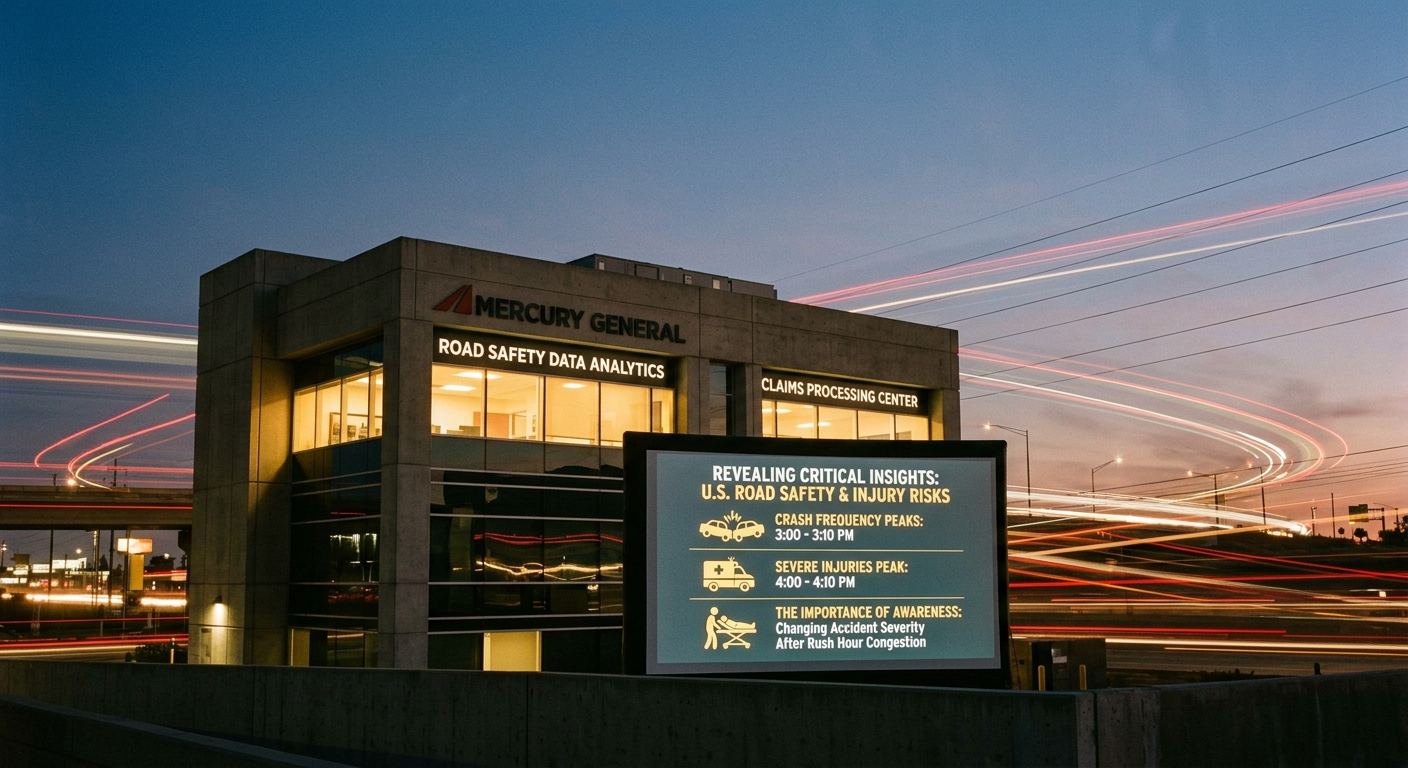
- Mercury General analyzes U.S. road safety using five years of proprietary claims data.
- Crash frequency peaks between 3:00 and 3:10 PM, while severe injuries peak from 4:00 to 4:10 PM.
- Findings highlight the importance of public awareness regarding changing accident severity after rush hour congestion.
Mercury General (MCY) unveils a significant analysis of road safety, focusing on driving risk patterns in the U.S. The company leverages five years of proprietary claims data to challenge conventional perceptions of when it's most dangerous to drive during rush hour. Their results indicate that while crash frequency peaks between 3:00 and 3:10 PM, the gravest risk of severe injuries occurs shortly after, specifically between 4:00 and 4:10 PM. This revelation points to the critical need for public awareness about fluctuating accident severity related to changing traffic dynamics as congestion begins to ease.
New Insights from Claims Data
According to Heather Paull, Divisional Claims Manager at Mercury Insurance, the dynamics of rush hour change drastically as the day progresses. Early incidents tend to involve low-speed, stop-and-go traffic, while the latter moments feature more severe collisions due to increased vehicle speeds. This analysis not only reinforces the potential hazards drivers may face but also helps Mercury Insurance to inform and educate customers about safe driving practices.
Weekday vs. Weekend Patterns
The study also highlights a consistent crash pattern influenced by typical work schedules, revealing a steady volume of accidents from 3:00 to 4:00 PM. However, as the weekend approaches, the data shifts, with peak crash volumes and increased injury risks documented around noon on Saturdays. This nuanced understanding emphasizes the importance of adapting safety messaging and policies to reflect the reality of driving conditions at different times.
Conclusion
Ultimately, Mercury Insurance's comprehensive study sheds light on the true nature of risk on the roads. It underscores the importance of informed driving, not just during peak hours, but throughout the day, marking a pivotal moment for the company in rethinking road safety communications.
Related Cashu News

Old Republic International Navigates Financial Challenges Amid Rising Operational Costs and Investor Scrutiny
In the latest developments regarding Old Republic International (Ticker: ORI), the company grapples with financial pressures that challenge its recently strong performance metrics. With signs of slowe…

Lincoln National Enhances Leadership Strategy with Key Executive Promotions and Succession Planning
Lincoln National Corporation (Ticker: LNC) enhances its leadership strategy with recent executive promotions designed to strengthen organizational continuity and risk management. The company promotes…

Fidelity National Financial Faces Investor Scrutiny Amid Disappointing Q1 Revenue Performance
Fidelity National Financial (Ticker: FNF) faces increased scrutiny following its disappointing revenue performance in the first quarter. The company reports results that fall behind analyst expectatio…

Brown & Brown Appoints Tax Insurance Leader and Restructures Credit for Future Growth
Brown & Brown (Ticker: BRO) takes significant strides in enhancing its operational capabilities by appointing a new leader focused on tax insurance. The recent appointment of Corey Lewis as the retail…