
Micron: Capitalizing on AI Demand
ED
Editorial
Cashu Markets·5 min read
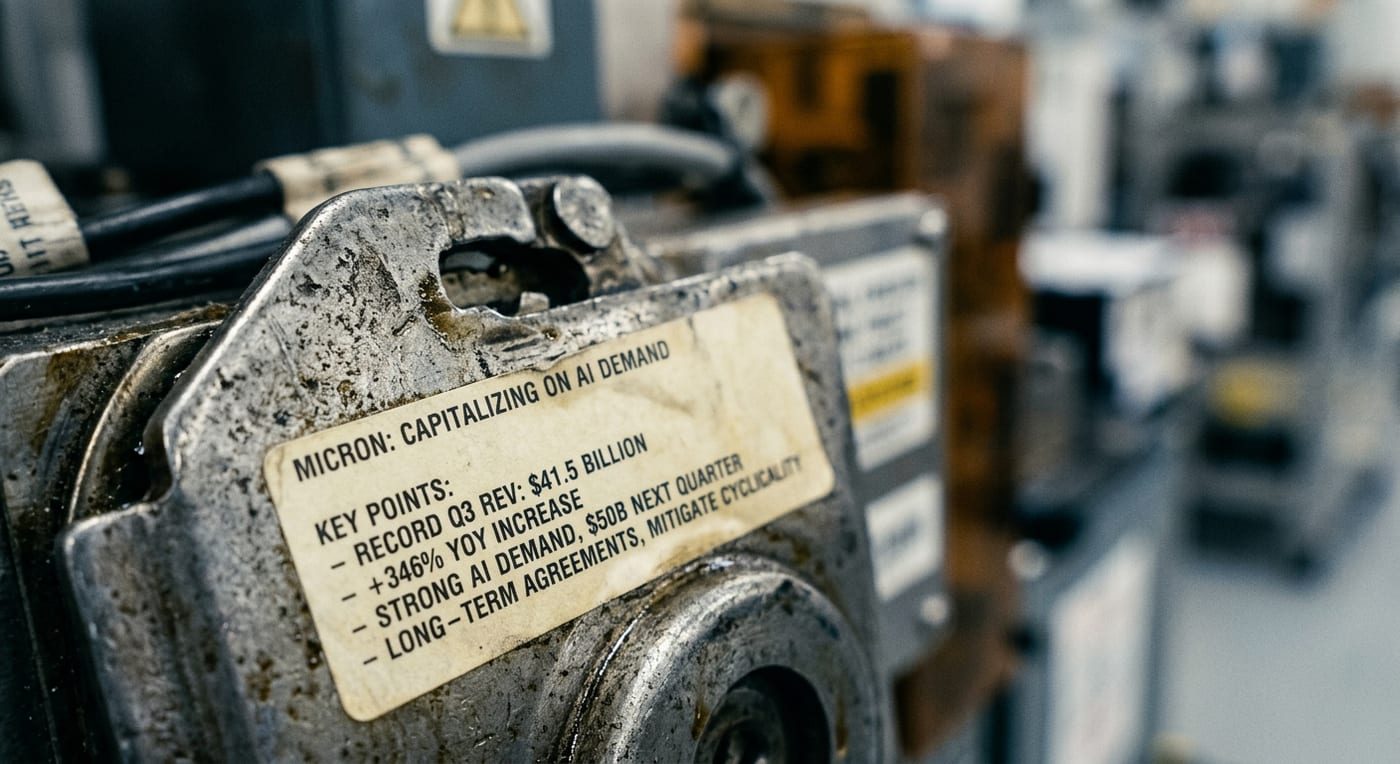
TL;DR
- Micron reported record Q3 revenues of $41.5 billion, a 346% increase YOY.
- The company anticipates strong demand driven by AI applications, projecting $50 billion in the next quarter.
- Long-term agreements enhance financial stability and mitigate industry cyclicality.
Micron Technology, Inc. (MU) is drawing attention as the latest developments come into focus. Micron Technology, Inc. (MU) is at the forefront of a transformative era within the semiconductor industry, driven by the unprecedented rise in demand for memory solutions powered by artificial intelligence (AI). The company has made significant strides in its financial performance, projecting an optimistic outlook amidst ongoing macroeconomic challenges. With a robust focus on navigating supply constraints and enhancing production capabilities, Micron is poised for long-term growth. This article will explore Micron's impressive earnings, its strategic positioning in the market, and the implications for investors as it capitalizes on the burgeoning AI market.
Overview of Recent Performance
In the recently concluded fiscal third quarter of 2026, Micron reported record revenues of approximately $41.5 billion, astonishingly representing a 346% increase year-over-year from the $9.3 billion recorded in the same period last year. This remarkable growth trajectory underlines Micron's adeptness in tapping into the surging demand for memory products that are essential for AI functionalities. The company's revenue boom is primarily attributed to its strong foothold in the data center segment, which caters to both hyperscalers and traditional data center players.
The thriving AI market, characterized by escalating requirements for advanced memory solutions, notably from giants like Amazon and Microsoft, solidifies Micron’s position in this rapidly evolving landscape. As noted in a recent assessment, the memory chip market has seen significant price increases, with DRAM increasing by approximately 90% and NAND by around 110% over the past year. Such dynamics highlight the crucial role Micron plays in meeting these demands, raising the company's revenue to projected values of up to $50 billion in the upcoming quarter.
Strategic Agreements and Financial Stability
To further bolster its market position and assure financial sustainability, Micron has entered into 16 long-term supply agreements spanning three to five years. These agreements, which incorporate minimum pricing and binding commitments, provide a strategic safety net against the historical cyclicality of the memory sector. This forward-looking approach allows Micron to mitigate some volatility while maintaining robust margins that are now anticipated to exceed past quarterly peaks.
These contracts represent around 20% of Micron's DRAM and a third of its NAND volumes. While they safeguard against price declines, there remains a substantial portion of Micron’s sales that are still exposed to the fluctuating spot market. Consequently, about 67% to 80% of its shipments remain vulnerable to market conditions, which can significantly influence overall profitability.
Navigating Supply Chain Challenges
Despite the robust demand for its products, Micron is still navigating a complex supply chain landscape. The semiconductor industry has been grappling with supply disruptions and increased costs, a trend that's unlikely to reverse in the near term. Micron's management has indicated confidence that the memory market will remain constrained beyond 2027, providing a favorable backdrop for price stabilization and sustained revenue growth.
Recently, industry analysts have expressed a positive sentiment towards Micron, noting a potential upside of 76% based on current evaluations. The company’s ability to secure stable sales channels through agreements significantly positions it well ahead of standard industry players, as highlighted in a previous article examining Micron’s AI-driven expansion and current pricing strategies.
The Outlook for Investors
As Micron expands its capabilities and secures its market share, the outlook for investors remains highly encouraging. The memory solutions demand driven by AI applications is expected to power Micron's growth trajectory over the coming years. With innovations in its product lines and strategic customer agreements, the firm is set to enhance its competitive edge against industry leaders.
In terms of valuation, Micron trades at approximately 10.7 times sales, which, while above its five-year average of 4.7 times, reflects its ongoing growth potential in a thriving AI-infused market. The company's gross margins have surged to an all-time high of 84.9%, further emphasizing its operational excellence.
Micron Technology's recent performance has not gone unnoticed, as analysts have identified it as a growth leader in the semiconductor space. However, volatility remains a factor due to the cyclical nature of the market and its high correlation with macroeconomic factors. Investors are turning their attention to how Micron manages these challenges moving forward, weighing its potential for long-term stability against inherent risks.
Conclusion: A Unique Position in the Market
As Micron Technology, Inc. (MU) continues to transform and innovate within the semiconductor landscape, it establishes itself as a formidable player in the AI memory market. The company's strategic maneuvers, including leveraging long-term contracts and focusing on product demand aligned with burgeoning technologies, paint a positive picture for its future. Micron’s commitment to navigating supply challenges while capitalizing on market opportunities reinforces its position as a compelling option within the technology sector for both current and prospective investors. It’s clear that Micron is not just participating in the AI-driven memory sector; it is leading the charge for innovation and market growth in a pivotal moment for the industry. The same pressure is reflected in recent reporting on the issue, which helps explain why the company's pricing decisions remain under scrutiny.