
Micron Technology's AI-Driven Future
ED
Editorial
Cashu Markets·4 min read
TL;DR
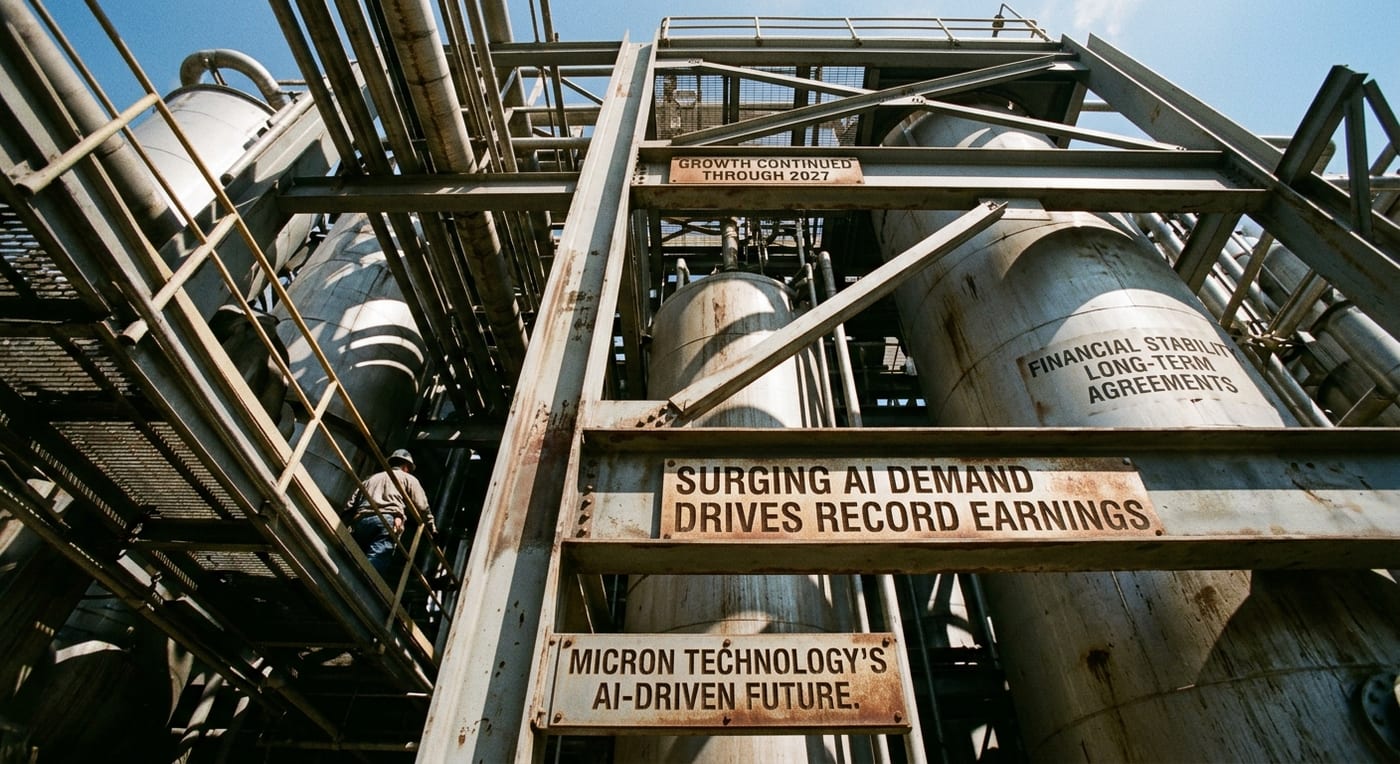
- Micron reports record earnings amid surging AI demand.
- Strategic long-term agreements enhance financial stability.
- The company anticipates continued growth through 2027.
Micron Technology, Inc. (MU) is drawing attention as the latest developments come into focus. Micron Technology, Inc. (MU) is transforming its business landscape, primarily driven by the surging demand for artificial intelligence (AI) memory solutions.
Overview of Recent Performance
In the fiscal third quarter of 2026, Micron reported astonishing revenues of approximately $41.5 billion, marking an impressive 346% increase year-over-year. This remarkable surge underscores the company’s adeptness in navigating the complexities of the semiconductor landscape, which is currently buoyant with heightened demand for advanced memory solutions.
Micron's robust earnings highlight its critical role in meeting the requirements of high-performance memory chips, especially those mandated by data centers and AI applications. The escalating needs from major AI hyperscalers such as Amazon, Microsoft, and Google are fueling this growth. These companies are investing heavily in data centers that require both DRAM and NAND memory, an area where Micron has positioned itself advantageously.
Strategic Investments and Alliances
The extraordinary demand for memory solutions is not only a consequence of market fluctuations but also Micron's strategic foresight in expanding its manufacturing capabilities. Recently, Micron has entered into several long-term agreements with major players in the AI sector, securing future sales and enhancing its margins.
This strategic positioning allows Micron to mitigate the cyclicality commonly associated with the memory chip market. Such agreements are crucial as they provide a buffer against the vagaries of the semiconductor market, which can swing dramatically with shifts in supply and demand.
By locking in long-term contracts, Micron not only stabilizes its revenue streams but also strengthens its market position against competitors who may falter in similar circumstances. Referencing the strategic decisions made by Micron, the earlier discussions highlight how these agreements play a significant role in their financial stability amid ongoing macroeconomic challenges, especially as the company anticipates another quarter of robust revenue that may top $50 billion.
Market Challenges and Competitive Landscape
While Micron's trajectory appears promising, the memory chip sector is not without its challenges. The looming threat of oversupply could dampen prices and, consequently, revenues in the future. Memory chips operate within a market susceptible to cyclicity; high demand and low supply can push prices upward, but an influx of products could fast-track a price decline.
Moreover, competitors like Sandisk, which focuses solely on NAND memory, create a competitive landscape that requires Micron to continuously innovate. Notably, Micron's dual approach in managing both DRAM and NAND production gives it a competitive edge, but it must remain vigilant to maintain market share amidst evolving industry dynamics.
As noted in earlier analysis, Micron has communicated to investors that it expects memory chip market tightness to persist well into 2027, suggesting an extended period of growth potential despite the possible downturns that cyclicality brings in the semiconductor domain.
Financial Health and Outlook
The current financial health of Micron is noteworthy. The company is witnessing an 81% revenue growth projection for the fiscal year ending in August 2027, a testament to its strategic positioning within the AI memory market.
Operational efficiency, driven by capital investments in manufacturing and technology enhancements, plays a crucial factor in improving margins while expanding production capabilities.
Investors and analysts alike are hopeful about Micron's financial trajectory as the company continues to tap into emerging AI applications that demand high-capacity memory solutions.
The ongoing investments are not merely a reaction to current market conditions; they represent a long-term commitment to maintaining leadership in a rapidly evolving industry.
Conclusion
Micron Technology, Inc. (MU) finds itself at the nexus of unprecedented growth influenced by the booming AI sector. The company’s impressive fiscal performance, underpinned by strategic alliances and steady demand for memory solutions, paints a promising picture for the future.
As it faces both opportunities and challenges, Micron's ability to adapt and maintain its market resilience will be crucial in defining its longer-term success. Continued investments in innovation and strategic market positioning will likely ensure that Micron remains a formidable player in the semiconductor industry, defined by its proactive response to market shifts and its commitment to leading the next wave of AI-driven growth. The same pressure is reflected in recent reporting on the issue, which helps explain why the company's pricing decisions remain under scrutiny.